
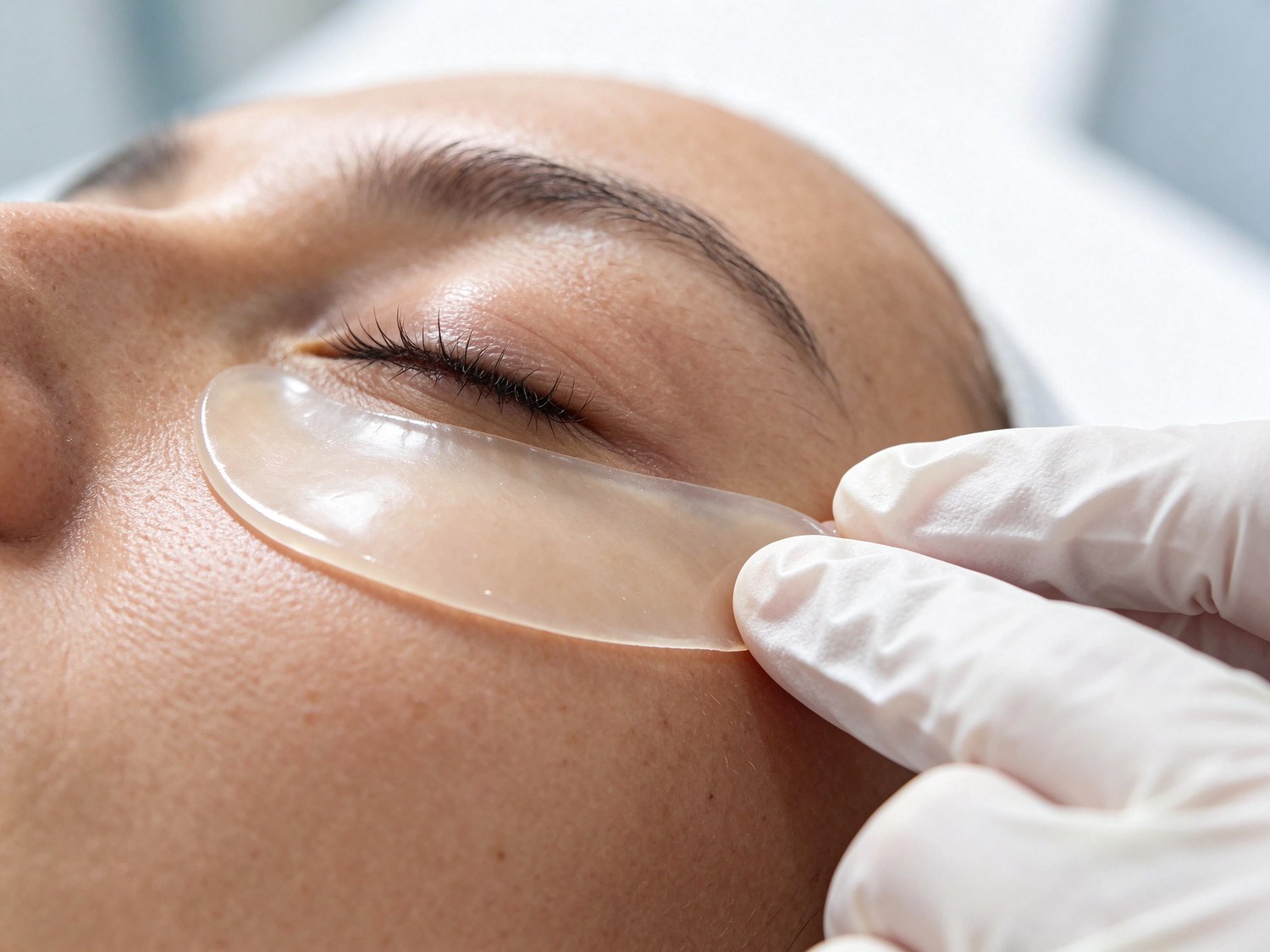
When a client’s eyes water, burn or turn red during an appointment, the adhesive takes the blame. In practice, a large share of reactions in the eye area trace back to the patch or the tape holding the lower lashes down. Understanding that changes how a stylist preps a sensitive client, and it changes what gets documented when something goes wrong.
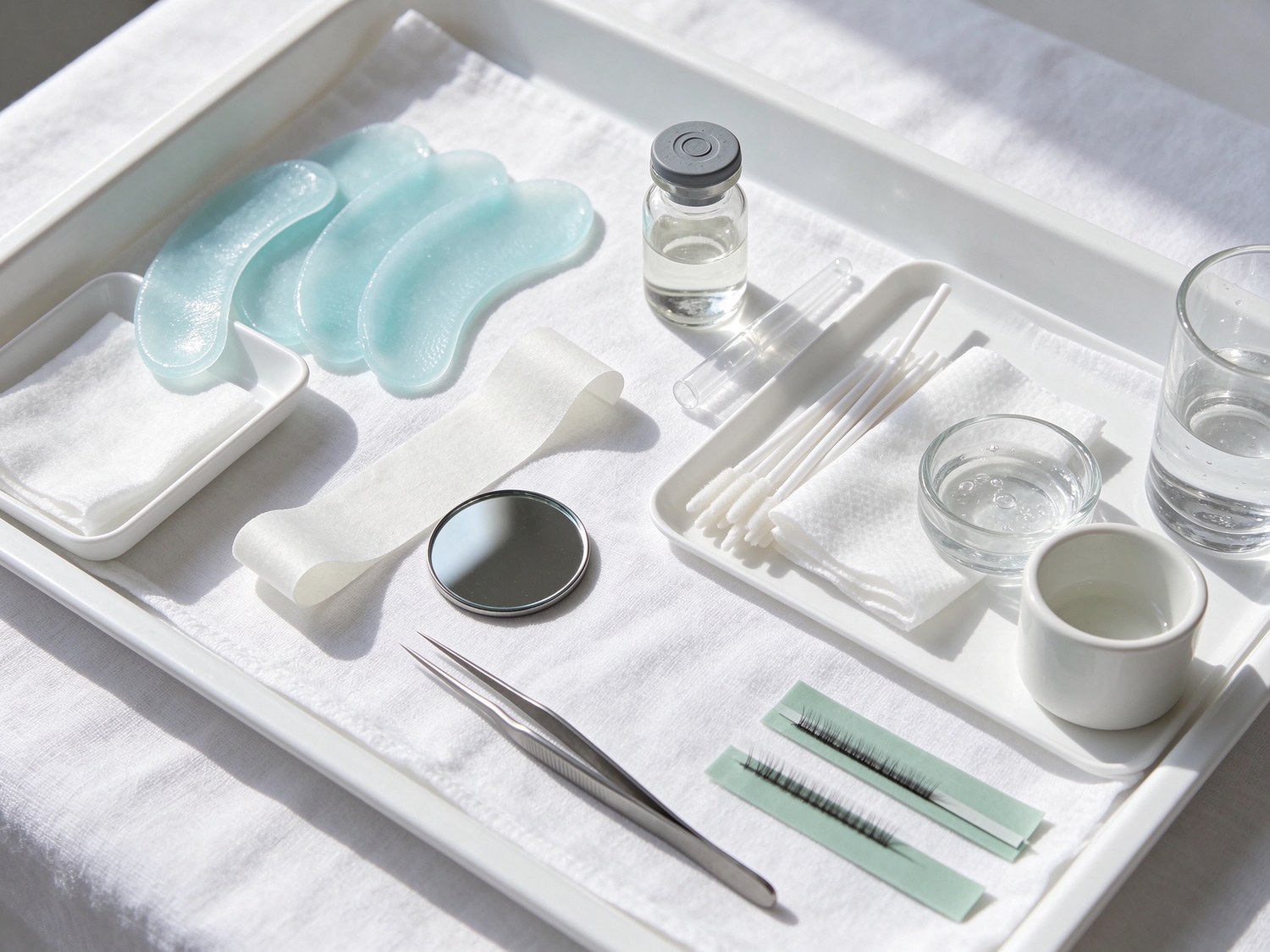
>Why the patch is the usual suspect
Under-eye patches and gel pads are formulated to hydrate and smooth the skin, which means they contain active ingredients intended for the cheek, not for the eye. Those ingredients are fine where they belong. They are not fine inside the eye, and the margin between the two is about a millimetre. A patch placed too high, a patch that shifts when the client closes her eyes, or a tape edge that lifts and releases product into the corner will produce exactly the symptoms clients describe as an adhesive allergy.
Reactions can be immediate, appearing within minutes of application, or delayed by hours or a day. Mild cases look like redness, tearing and a burning or itching sensation. More serious cases involve swelling of the lid and eye, with pain that does not settle. Ingredients the client is sensitive to can trigger this even when placement is perfect, which is why patch material matters as much as patch technique.
Placement, step by step
- Gently lift the upper lid to expose the lower lash line. Do not ask the client to open wide or look up; when she closes again, the patch will ride up into the eye.
- Follow the contour of the lower lid margin and lay the patch over the lower lashes, sitting about 1 mm below the margin. It should never cover the margin itself.
- Release the lid and let the patch settle, securing only the edges. Pressing the pad down flattens it against the eye and pushes product toward the lashes.
- After both patches are on, lift each upper lid in turn and check that every lower lash is covered and that the patch has not crept upward.
- Confirm that when the eyes are closed, the upper and lower lid margins meet each other, not the patch. If the upper lid rests on the pad, the pad is too high.
Screening before the patch goes on
Ask directly during consultation about sensitive skin, known cosmetic allergies, recent lash tint or lift services, and any history of reacting to tape, bandages or gel pads. Clients who answer yes should be treated with a silicone patch rather than a gel pad, and the stylist should consider a patch-free taping method where the lower lashes can be isolated without product contact. A patch test on the inner forearm twenty minutes before the appointment is cheap insurance for a client with a long reaction history.
Room conditions and the rest of the chain
Patch reactions get blamed on adhesive more often when the room is out of range. Keep humidity between 45 and 60 percent and the space ventilated, because dry air extends cure time and wet air shortens it, and both push a stylist toward over-application. Adhesive applied too generously sits uncured near the lid and produces vapour that irritates the eye on its own.
Document what was used: patch type, tape, adhesive, room humidity, and the time symptoms appeared. If a reaction occurs, remove the patches, flush the area with saline, and refer the client for medical advice rather than treating it in the studio. On the next visit, change one variable at a time so the cause is identifiable, and note the finding in the client record for the next stylist who sees her.