
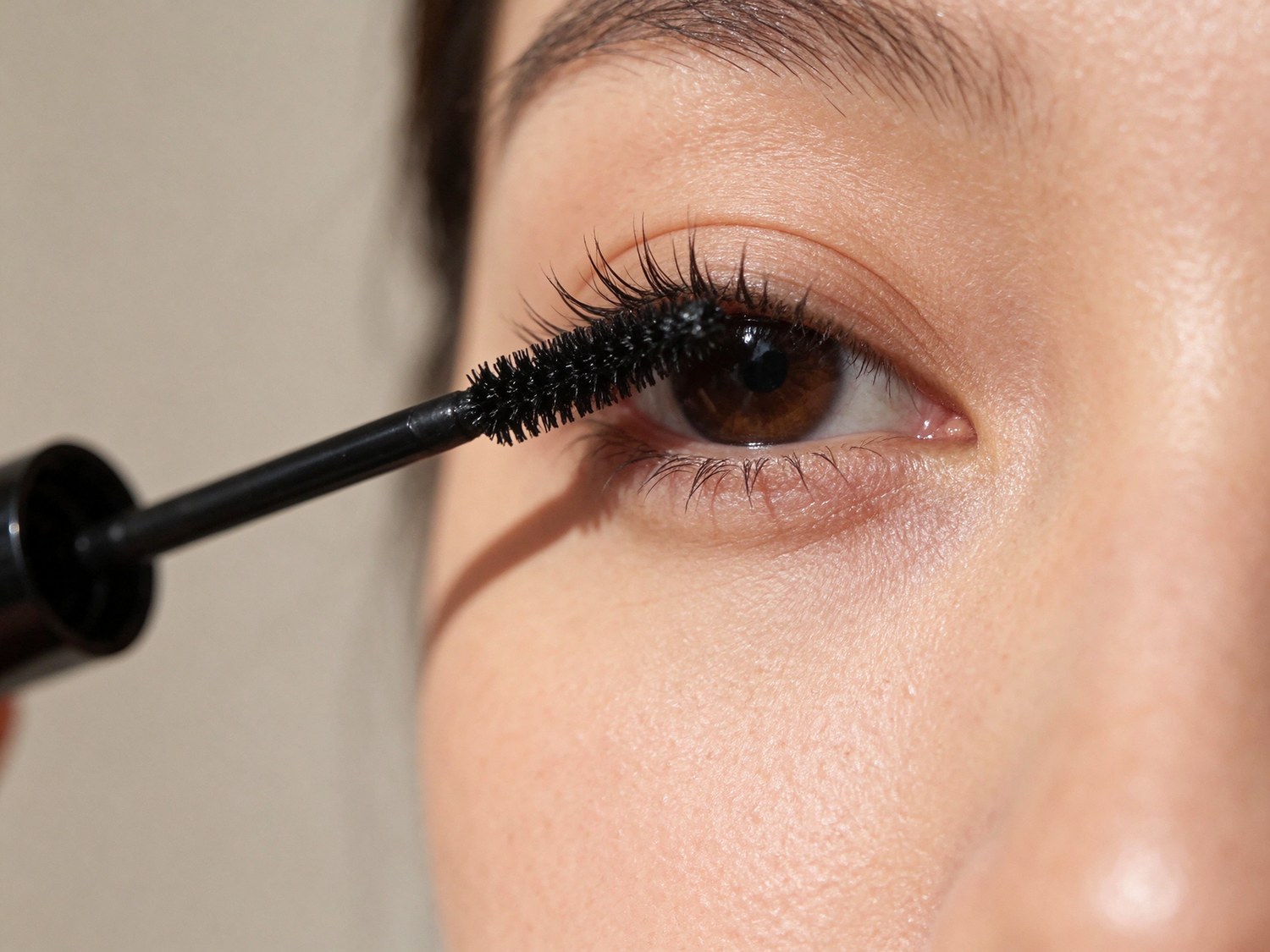
Most clients brush their hair every morning without thinking about it, and then leave a set of extensions untouched for three weeks. That is backwards. A lash set is a few hundred small fibres arranged in a deliberate pattern, and sleep, pillow pressure, makeup and idle touching all push them out of that pattern. A short daily pass with a clean wand costs less than half a minute and does more for appearance than most aftercare products sold at the front desk.
>What brushing actually fixes
Three things, and only three. It restores alignment, so lashes that folded over each other during the night sit back in their row. It separates clusters that have hooked together at the tip, which is what clients describe as “clumpy” even when the application was clean. And it lifts dust, lint and leftover powder out of the gaps between fibres before it settles onto the lash line.
What it does not fix: a bond that has already failed, a set that has grown out past the point of return, or irritation. If a lash is detached at the base, brushing will only move it around. Clients should be told the difference early, or they will blame the brush for a set that was due for a refill two weeks ago.
The technique, in order
Start at the base of the set, not at the tips. Place the wand under the lashes and sweep outward and slightly upward in one continuous motion, letting the bristles or teeth pass between the fibres rather than dragging across them. Work from the inner corner outward, then repeat from underneath once more if the set is dense. Fifteen to twenty seconds per eye is enough; longer sessions tend to turn into tugging.
- Never press into the attachment area. The bond sits a fraction of a millimetre above the lid, and sideways pressure there is the fastest way to loosen it.
- Stop at a tangle. If two lashes are knotted, hold the set steady and tease the knot apart from the tip down with the very edge of the wand. Pulling through a knot takes the extension with it.
- Brush dry. A damp wand, or one still carrying cleanser, drags and can leave residue in the bond.
- Keep the tool clean. Wash the wand with the same foam used on the lashes, rinse, and dry it fully before it goes back in the case.
When in the day it matters
Morning is the default, because that is when the damage from sleeping is visible. Two other moments are worth building into the routine: after eye makeup is applied, since powder and liner settle into the set, and after any workout or shower once the lashes are fully dry. Clients who touch their eyes out of habit, or who refresh makeup at lunch, should carry a wand in their bag rather than improvising with fingers.
For the studio, the practical move is to put a wand in every aftercare kit and demonstrate the sweep on the client’s own set before she leaves the bed. A client who has felt the correct pressure once will not scrub at her lashes afterwards. It also gives the front desk an honest, low-cost add-on that supports retention rather than competing with it.
What to say when a client asks about brushing “too much”
The concern is real but misplaced. Brushing does not thin a set; rough handling does. A clean wand, light pressure and a stop-at-the-knot rule will not shorten the life of an application. What shortens it is a client dragging a mascara wand through a knotted set, or using a bristle brush that has hardened with old product. Recommend one tool, one motion, twice a day, and check the tool at every refill appointment.
If a client reports that lashes “fall out when I brush”, the answer is almost always that those lashes were already shedding on schedule and the brush simply revealed it. One to five natural lashes per day is normal. A cluster of ten in one sweep is not, and that is a refill conversation, not a brushing problem.