
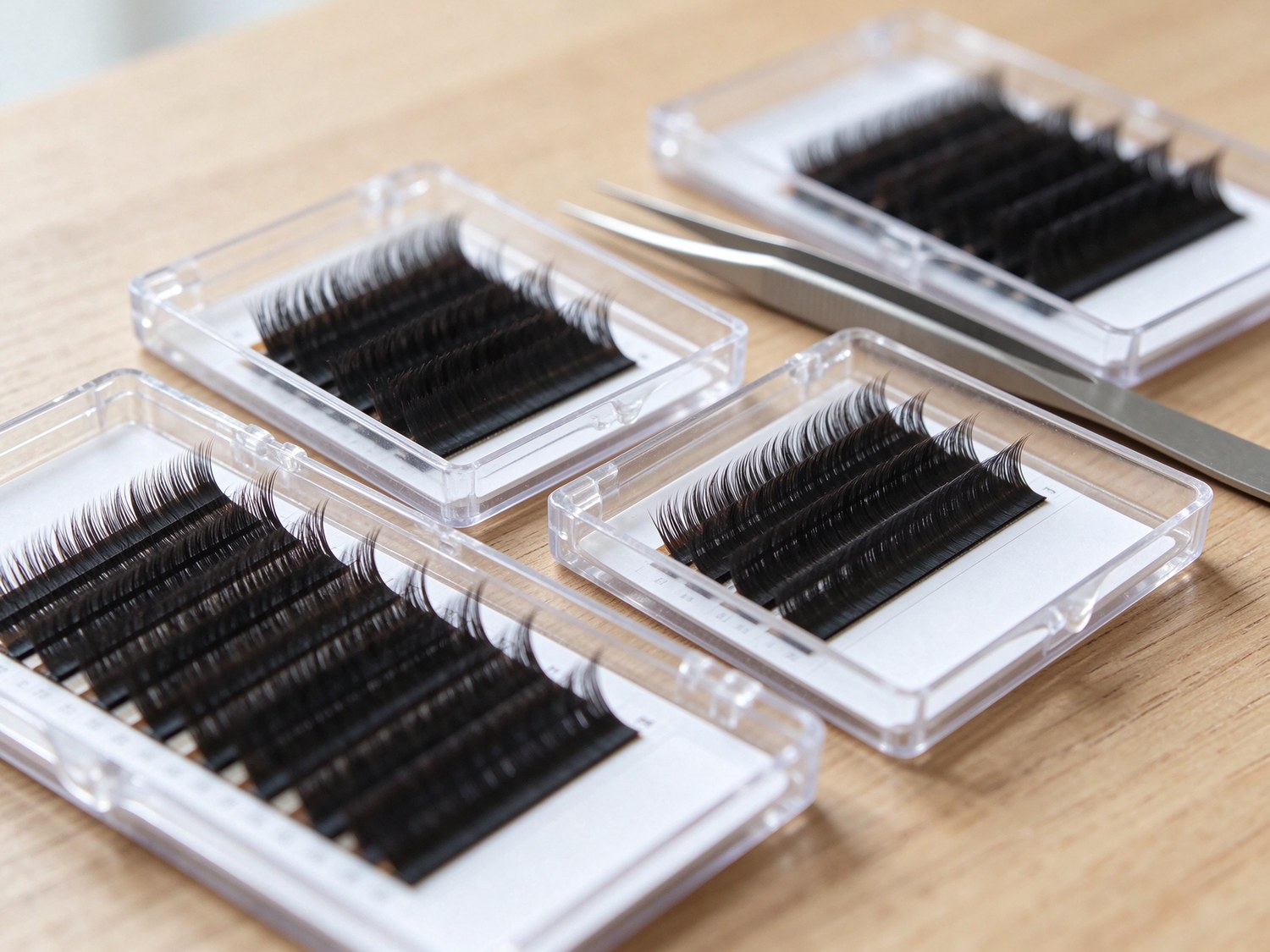
“Mink” sells. It sounds soft, natural and expensive, and it is one of the most common words in lash marketing. It is also one of the least reliable. A large share of what is sold as mink is synthetic fibre, and the portion that is genuinely animal hair brings a set of problems that most clients never hear about at the consultation.
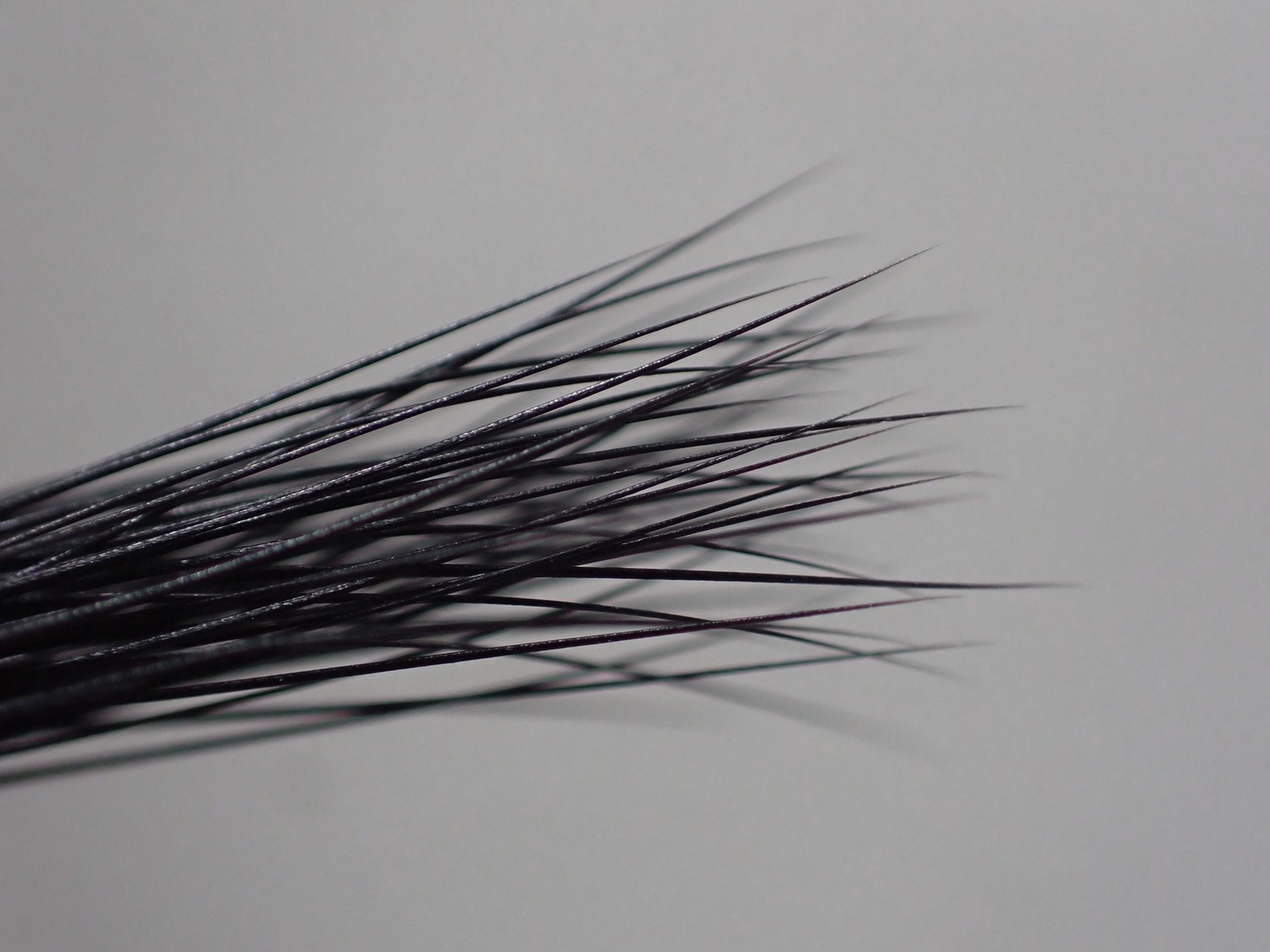
>What lash extensions are actually made of
Professional extensions are almost always synthetic polymer fibre — most commonly PBT (polybutylene terephthalate) or PES (polyester). The fibre is extruded to a controlled diameter, tapered at the tip, and heat-set into a curl. That manufacturing control is the whole point: a 0.07 mm lash is 0.07 mm, the taper is consistent, and the curl holds its shape through a three-week infill.
Animal hair cannot offer that. Mink, yak, fox and “mink-like” blends vary in diameter along a single strand, taper unpredictably and lose curl faster. A set built from inconsistent fibre looks uneven within a week, and the artist has no way to map around a material that changes from lash to lash.
The safety argument, which matters more than the marketing
Animal hair is a biological material. It can carry pathogens — bacteria, fungi, parasites and viruses — and no supplier document proves sterilisation of every batch. It is also a protein source that some clients react to, which is difficult to predict from a patch test on the skin when the material sits against the eyelid margin for weeks.
There is a second, less discussed issue: curl. Animal hair does not hold a curl naturally. It is processed with chemicals to set the shape, and residue from that process can interfere with adhesion and act as an irritant. With synthetic fibre, the curl is set by heat, so there is no chemical residue to bond around.
The supply chain problem
Most “mink” on the market is not mink. Investigations and supplier admissions repeatedly find that fibre sold as mink is hair from other animals, or a synthetic blend described loosely. Even when the material is genuine, the harvesting happens far from the buyer, in jurisdictions with weak animal welfare enforcement, so a claim of humane sourcing cannot be verified. For a salon, that is an reputational risk that cannot be audited.
None of this means animal hair is illegal or that every seller is dishonest. It means the label is not evidence. Ask for the fibre composition in writing, the diameter tolerance, the curl method, and lot traceability. A supplier who cannot answer those four questions is selling a story rather than a product.
What synthetic fibre does better, in practice
- Consistent diameter and taper, which makes mapping predictable and keeps a set looking uniform as it grows out.
- Curl retention, because the shape is heat-set rather than chemically imposed.
- Lighter weight per volume, so volume sets can be built without overloading fine natural lashes.
- No protein allergen load from the fibre itself, which narrows the number of variables when a client reacts.
- Traceability, because industrial production can be documented batch by batch.
The trade-off is honesty about feel. Synthetic fibre does not feel like fur, and clients who expect a “fur-like” sensation may notice. What it does is look clean, hold shape and behave the same on lash one and lash two hundred.
How to talk about it at the consultation
Most clients repeat what they have read online, so the conversation is less about arguing and more about reframing. A short explanation works: the fibre is synthetic, it is chosen because the diameter and curl can be controlled, and it carries no animal protein. If a client specifically wants animal hair, explain the trade-offs — inconsistent taper, chemical curl setting, no verifiable sterilisation — and let her decide with real information.
Vegan and cruelty-free claims are worth making only if the whole supply chain supports them: fibre, adhesive, packaging and testing. Vague “mink-feel” language borrowed from a competitor’s marketing undermines the credibility of an otherwise accurate claim.
The specification sheet to ask for
Fibre type, diameter in millimetres with tolerance, curl type and setting method, length range, tip taper, and lot number. That is the entire technical case for a lash tray. Once you have it, two trays at different price points can be compared rationally rather than by packaging, and a client complaint about “uneven lashes” can be traced to material or technique instead of guessed at.