
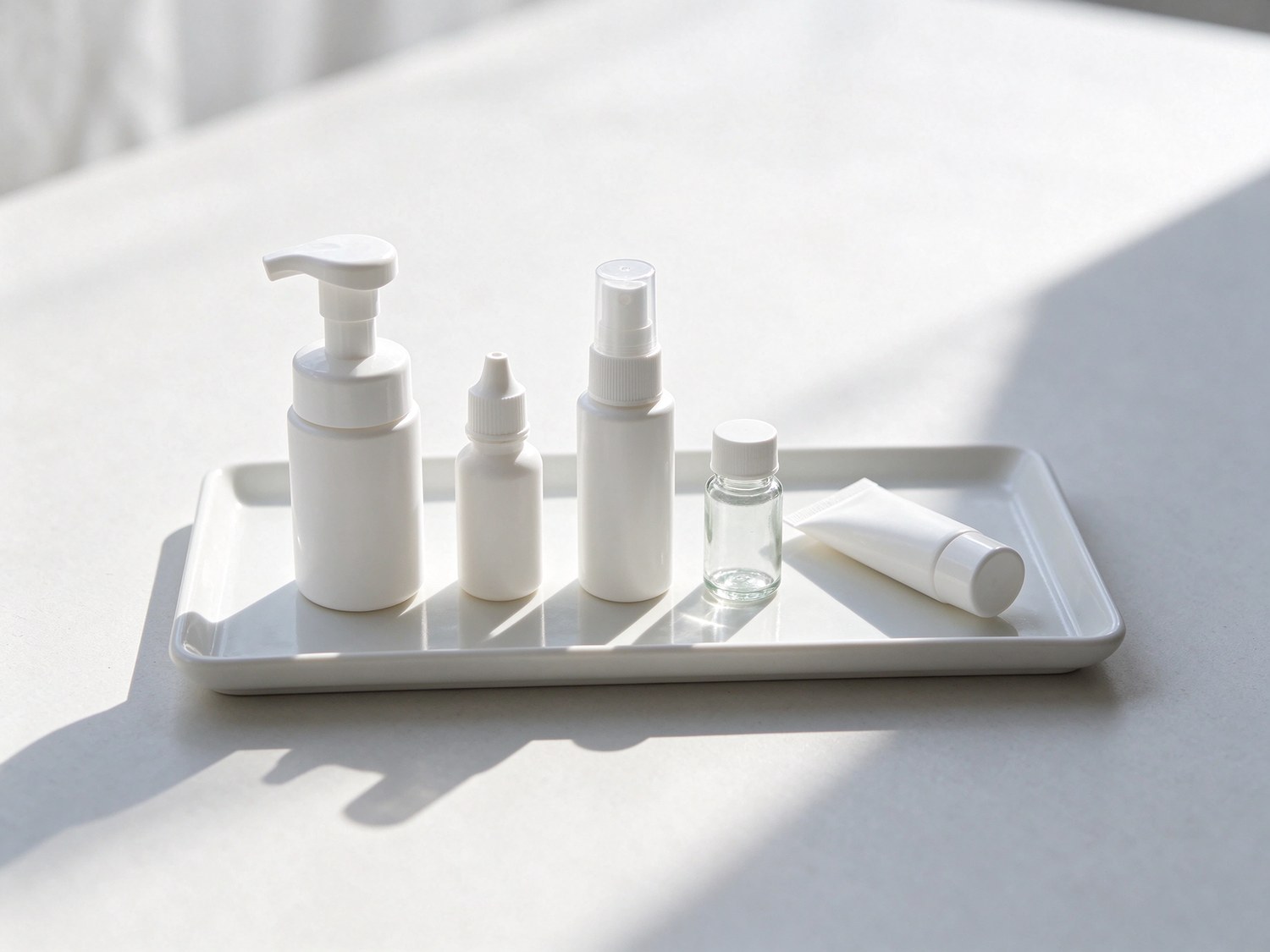
Adhesive gets all the attention, but the liquids used before and after it decide how well it can work. Cleansers, primers, pH balancers, bonders and finishing fluids are sold as a set of extras, which makes them easy to overbuy and easy to misuse. In reality there are five distinct jobs, and most artists need two or three of them rather than all five.
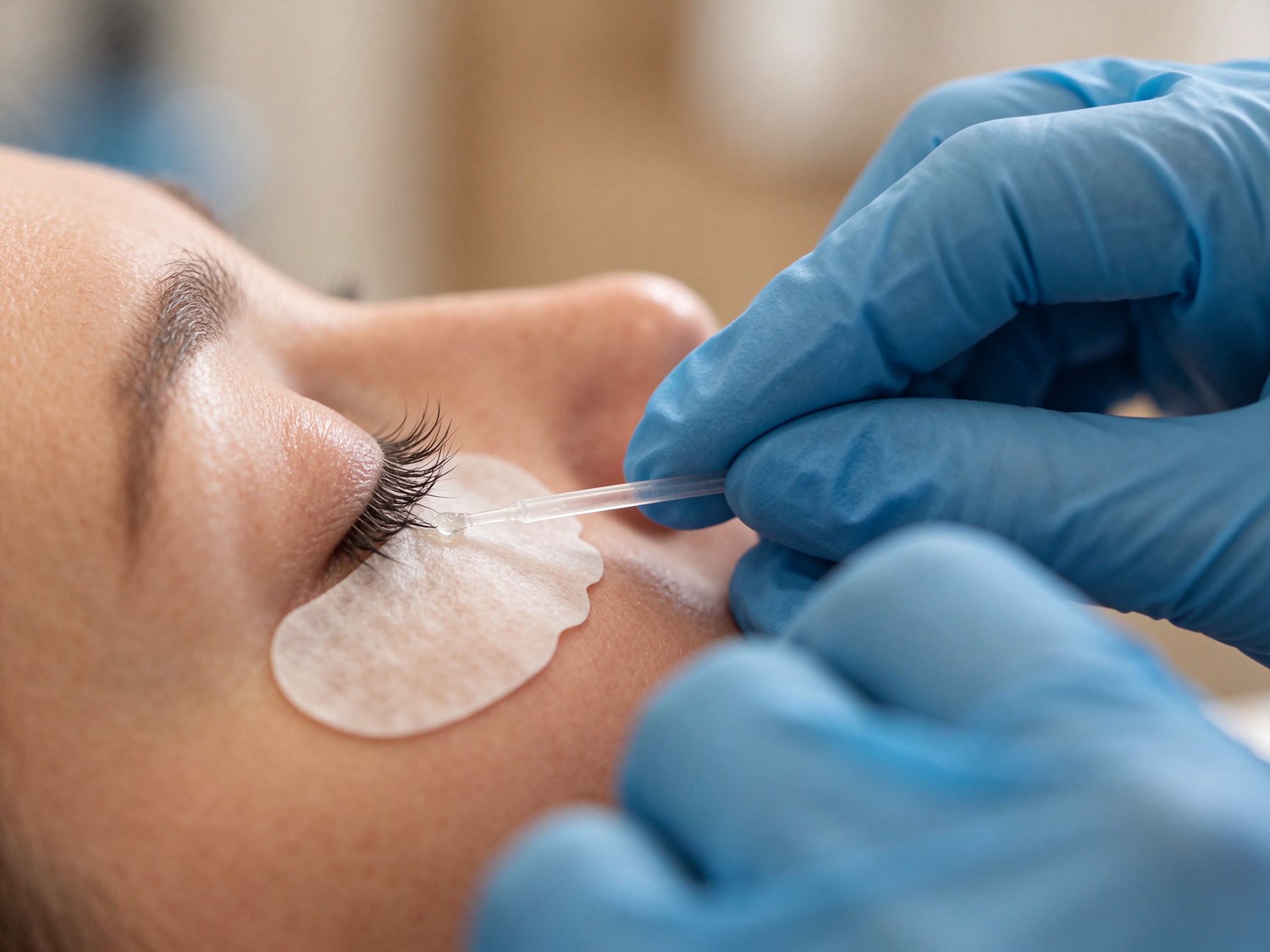
>Five jobs, not five products
Before the first lash goes on, the natural lashes have to be clean, at a workable pH and free of oils. During the set, the adhesive needs a stable surface and, in some rooms, help with speed or migration. After the set, the bond benefits from a finish that neutralises fumes and adds flexibility. Each product on the shelf belongs to one of those jobs. If you can name the job, you can decide whether you need the product.
Cleansing comes first, and nothing replaces it
Natural lashes collect sebum, makeup, sunscreen, skincare and lint through the day. A pH-balanced lash shampoo removes that film without stripping the lashes; for oily skin or a client who arrives wearing eye makeup, cleanse twice and rinse thoroughly. Foam cleansers are the practical choice because they reach the lash line without dragging.
Primer is not a substitute for this step. An artist who skips cleansing and relies on primer is sealing dirt in place, and the bond will fail regardless of which bottle was used.
Primer removes residue; pH balancer changes the surface
These two are often confused because both are applied before the set, but they do different things. A primer removes residual oil and impurities from the natural lash. An alcohol-free formula is the gentler option, useful for sensitive clients, oily lash types and anyone whose retention has been inconsistent, because it does not over-dehydrate the hair or accelerate the adhesive.
A pH balancer addresses acidity. If the natural lash surface is too acidic, adhesive sets more slowly and the bonds shrink as they cure, which weakens them; if it is too alkaline, adhesive sets too fast and unevenly. A neutralising prep brings the surface into the range where the adhesive was designed to perform, and it encourages the cuticle to open slightly for a better grip. It is a different product from primer, and using both is a decision based on the lash in front of you, not a default.
Speed and retention boosters have specific uses
A booster is not a magic retention product; it is a tool with several defined jobs. Applied along the base of the lash strip, it limits how far adhesive travels and helps keep handmade fans open. In cold months, when adhesive dries more slowly, it can reduce stickies and improve the bond. For artists learning to work with a faster glue, it can make the transition survivable. On dense or oily lash types it can support retention where the surface is harder to bond.
If several clients suddenly report poor retention, do not reach for a booster. Look for the pattern first: the same room conditions, the same prep step skipped, the same client aftercare. A product cannot fix a technique or environment problem, and adding one obscures the cause.
The finishing liquid: fumes, flexibility and water
What happens in the last two minutes matters as much as the first twenty. A finishing bonder is applied after the set to neutralise adhesive fumes, polymerise the glue without shock curing, and leave the bond slightly flexible so it tolerates movement and sleeping on a pillow. Because the bond is fully cured and neutralised, clients can usually wet the lashes sooner than the traditional 24-hour rule — a genuine convenience, and one worth explaining rather than hiding.
What a bonder cannot do is rescue a bad attachment. If the base was placed wrong or the pickup was too light, no finishing product changes the outcome. It also does not replace aftercare; it shortens the fragile window, it does not eliminate it.
The order of operations
Cleanse, rinse and dry properly. Assess the lash type, then decide whether a primer, a pH balancer or both belong in this appointment. Apply the chosen prep thinly and let it dry before the first lash goes down. Work with fresh drops. At the end, apply the finishing liquid according to its instructions, blot any excess, and give the client the aftercare that matches what you actually used.
If that sounds like more steps than your current routine, it is — but most of them replace a step you are already doing badly. A two-product routine used correctly beats a five-product routine used vaguely.
Common mistakes worth naming
- Too much product. Excess liquid leaves residue that interferes with the bond and can irritate the lid. Thin layers, correct applicators.
- Skipping the cleanse. The most common cause of unexplained retention loss, and the cheapest to fix.
- Expecting one bottle to solve retention. Attachment, environment, adhesive choice and aftercare all contribute.
- Ignoring the room. Temperature and humidity change how every liquid and the adhesive behave.
- Not reading the instructions. These products have different dwell times and application methods; guessing produces inconsistent results.
Buying in the right order
Start with a proper cleanser and a correctly matched adhesive. Add an alcohol-free primer if clients are oily or sensitive. Add a pH balancer only if you can identify a pH-related retention pattern. Add a booster if you have a specific problem — fan migration, winter cure speed, dense lashes. Add a finishing bonder if you want faster return to normal life for clients and a more flexible bond. Nothing on that list is compulsory, and everything on it is optional until a client’s lashes tell you otherwise.