
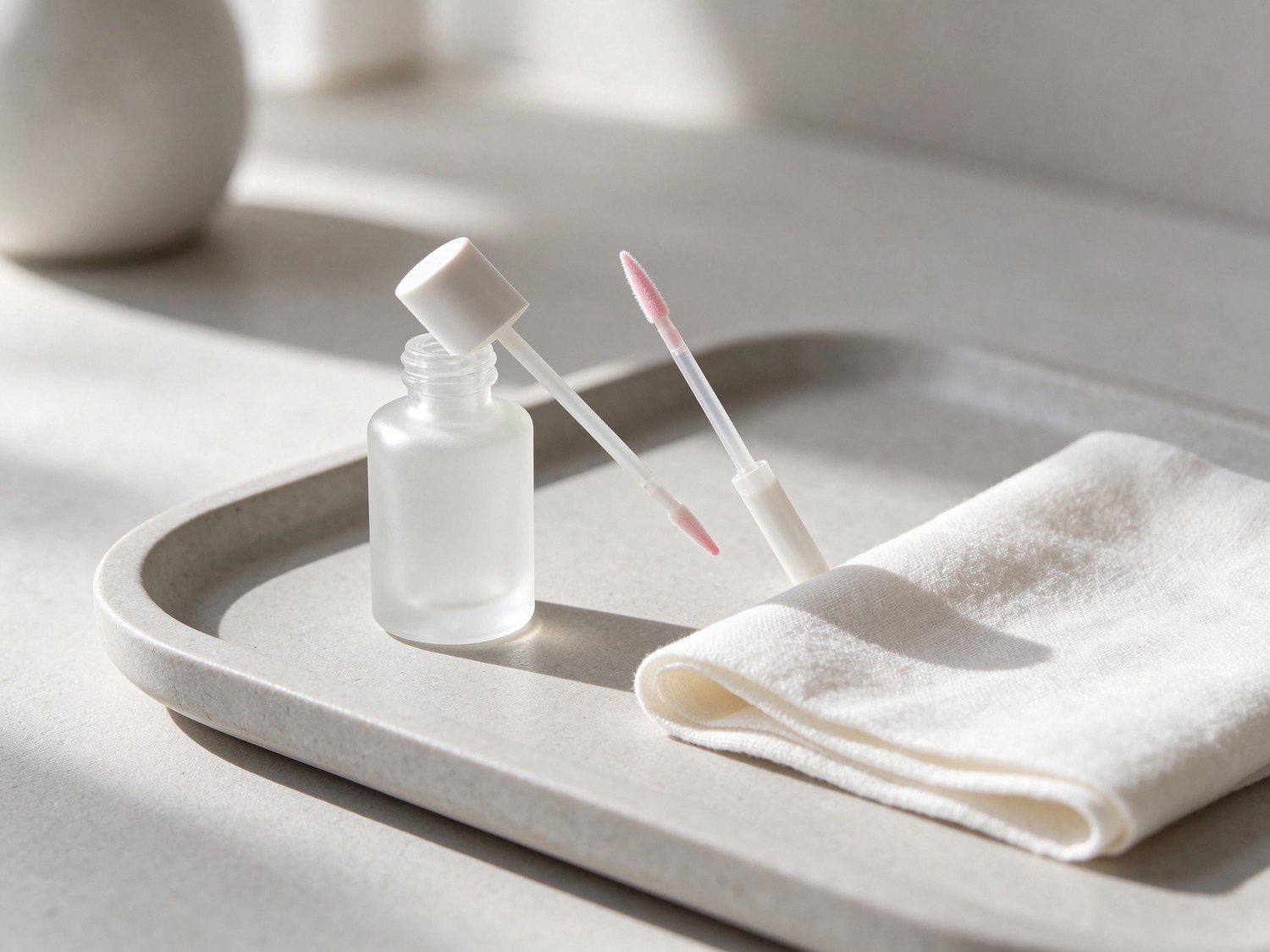
Top coats and sealants have a long history in lash work, and a persistent reputation. The idea is simple: brush a thin film over the finished set, seal the adhesive surface, and buy the client a few extra days of retention. In practice, whether a coating helps depends entirely on the set you just built and why you think it needs protecting.
>What a coating is actually supposed to do
A sealant sits on the outside of the cured adhesive and the extension surface. In theory it does three things: it reduces direct exposure to humidity and water in the first hours, it adds a slip layer so lashes brush past each other instead of catching, and it can make the surface feel smoother to the client. None of that changes the bond underneath. A coating is a surface treatment, not a second cure.
Where it goes wrong
The failure mode is mechanical, not chemical. A liquid brushed through a volume set wets the fan tips and pulls them together as it dries. Fans that were opened deliberately during application close into solid points, and the set reads clumpy within a day. On classic sets the risk is different: many coatings dry to a firmer film than the adhesive itself, so the finished set feels stiff at the base instead of flexible, and stiff bonds fail at the lash line rather than at the tip.
There is also a removal penalty. A coated set is harder to cleanse thoroughly, and the film can trap lint and pigment at the attachment area. If the client then cleanses more aggressively to get it off, the adhesive takes the wear instead.
Why modern adhesive practice changed the calculation
Most of the retention problems that coatings were invented to solve are now handled upstream. Adhesive chemistry has improved, and the bigger gains come from controlling the room rather than from painting over the result. A workable baseline:
- Temperature: keep the work area in the 18–24°C band and measure it, don’t estimate.
- Humidity: 40–60% is the comfortable middle for most standard adhesives; log it at the station, not by the window.
- Cure time: respect the full set time before the client opens her eyes, and keep the set still while it cures.
- Fresh drop: a new drop every few minutes beats a large drop that has already started to thicken.
- Isolation: tape or gel pads that keep lower lashes out of the working field do more for retention than any top coat.
When those variables are stable, retention improves on its own. When they are not, a coating hides the symptom for a few days and then the set fails anyway, which is why so many stylists conclude that sealants “don’t work”.
The narrow cases where a coat still earns its place
There are situations where a thin surface film is genuinely useful, provided it is applied correctly and only on the right kind of set:
- Classic sets only. Never on volume, mega-volume or pre-made fans, where it will close the geometry.
- Very dry, air-conditioned rooms. Where ambient humidity sits below 30% for most of the day and bonds feel brittle.
- Clients who touch their lashes. A light film reduces friction between lashes during sleep and face-touching, but only if the set is classic.
- Short-term wear. Events, holidays and photo shoots where the set only needs to survive a week.
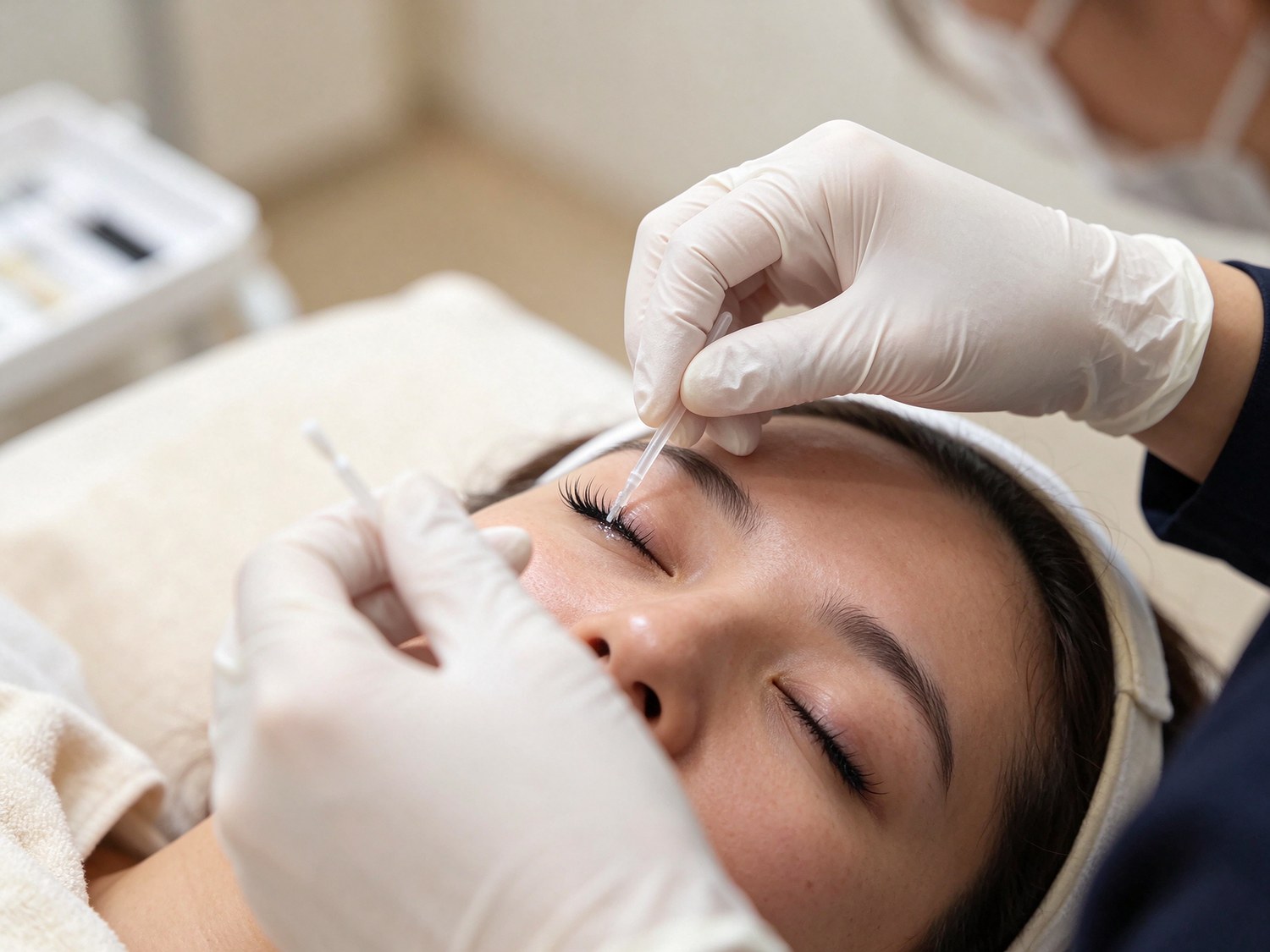
Application, if you use one: a minimal amount on a fine microbrush, swept along the middle to outer lengths, never at the base, one thin pass rather than a second coat, and full dry time before the client sits up. If the film looks wet or shiny, it is too much.
Judge it by data, not by feel
Track retention instead of trusting the finish. Count extensions removed at refill, note the average day of first loss, and compare a coated period against an uncoated one with the same clients and the same adhesive. In most studios the numbers show that climate control and aftercare move retention more than any top coat, and the coating turns out to be extra handling on a set that was already fine.
If a set is failing early, look at the room, the drop, the cure and the client’s home routine in that order. A coating is the last variable to add and the first to question. LebestPro keeps its adhesive range and aftercare matched to that sequence, so stylists can fix the cause rather than mask it.