
Summer is good news for almost everyone except the person holding the tweezers. Heat and humidity change how adhesive behaves before the first lash is placed, and the effects show up weeks later as early shedding that clients attribute to technique. The fixes are mostly environmental and procedural, and they are easier than switching to a different brand every June.
>What heat actually does to the drop
Warmth thins the glue and speeds curing. On a hot day the same bottle that holds a bead in a mild room spreads faster, so a lash picks up less product than you expect. Bonds end up thinner, cure faster at the surface and can look set while the base is still insecure. Add a humid room and the surface skins over even sooner, which is why retention drops in July without any change in technique.
The practical consequence is that the amount of adhesive on the lash, not the drying speed on the clock, becomes the variable you need to watch. If the set is shedding in five to seven days and the application looks clean, check pickup before you blame the client’s aftercare.
Adjust the method before you change the product
- Make smaller, fresher drops. A drop that would last twenty minutes in winter is tired after ten in a warm room. Replace it rather than topping it up.
- Check the bead, not the clock. If the lash looks dry when it leaves the stone, you are picking up too little and the room is the reason.
- Consider a slower or wide-range formula for the season. If your everyday glue was already at the fast end of your comfort zone, summer pushes it past it.
- Keep the fans closed and the base clean. In thinner glue, a stray drop between lashes becomes a sticky far more easily.
- Shake harder. Warm adhesive separates more readily, so thirty to sixty seconds before every use is not optional in summer.
Control the room, not the client
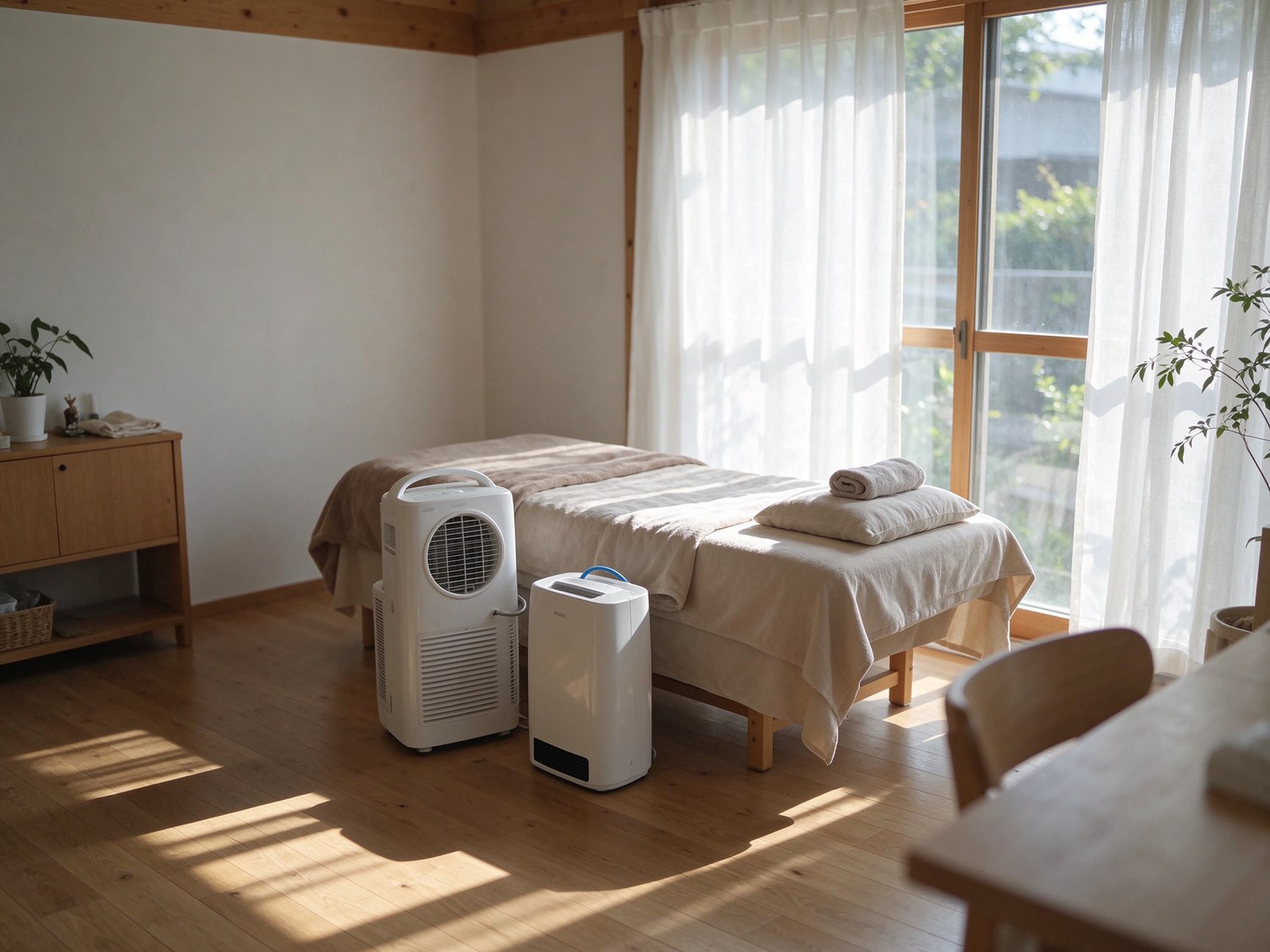
Aim for 18–24°C at the bed and 40–60% humidity, and measure both. Air conditioning does most of the work, but it has to reach the lash bed rather than the ceiling. In humid heat a dehumidifier is often more useful than more cold air; in dry heat, a humidifier prevents the glue curing too fast and becoming brittle.
Ventilation matters for a second reason. Fumes should be drawn away from both faces, which means an extraction fan or a window behind the artist, never a fan blowing across the lash tray toward the client. A fan that hits the glue also cures the surface prematurely and makes the drop useless within minutes.
Direct sun on the bed is its own problem. A room that is comfortable at 9am can be five degrees warmer by the afternoon, so recheck the hygrometer between clients rather than setting the thermostat once in May.
Storage rules for a hot season
Never leave adhesive in a car, a conservatory or a bag in the sun, even for an hour; the temperature swing is far beyond anything the formula is designed for. Keep stock in an airtight container in the coolest dark cupboard you have. Unopened bottles can be refrigerated at 2–10°C for up to three months, but opened bottles should not go back in the fridge — moisture from condensation degrades them faster than warmth does. If a bottle has been chilled, let it come to room temperature before opening, and never store it beside primers or cleansers.
Prep when clients arrive sunscreened
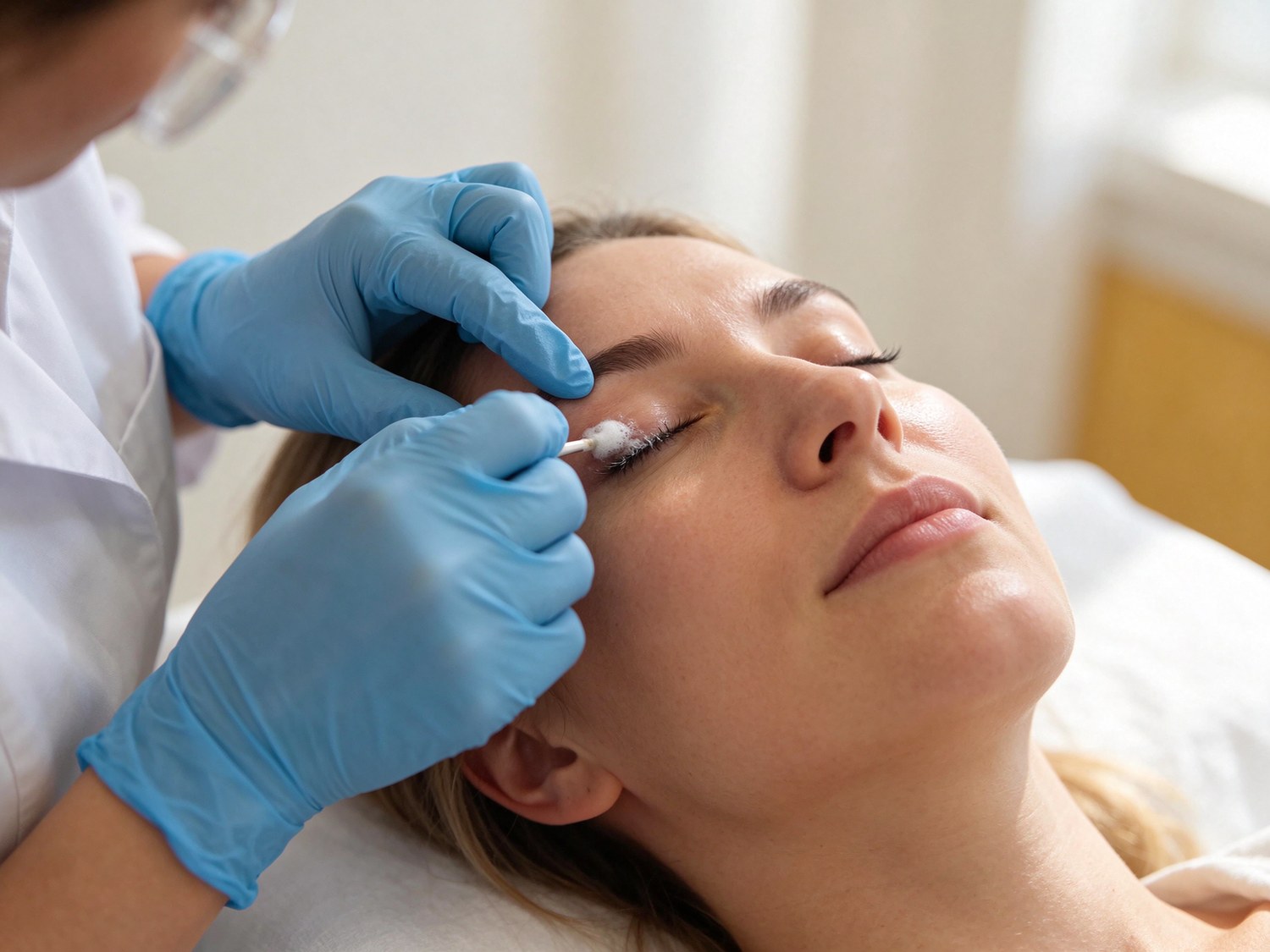
Summer clients arrive with SPF, moisturiser, sweat and sometimes salt. Cleanse twice, and use a lash shampoo rather than a micellar wipe, because oils and sunscreen film are exactly what prevents a bond from anchoring. An alcohol-free primer is the better choice in heat: it removes residual oil without dehydrating the natural lash or accelerating a glue that is already fast. Carbon-free clear formulas also run a little calmer in a warm room, which is worth knowing for sensitive clients.
If a client has been in the sea or a pool the same day, say plainly that retention will be lower this set and that the first 24 hours matter more than usual. Honest expectations prevent a complaint later.
Aftercare for sweat, salt and swimming
The first 24 hours remain the critical window: no water, no steam, no sauna, no gym session that ends with a wet face. After that, the rules are about handling rather than avoidance — blot sweat with a tissue instead of rubbing, rinse after swimming and dry with a cool hairdryer on the lowest setting, and keep oil-based cleansers and eye creams off the lash line. Sunscreen belongs on the face, not on the extensions.
Clients who book a holiday set should be told the honest version: sea water, heat and sun oil shorten the life of any set, and a slightly shorter, lighter map usually looks better on the eighth day than a heavy one that has begun to twist.
What to say when a client notices early shedding
Explain the mechanism in one sentence — warm air makes the glue set faster, so the bond sits lighter — then describe what you changed, and offer a check at seven days rather than a free redo on the spot. A client who understands that heat is a condition, not a fault, is far more likely to book the next set in the cool of the morning.