
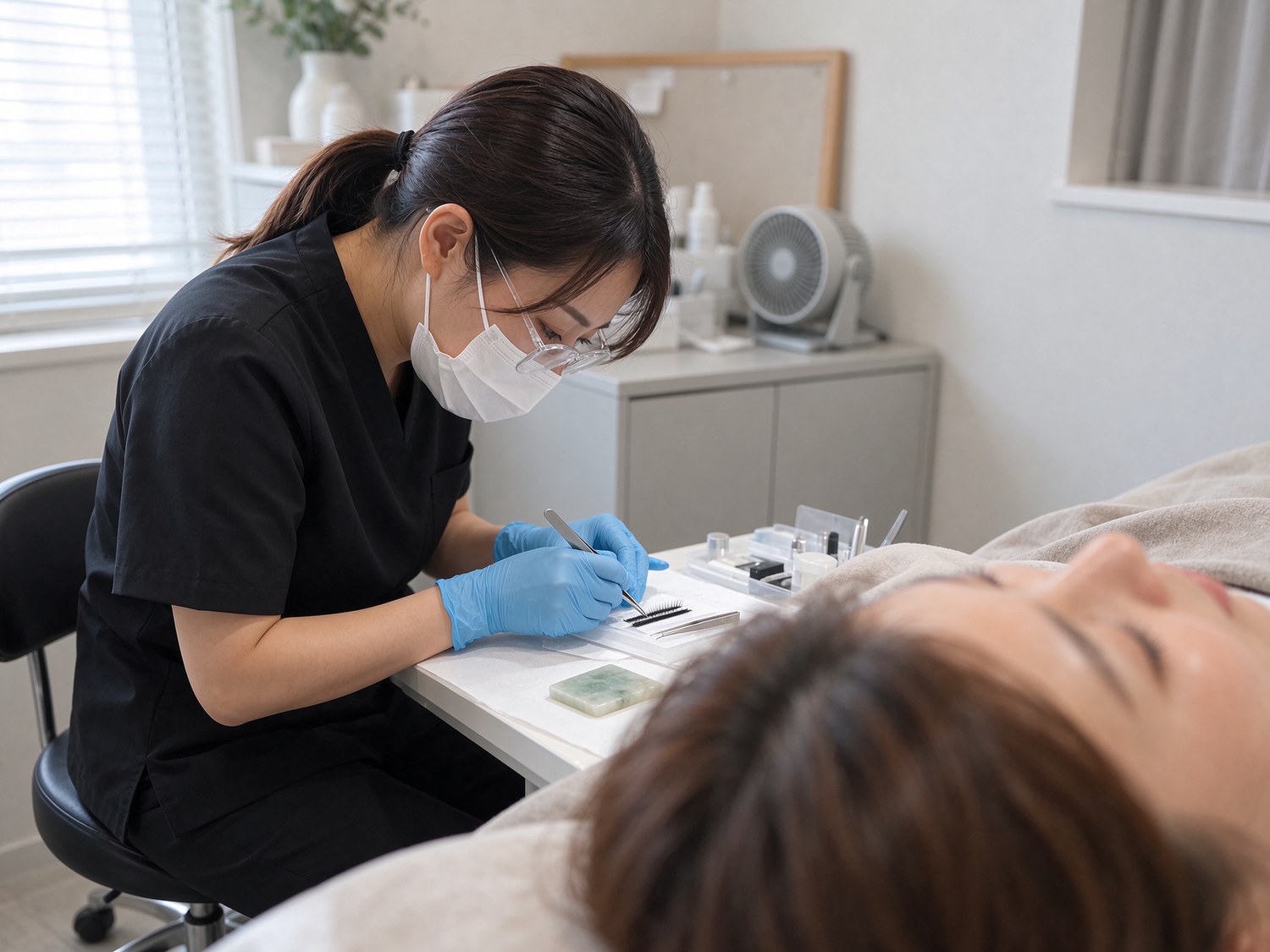
Occupational allergy is one of the few risks in lash work that gets worse the longer it is ignored. It rarely begins with an unmistakable reaction. It begins with dry patches, a little redness where glasses sit, a rash that clears on holiday and returns in the treatment room — and because artists are used to working through discomfort, it is usually explained away for months before anyone connects it to the adhesive.
>Why the first signs are so easy to miss
Cyanoacrylate sensitisation develops gradually. Early reactions are mild and localised: flaking skin on the cheeks or under the brows, redness on the neck, itching at the end of a shift. They often improve when exposure stops — a week off, a well-ventilated summer room, a holiday — which makes them look seasonal or stress-related. Many artists already manage eczema or dry skin, so the new symptoms fit an old explanation.
The pattern that should raise suspicion is repetition: the same areas flaring after the same kind of appointment, improving when you are away from the table, worsening across the week rather than settling.
What is actually reacting
The allergen in lash adhesive is almost always the cyanoacrylate monomer rather than the pigment, and it reaches the artist as vapour as well as through touch. Once the immune system has been sensitised, each exposure can produce a stronger response than the last. That is the difference between irritation and allergy: irritation is dose-related and settles, sensitisation escalates. It also means that “working through it” is the one strategy guaranteed to make it worse, and that sensitised artists may later react to nail adhesive or medical glue.
The signs that mean stop, not adjust
- Itching, redness or swelling around the eyes or lids, especially the morning after a full set.
- A rash on the cheeks, neck or forehead that appears after appointments and fades when you stop.
- Irritation that is worse after each shift rather than stable.
- Dry, cracked or weeping skin where gloves, glasses or a mask rests.
- New respiratory symptoms — sneezing, blocked nose, tight chest or wheeze in the treatment room.
Swelling, breathing changes or a rash spreading beyond the contact area are reasons to stop work and seek medical advice, not reasons to try a different brand. The next exposure is not a test.
Protect yourself before there is a symptom
Sensitisation is cumulative, so exposure control is the whole game:
- Nitrile gloves, changed often. Latex offers no protection against cyanoacrylate and adds its own allergy risk.
- Extraction at the table. A fan behind you drawing fumes away, not a fan blowing them past your face.
- Keep the bottle capped between dips and keep drops small; an open bottle in a warm room is a fume source all appointment.
- Never eat, drink or touch your face at the station, and wash hands before breaks.
- Limit consecutive hours. Ten sets in three days exposes you far more than the same ten spread across a week.
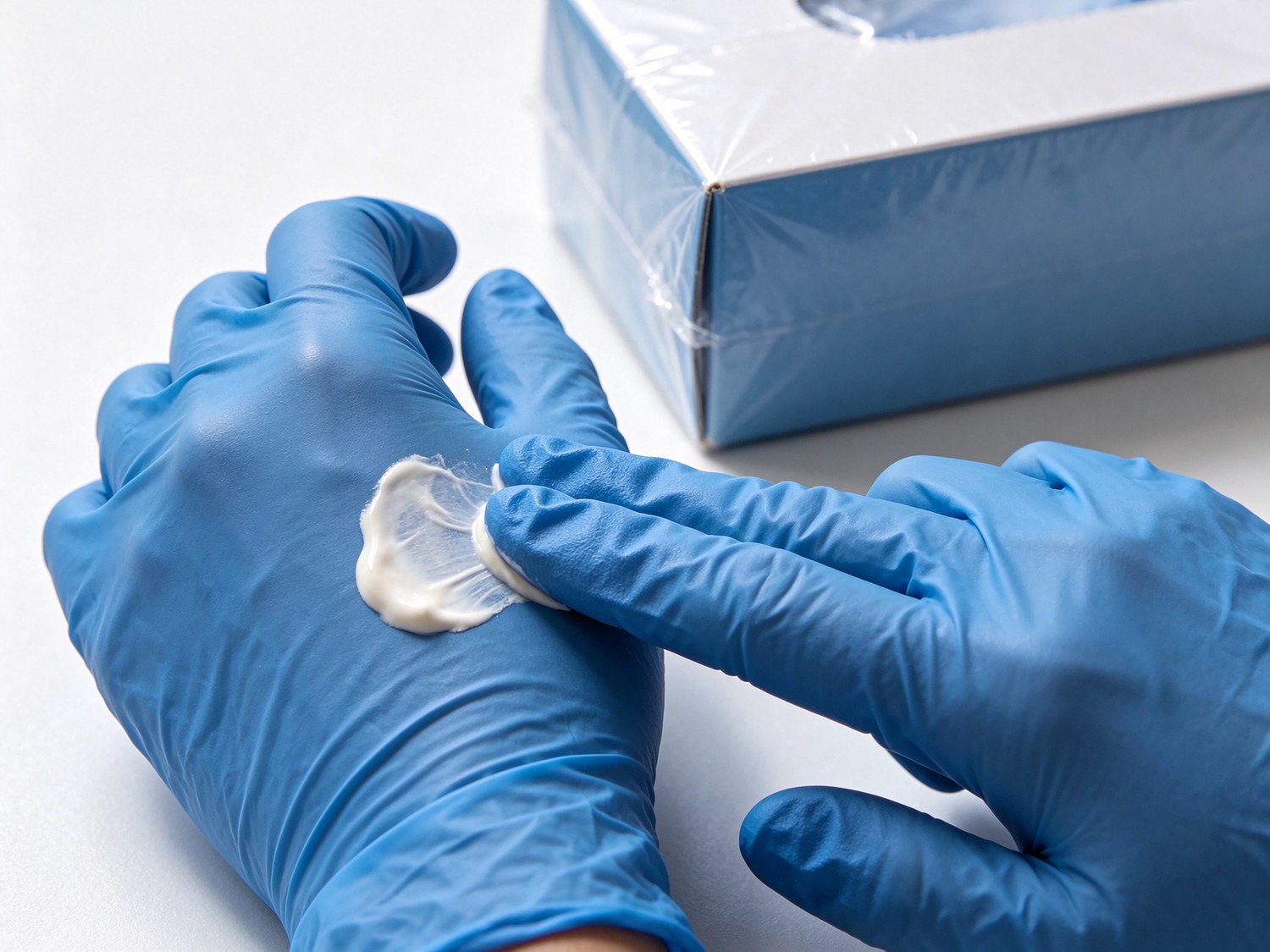
- Barrier cream on hands and forearms, and a well-fitted mask if you are sensitive to vapour.
- Lint-free wipes, never cotton, for nozzle cleaning — the exothermic reaction with cotton is an avoidable exposure.
If it happens: what to do next
See a doctor, and ask specifically about patch testing or referral to a dermatologist; photos of the flare-ups at their worst are useful evidence. Do not self-diagnose from social media, and do not assume a clear or carbon-free adhesive is safe — the monomer is still there. While waiting, stop extension work rather than reducing it, because reduced exposure still sensitises.
Reworking the business around it
Many artists who cannot continue extensions move to services with far less adhesive exposure and discover the business survives the change. Lash lifts and brow lamination involve no cyanoacrylate at all, and tinting involves minimal chemistry. The economics shift rather than collapse: extension clients return every two to three weeks, lift clients every six to eight, so the diary needs more clients at a higher price per slot — but each appointment is shorter, and the work is gentler on the body.
Convert existing clients honestly. Most will follow the artist rather than the service, and the ones who only want extensions should be referred to a colleague rather than talked into something they do not want. Adding a complementary service — brows, tinting, facials — fills the gap that fewer return visits create.
The client side of the same lesson
Artists are not the only people who react. Ask about previous reactions at every consultation, patch test where your insurer or protocol requires it, and take a client’s report seriously the first time. A client who mentions itching after the last set is giving you information, not complaining. Stopping early protects her lashes and protects your reputation, and it is the same advice you would give yourself.
Nobody enters this industry expecting to become allergic to it. The artists who come through it best are the ones who treated ventilation, gloves and early symptoms as part of the job rather than as an inconvenience.