
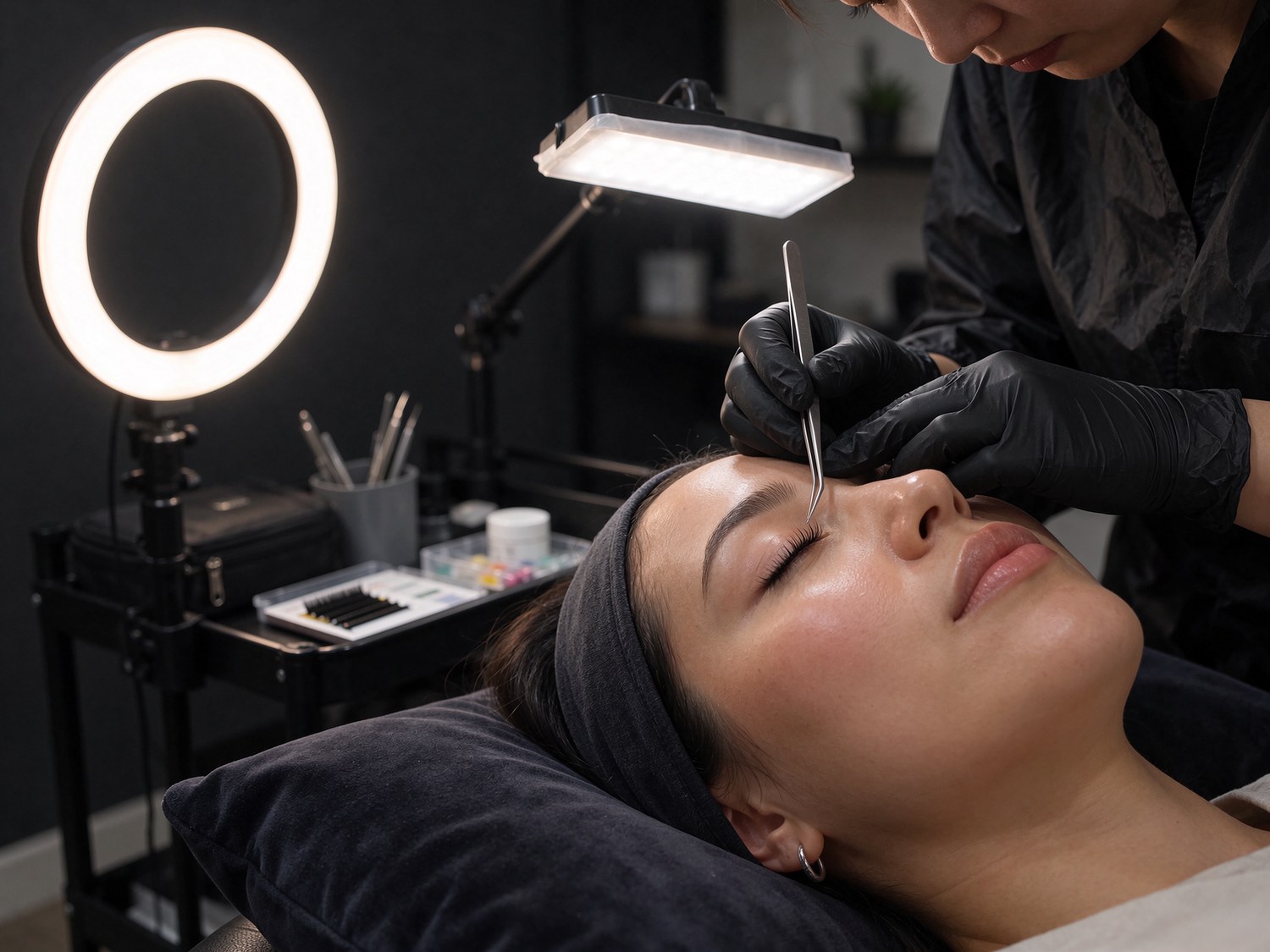
Lighting is the piece of equipment lash artists notice last and miss most. A good light shows you the finest hairs at the inner corner, exposes stickies before the client leaves, keeps your eyes comfortable for a five-hour day and makes your photos look professional. A bad one makes every set harder and every photo worse, and it is usually the reason a technically strong artist’s work looks flat on a phone screen.
>What lash work actually needs from a light
Four properties matter more than brightness:
- Neutral colour temperature. Around 5,000 K — daylight-neutral — shows lash and skin tone accurately without the blue cast of cool white office light or the orange cast of warm salon bulbs.
- Good colour rendering. A high CRI (90 or above) keeps brown, coloured and blonde lashes looking the shade they actually are, which matters when you are matching a set to a client’s hair or tinting.
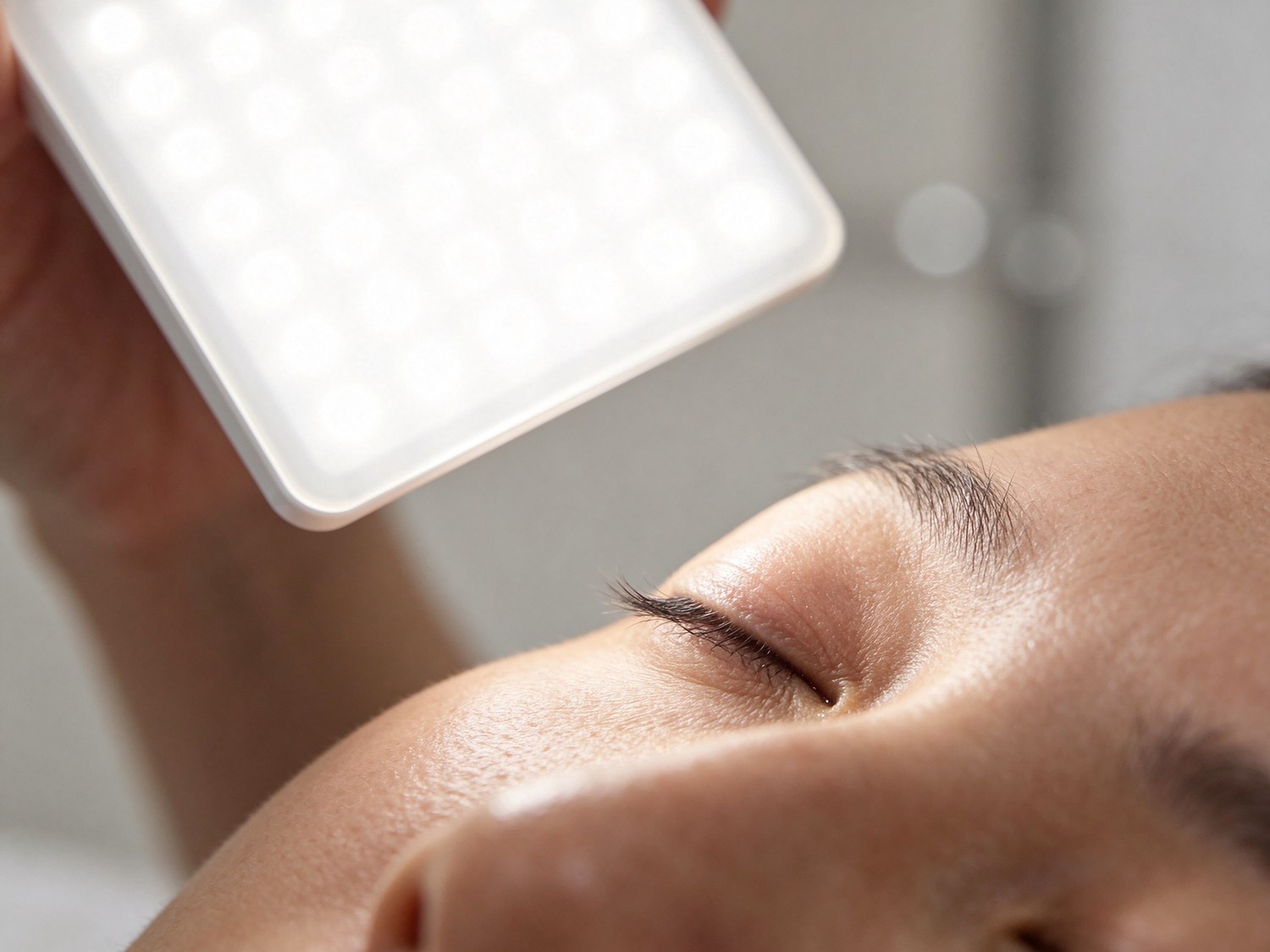
- Even, diffused fill. A large diffused panel lights the whole eye area; a narrow spot creates shadows under the brow and glare on the cornea, both of which hide the thing you are trying to see.
- Adjustability. Dimmable output and a flexible arm so the light can move to the angle you need rather than forcing you to move your body.
Three setups, and who each one suits
A clamp-on single-arm light. The most common first purchase: it clamps to a trolley, beauty bed or table, needs no floor space, and is fully adjustable. Ideal for a small room, a mobile kit or an artist who works in a corner of a shared studio. It is usually the least expensive way to get proper light on the eye area.
A stand or twin-arm light. Two light arms, or a taller stand, give you more reach and more even coverage, and make it easier to light both the working area and the client’s face. This is the setup for a fixed treatment room where the bed position does not change and the artist works long days.
A content rig with a phone holder. If filming is part of your marketing, buy a light that already carries the phone. A second arm with a mount removes the tripod problem entirely: you can record a set from the same angle you work from, without rearranging the room. Some models add a tablet holder and a mirror in the same footprint, which is genuinely useful for showing clients the finished result.
Where to put it
Position the light above and slightly forward of the eye, angled down toward the lid, so lashes are lit from the direction you are viewing them. Two practical rules:
- Keep the panel out of the client’s direct line of sight. They should feel comfortable with eyes closed for the whole appointment; glare through the eyelid is what makes clients flinch and water.
- Move the light, not your back. If you find yourself leaning in to see better, the panel is in the wrong place. Adjust the arm first, every time.
What to spend, and where to spend it
Prices split roughly into three bands. Entry-level clamp lights sit in the low hundreds and are perfectly capable for a single working station. Mid-range stand or twin-arm units around the low-to-mid three hundreds add reach, stability and better diffusion. Content rigs with phone and tablet mounts sit above that, typically in the four-hundred-plus range, and are worth it only if you genuinely film regularly.
Spend on the panel, not on the frame. An expensive stand under a cheap light is the wrong way round: the quality of the light on the eye determines what you can see, and what you can see determines the quality of the set.
Test before you buy
Where possible, stand at working distance and look at a brow under the light. Check three things: whether you can see the finest hairs at the inner corner, whether the panel throws a shadow across the brow bone, and whether the light reflects off the eye in a way that would bother a client. A light that passes those three tests at 25 cm will do the job, whatever the marketing copy says.
Good lighting pays for itself twice — once in fewer stickies and re-dos, and once in photographs that look like the sets you actually produce.