
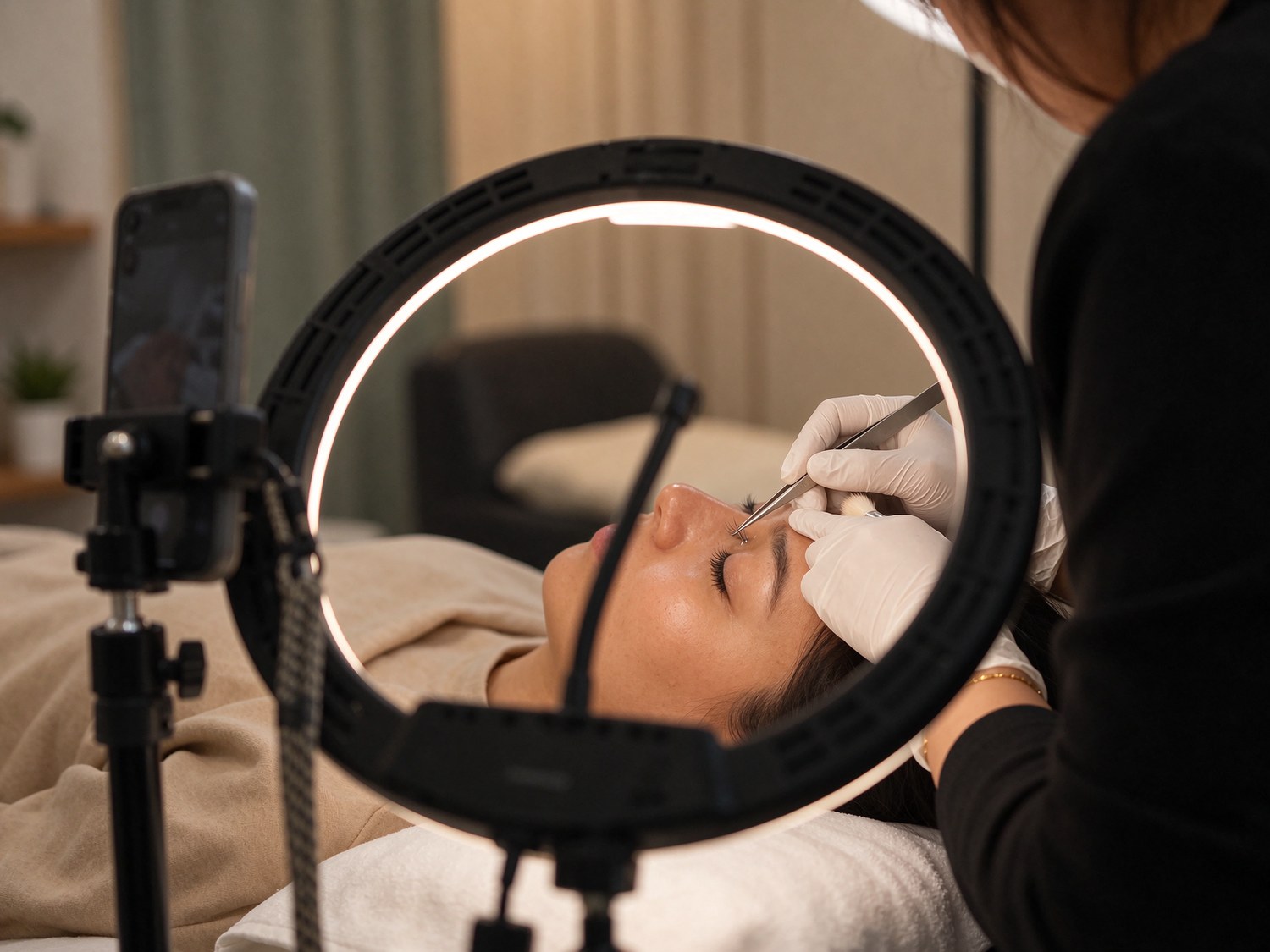
Good content does two jobs at once: it shows the standard of your work, and it makes a stranger feel that booking you would be straightforward. It does not need a studio, a videographer or an editing suite. It needs a light, a clean frame and a rhythm you can keep up on a busy week.
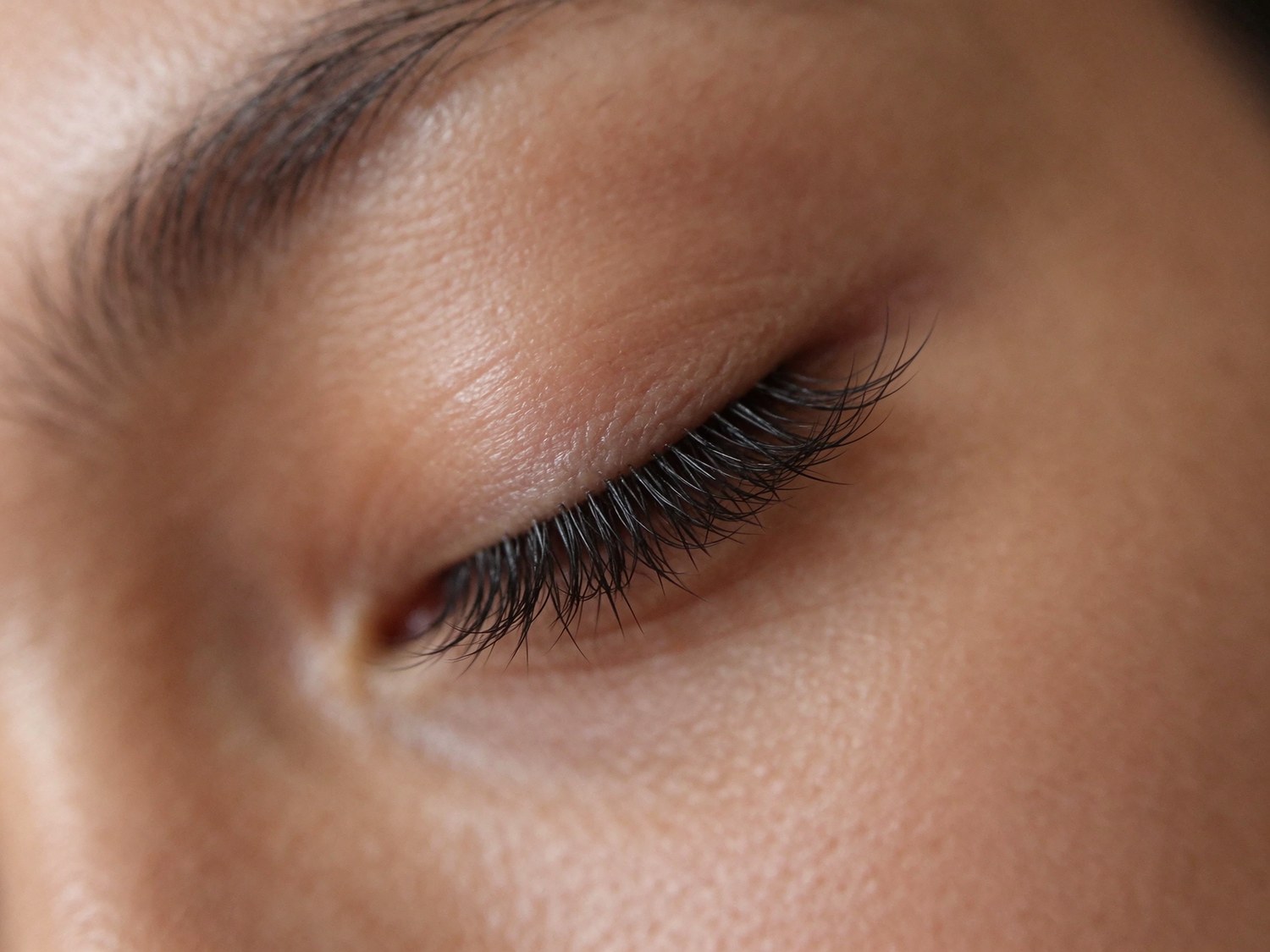
>Get the capture right before you worry about the edit
- Light first. Lighting makes or breaks lash content. Daylight is ideal; if the room has none, a decent ring light or beauty light does the job. Good light shows true colour, individual lash detail and a professional finish — bad light makes excellent work look amateur.
- Use a macro or close-focus mode for detail shots. Close-ups are where technique, retention and styling become visible. A phone held close and focused properly beats an expensive camera held at the wrong distance.
- Wipe the lens and check focus every single time. A smeared lens is the most common reason lash photos look soft. Blurry content distracts from the work and makes even a perfect set look mediocre.
Keep the frame clean and consistent
- Clean the background. A tidy, uncluttered backdrop keeps the eye on the lashes. A plain wall, a folded cloth or a small decorative rug laid over the lash cushion is enough to change the look of a whole set of photos without changing the room.
- Find two or three angles you trust. Repeat them. Consistent angles make your feed recognisable and your work instantly identifiable, and they cut the time you spend deciding how to shoot each client.
Edit lightly, or not at all
- Skip heavy filters. Small adjustments to brightness and crop are fine; skin-smoothing and colour-shifting filters are not. Clients are buying a real result and they will compare it to real lashes in the mirror. Honest images build trust and prevent the awkward gap between photo and reality.
- Shoot before and after. Transformation content consistently performs best because it demonstrates the change the service makes. A before shot is the only way a stranger can imagine the result on their own face.
Mix stills with video
Photos show the finished set; video shows how it happens. Short application clips, a full transformation condensed to fifteen seconds, or a client’s reaction at the mirror all give people a reason to keep watching — and watching is what turns an account into enquiries. You do not need to film everything: one clip per week, taken during a set you were already doing, is enough to keep video in the mix.
Post on a rhythm you can actually keep
Daily posting is not required and usually not sustainable for a working artist. Consistency is what matters: a predictable rhythm — two or three posts a week, at similar times — keeps the account visible and the audience engaged far better than a burst of content followed by a month of silence. Batch on your admin day: shoot five sets of photos, write five captions, schedule them.
Show the person behind the set
People book a person, not a service listing. Behind-the-scenes moments, a tip you would give a client anyway, the occasional honest post about a busy week — these make a stranger feel they know who will be holding the tweezers. Personality is the difference between an account that looks like a catalogue and one that looks like a business with a human being in it.
None of these habits is expensive. Most of them simply require deciding, before the client arrives, that this set will be photographed properly — and then doing it the same way next week.