
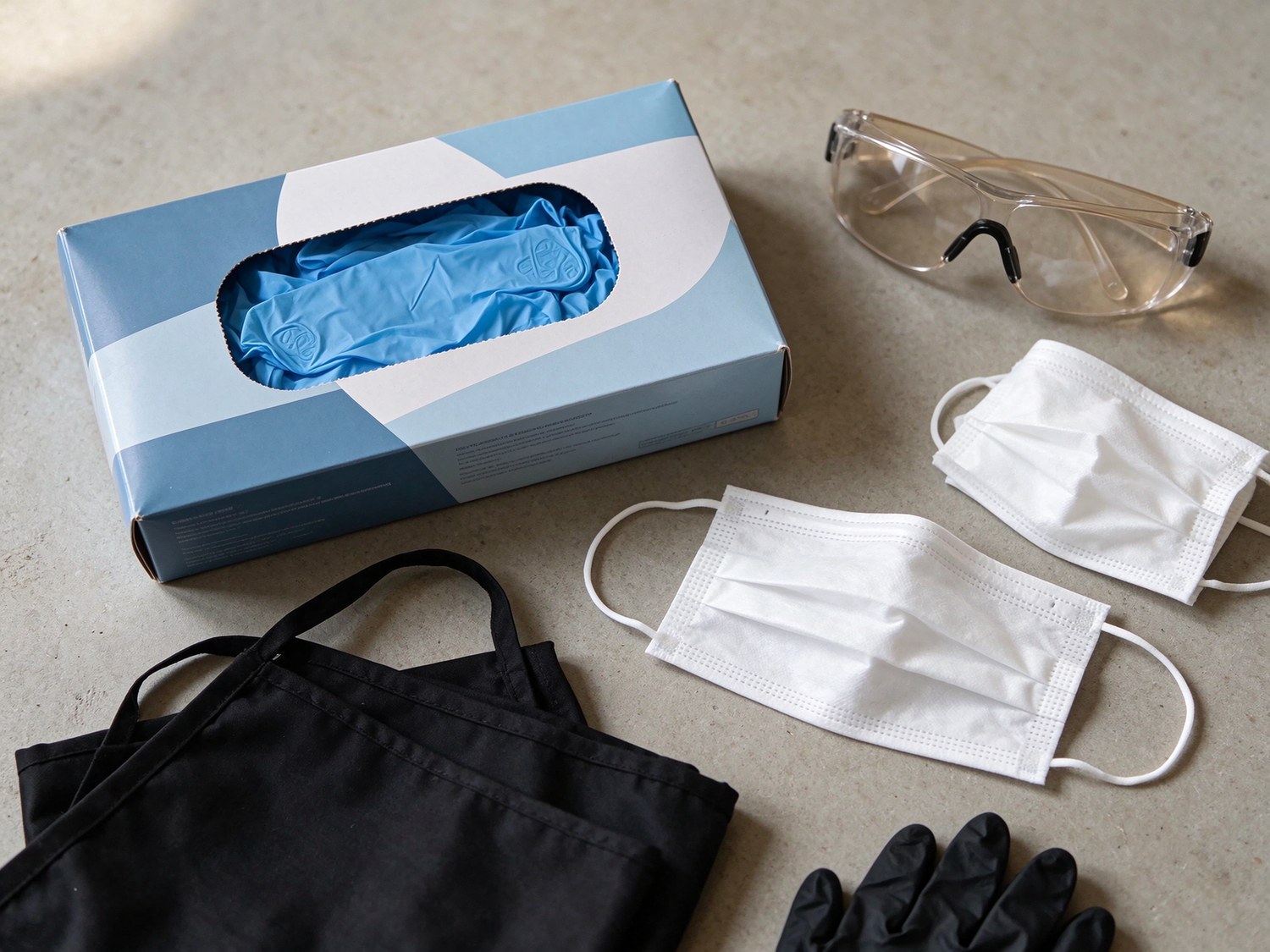
December compresses four weeks of demand into three, and the temptation is to shorten the parts of the service that no one can see. Protective equipment is usually the first thing dropped, and it is the one thing that decides whether a busy season ends with a full book or with a stylist out sick on the twentieth.
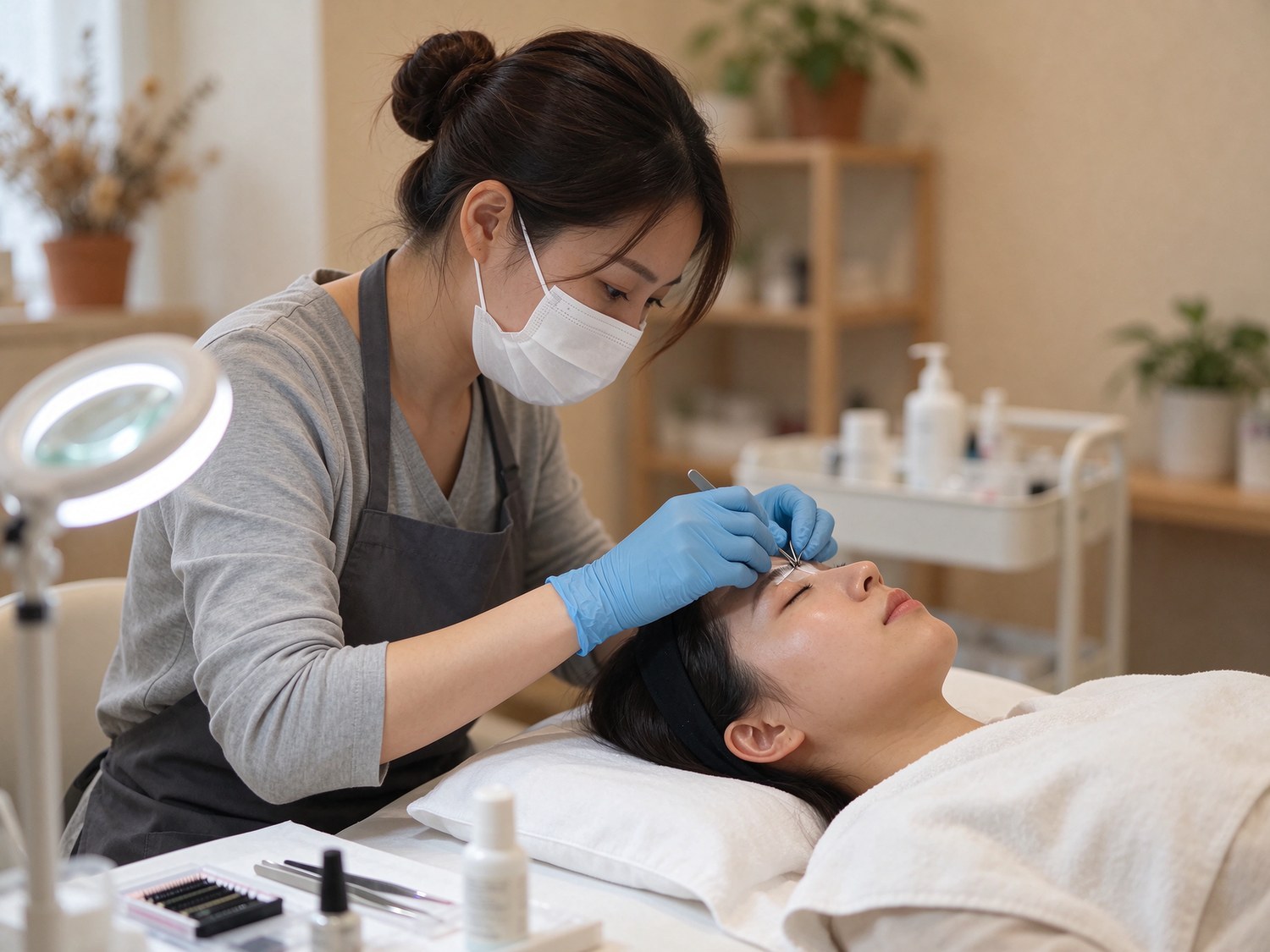
>What counts as protective equipment
Personal protective equipment is anything worn to keep a worker from contact with infectious material: gloves, a mask, eye protection, and a barrier apron or gown. In a lash room the exposure is specific. The stylist’s face sits a hand span from a client’s eyes and airway for two hours at a time, gloved fingers work within millimetres of the lid margin, and every appointment involves tape, patches and adhesive near mucous membranes.
The four items and how to use them
- Gloves. Nitrile, changed between clients and after any interruption that takes the hand away from the bed. Gloves are not a substitute for hand washing; wash before donning and after removing.
- Mask. A well-fitting surgical or respirator mask, worn for the whole appointment, not only while the client is talking. Holiday clients arrive with colds and children’s illnesses, and a stylist who works through a season unmasked will lose days to it.
- Eye protection. Glasses or a shield for the stylist during removal, cleansing and any step where adhesive or remover can flick, and for the client when a service involves vapour.
- Barrier apron or gown. Protects clothing from product, and more importantly keeps product off the forearms and lap where it can be carried to the next client.
Where the rush breaks the routine
Three failures repeat every December. Gloves come off to answer a phone or open a drawer and never go back on. The mask drops below the nose once the client is settled. The bed is re-set between clients without a full surface disinfection, because the next client is already in the doorway.
Fix them by design rather than discipline. Put a box of gloves on each side of the bed, so reaching for one is shorter than reaching for the door. Build ten minutes of turnover into the holiday schedule instead of five, and hold the slot even when the waiting room is full. Assign one person to reset the room while the stylist writes notes, so cleaning is not competing with the next client’s arrival.
Holiday scheduling that leaves room for the basics
A book that runs back-to-back for ten hours guarantees shortcuts. Cap the day at the number of full sets the stylist can do with proper turnover, and put a fifteen-minute buffer at the end of each appointment. Offer the early and late slots as premium bookings rather than as obligations, and keep one slot per day unbooked for the client who calls in a panic on the twenty-third. A stylist who has time to change gloves, wash hands and reset properly will do it; one who does not, will not.
The commercial argument is just as direct. A respiratory illness caught in the studio costs three to five appointments and every referral they would have produced. A glove habit costs pennies per client. The equipment is cheap; the absence is not.