
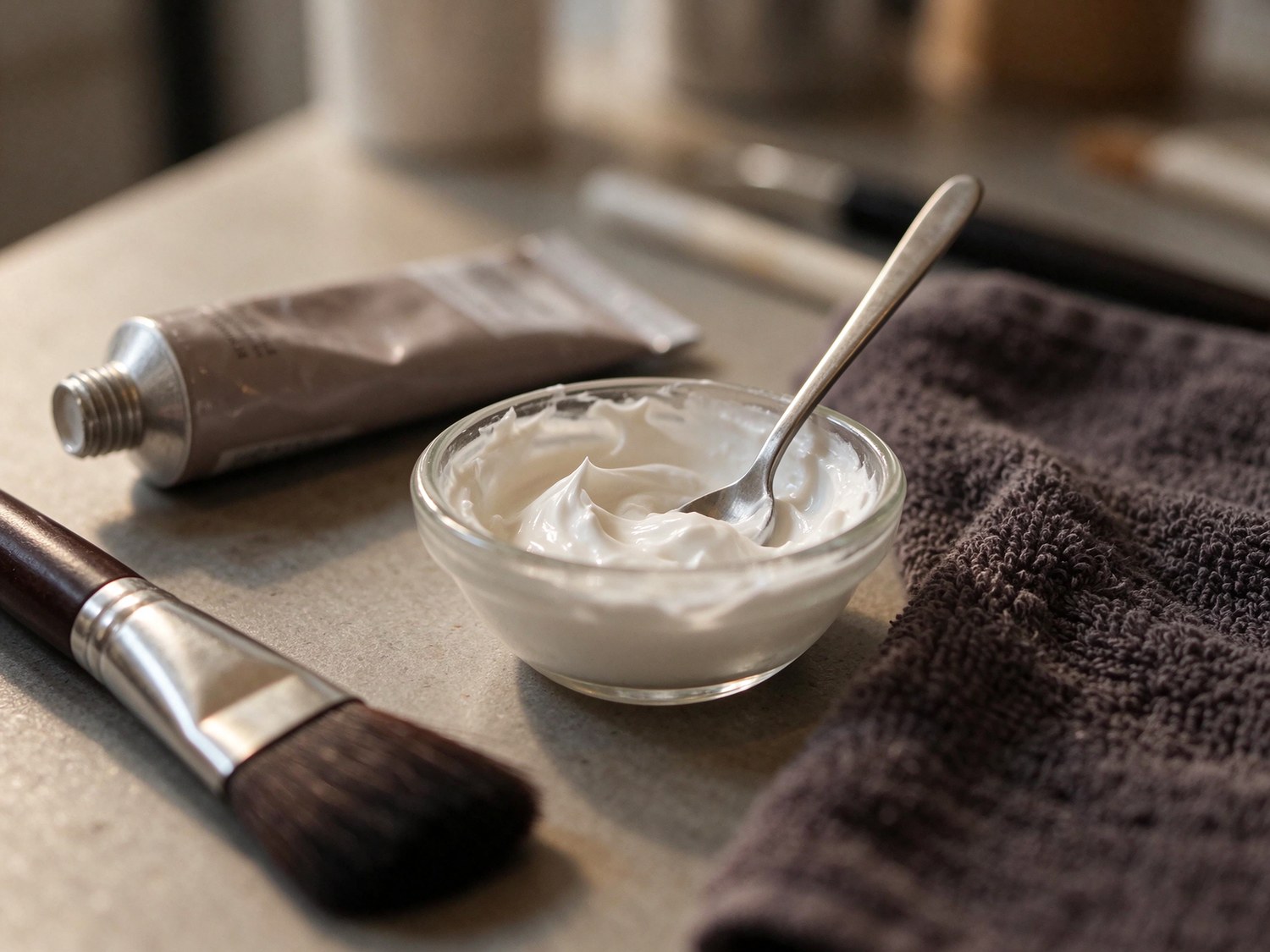
A brow tint is only as predictable as the two products mixed in the dish. Shade choice gets the attention, but the developer decides how that shade develops — and a mismatch between tint and developer produces the kind of result that looks patchy, too warm or too flat, no matter how carefully the brows were mapped.
>What the developer is doing
Brow tint develops through oxidation. The developer supplies hydrogen peroxide, which opens the hair cuticle and allows the dye intermediates to combine into colour. Without it, nothing happens; with the wrong concentration, colour develops unpredictably. The developer is not a neutral mixer — it is half of the formula.
Developer strength refers to the percentage of hydrogen peroxide. Many professional brow systems specify a 3% developer, equivalent to 10 volume, though requirements vary by manufacturer and by formula. A stronger developer does not automatically give a darker brow; what it does is speed and intensify the reaction, which can push a shade warmer or produce an uneven result on coarse or resistant hair. Following the tint manufacturer’s stated pairing is the only reliable route to repeatable colour.
Cream or liquid, and why compatibility matters more
Cream developers are thicker and stay where they are placed, which helps when you are working along a brow outline or through the front of the brow where precision matters. Liquid developers mix more fluidly and are easier to combine evenly with a powder or cream tint, but they can migrate on a client who moves or talks.
Neither texture is better in itself. What matters is that the developer belongs to the same system as the tint. Developers from different ranges are not interchangeable even when the percentage matches, because stabilisers, buffers and thickeners differ. Artists who borrow a developer from another line — or top up a tint with whatever bottle is on the trolley — are the ones who get unexpected green, ash or overly warm results and blame the shade.
Mixing and timing discipline
- Confirm the developer is the one specified for that tint.
- Measure rather than eyeball the ratio; a slightly thick or thin mix changes how evenly the product sits.
- Mix to the consistency described in the instructions, with no dry pockets and no lumps.
- Process for the stated time and do not extend it to chase a darker result. Extending the time stains the skin unevenly and increases irritation.
- Mix fresh for each client. A pre-mixed paste has already begun to react.
Consistency between appointments depends on this discipline far more than on artistic judgement. If the mix is the same every time, a shade that looked too warm last month can be adjusted deliberately rather than guessed at.
Classic and hybrid tints finish differently
Classic tints colour the brow hair only. The skin beneath stays natural, so the result reads as polished rather than filled, and it suits clients with good density who simply want shape and depth to register more clearly. On sparse brows, a classic tint defines what is there but cannot create the illusion of hair that is not.
Hybrid tints colour the hair and leave a visible stain on the skin. That stain is what allows an artist to draw an outline, soften a sparse tail and create the look of fullness through a gap. It is the better choice for clients with uneven density, scar tissue, or brows that disappear in photographs, and it layers well when a deeper stain suits the service plan. The trade-off is commitment: a skin stain fades over a few days to a couple of weeks depending on skin type and cleansing routine, so the brows look strongest immediately after the appointment.
Skin undertone affects the finished shade. The same formula reads cooler on pale, translucent skin and warmer on olive or deep tones, which is why the consultation should include the skin, not only the hair.
Choose the shade, not the strength
Clients often ask for “darker” when what they want is definition. The answer is usually a shade adjustment or a hybrid finish, not a stronger developer. For a soft result, pick a shade one step from the natural hair colour and keep the developer as specified. For stronger definition, go a shade deeper, or choose a hybrid and control the stain at the outline. Changing developer strength to chase intensity is the least predictable way to get there.
Application and aftercare
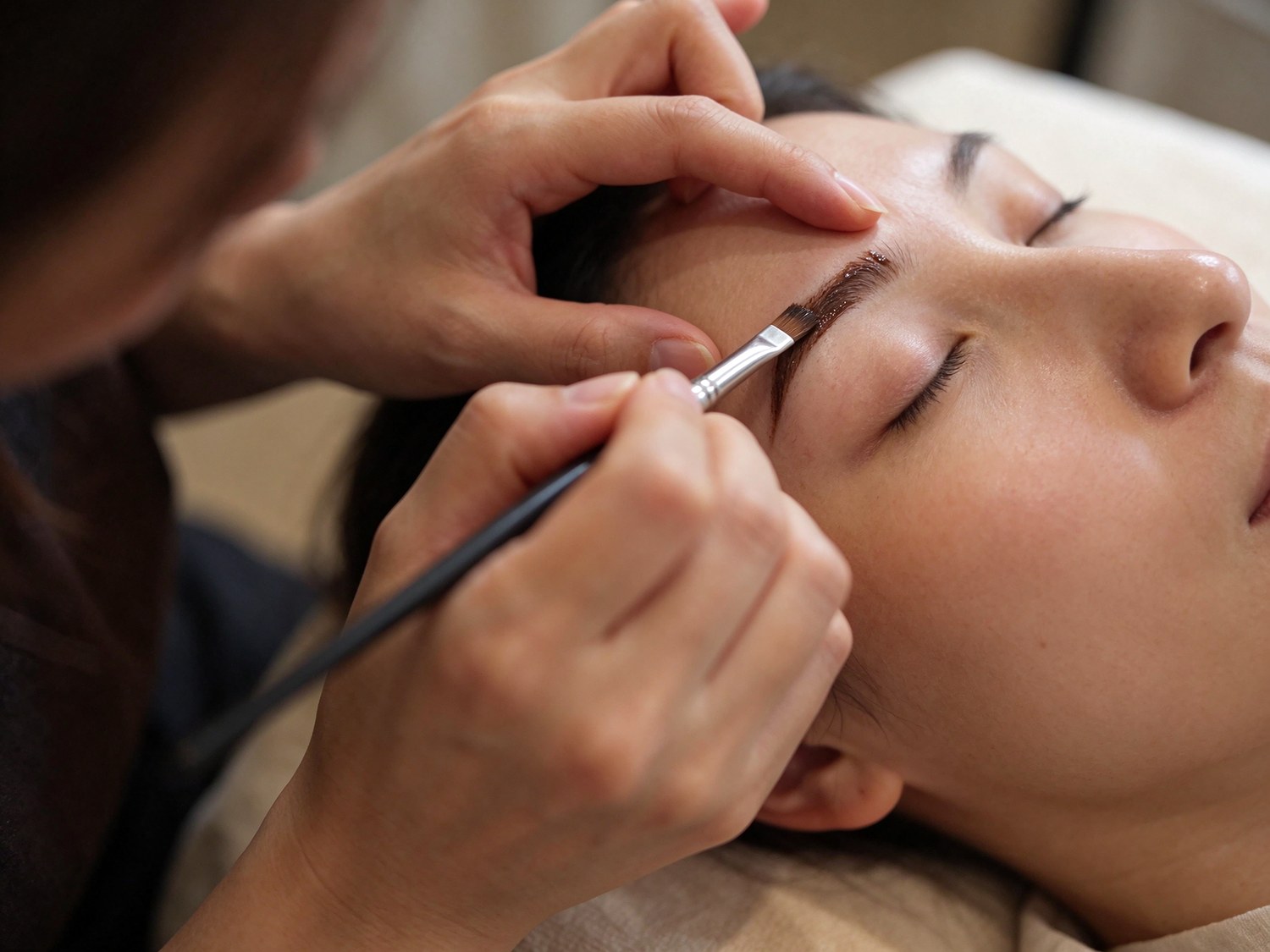
Patch test according to your protocol, usually 48 hours before a first tint. Cleanse and dry the brow area, map the shape, then apply from the tail forward so the finer hairs at the front receive less product and process for less time. Remove thoroughly with damp cotton or a soft sponge, and check the skin for staining before the client leaves.
For aftercare, keep the brows dry for the first 12 to 24 hours, avoid oil-based cleansers, scrubs and exfoliating acids over the area for a couple of days, and use sunscreen on the face rather than over the brow hairs. Explain that a hybrid stain will soften faster than the hair colour, so a slight fade by the end of the first week is normal.
When the result goes wrong
Patchy colour usually means uneven application or hair that was not fully clean. Too warm a result usually means the shade, not the developer, needs adjusting. A sting or redness during processing points to a compromised barrier or an over-strength mix, and the service should be removed early rather than finished. Record what you used, in what ratio, and for how long — the notes are what turn a one-off surprise into a decision you can repeat.