

Finishing a lash course and getting the treatment room set up is the easy part. The hard part is turning friends and family into a diary full of paying regulars who come back every two to three weeks without being chased. Growth rarely comes from one big marketing push. It comes from a handful of small, repeatable habits that make you easy to find, easy to trust and easy to book.
>Start with the people who already know your work
Word of mouth is the oldest channel in the business and still the one that converts best, because a personal recommendation removes the risk of trying someone new. The people who let you practise already have an opinion of your work — ask them directly for one thing: a name. A specific ask works far better than a general “tell your friends”. Something like “if you know one person who has been thinking about lashes, send them my booking link” gives them a task they can finish in ten seconds.
Referrals also need a reason to happen now rather than eventually. A simple structure — a credit for the friend on their first full set and the same credit for the person who sent them — turns goodwill into an active loop instead of a compliment.
Show the work where people are already looking
Almost every new client researches on a phone before they message anyone. Your social account is your shop window: finished sets, short clips of application, the occasional piece of personality. It does not need to be polished or posted daily, but it does need to look current — an account whose last post is five months old reads as a closed business, however good the lashes in the grid are.
Put the practical information where it can be found without a conversation: service list, price list, location, how to book. The fewer steps between seeing a set and sending a message, the more enquiries you will get.
Collect reviews in the places that decide bookings
Reviews do the persuading that you cannot do yourself. Three places are worth the effort:
- A business profile on the main search and map platforms. Claim it, add accurate opening hours, photos and a booking link. This is often the first thing a stranger sees, and reviews left here carry real weight when somebody is comparing two artists.
- A social business page with recommendations turned on. Clients can leave public feedback that their own friends will see, which multiplies the value of a single good review.
- Your own website. If bookings, prices, work and reviews live in one place, you look established and you stop answering the same questions in direct messages.
Ask for the review at the moment of highest satisfaction — right after the client has looked in the mirror — and make it effortless by sending the exact link. A short, specific request gets far more responses than a generic “please leave a review”.
Answer messages like a business
Speed decides a remarkable number of bookings. Set an automatic reply that confirms you have seen the message and states when you will answer properly, then protect two or three short windows in the day for enquiries. Keep those windows inside your working hours: a client who gets an answer at midnight learns that you are always available, which is not a reputation you want to build.
A reply that answers the three questions every enquiry contains — how much, how long, when can I come — saves a whole exchange. Send the price, the appointment length and two concrete time slots in the first message.
Use introductory offers deliberately
Discounts work, but only when they are aimed at the behaviour you actually want. Three structures tend to pay for themselves:
- Bundle the first set with the first infill. A percentage off when both appointments are booked together converts a one-off trial into a repeating client, which is worth more than the discount.
- A two-sided referral credit. The friend gets a reduction on their first full set and so does the client who referred them. Both sides have a reason to mention it.
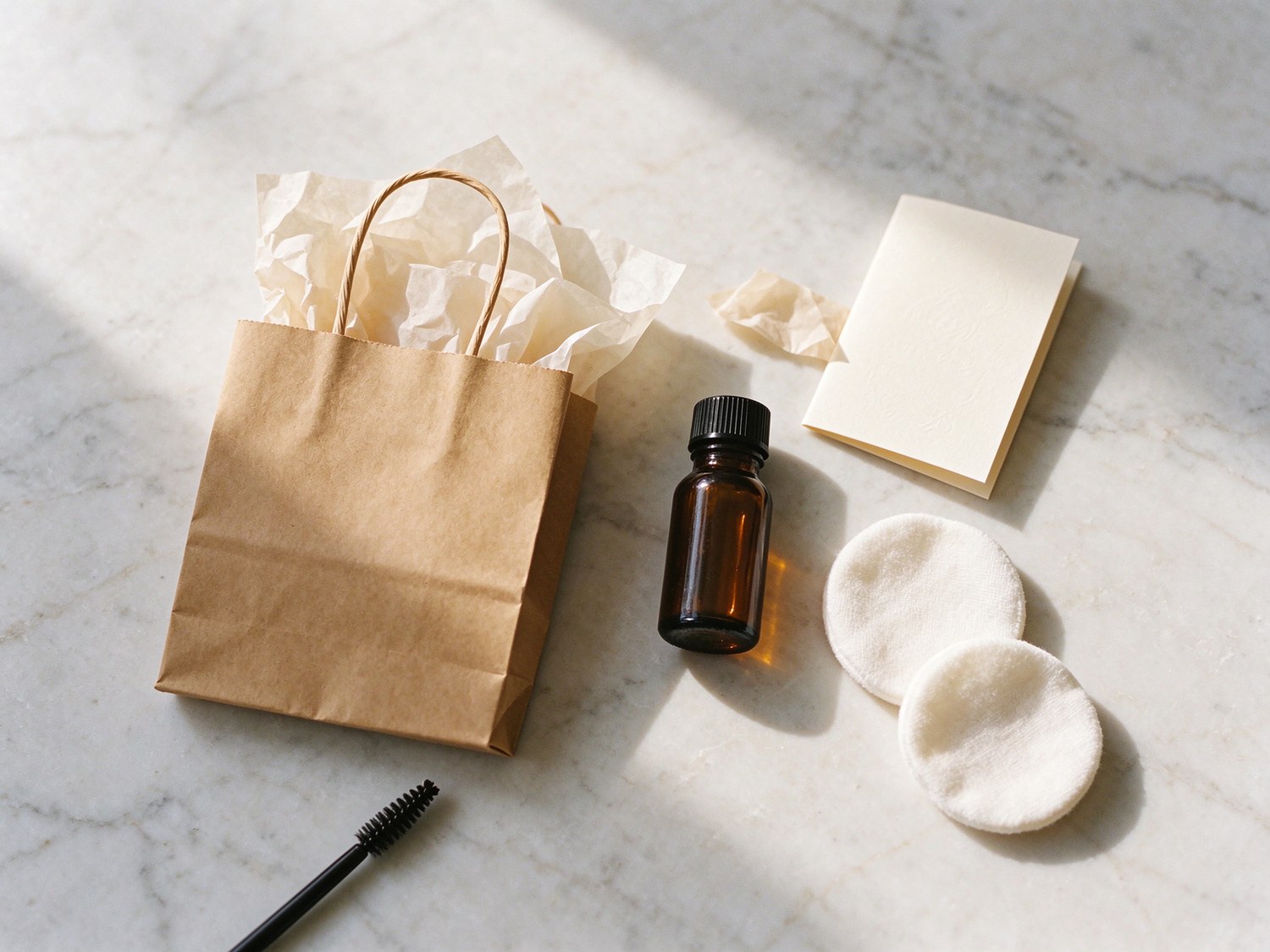
- A complimentary aftercare bundle for first-month bookings. A spoolie, a small oil-free cleanser and a written aftercare card cost little, get used daily and keep your aftercare standard in the client’s hand rather than in a message they will not re-read. If they like the products, some will buy the full size later.
Run the numbers before you publish any offer. If a discount removes more margin than a returning client is worth over three visits, it is not an offer, it is a loss. Time-limited and clearly bounded promotions protect your price list from becoming a permanent sale.
Make the first appointment earn the second
The cheapest client to win is the one already in your chair. Finish every set by walking through aftercare, showing the client how to cleanse and brush, and then booking the infill before they get up. A two to three week return is normal for a healthy set, so the date can be agreed while the result is still on their face and the decision is easy.
If they hesitate, offer a reminder rather than a booking: a message at the two-week mark with a link does most of the work. Either way, the relationship continues without you having to start a new conversation from scratch.
Give it twelve weeks of consistency
None of these habits produces a full diary in a fortnight. What they do is compound: one review becomes four, four become a profile that ranks, referrals start arriving without prompting, and the clients who were always going to be regulars stop drifting away between appointments. Pick two items from this list, run them properly for three months, and add the next one only when the first is automatic.