
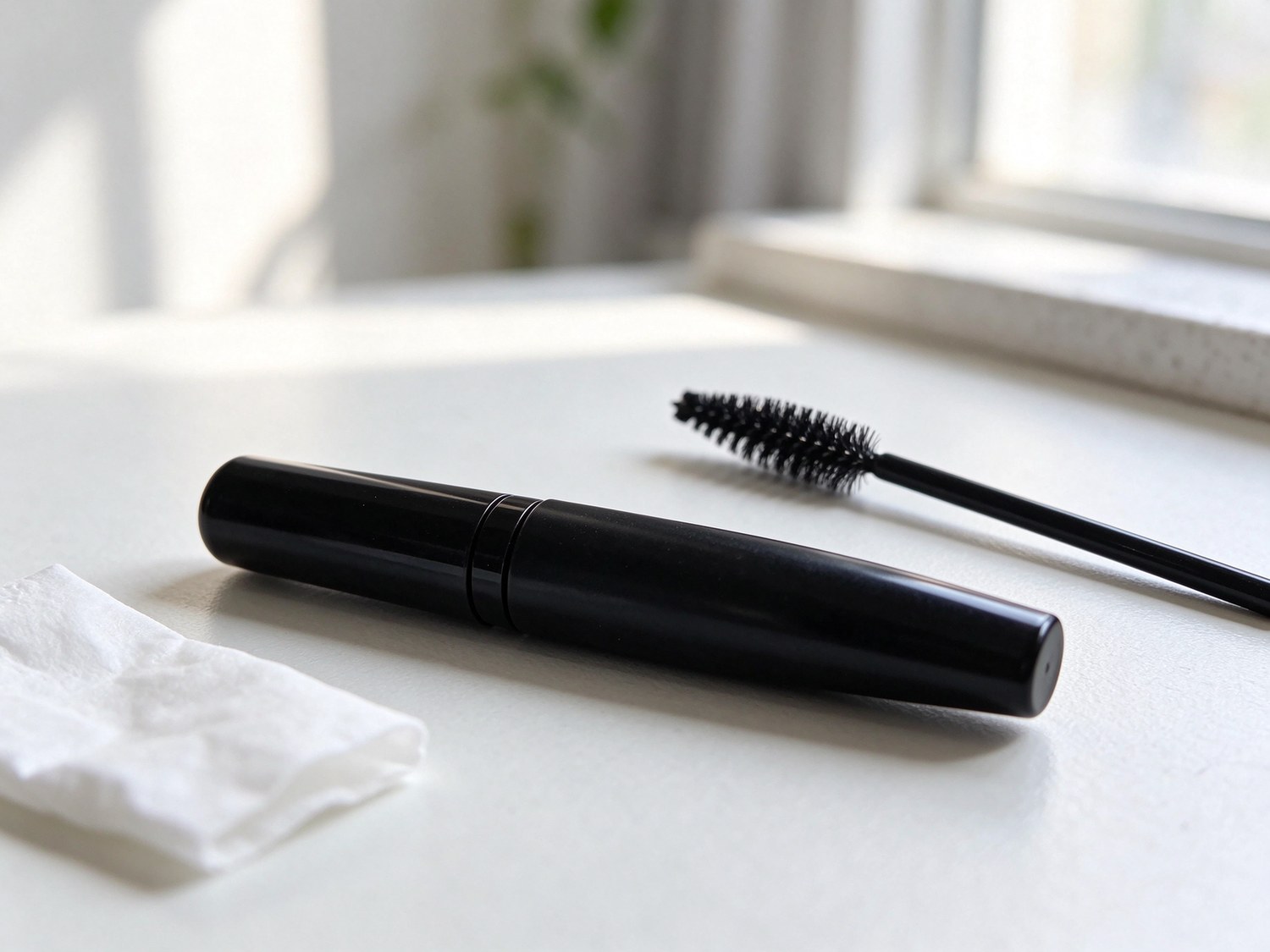
Most clients who wear extensions are not asking for permission to wear mascara. They are asking because a set that is two weeks old looks thinner than it did on day one, and a coat of mascara feels like the fastest fix. The problem is not mascara itself. The problem is which formula, where it goes, and what it does to the adhesive bond underneath.
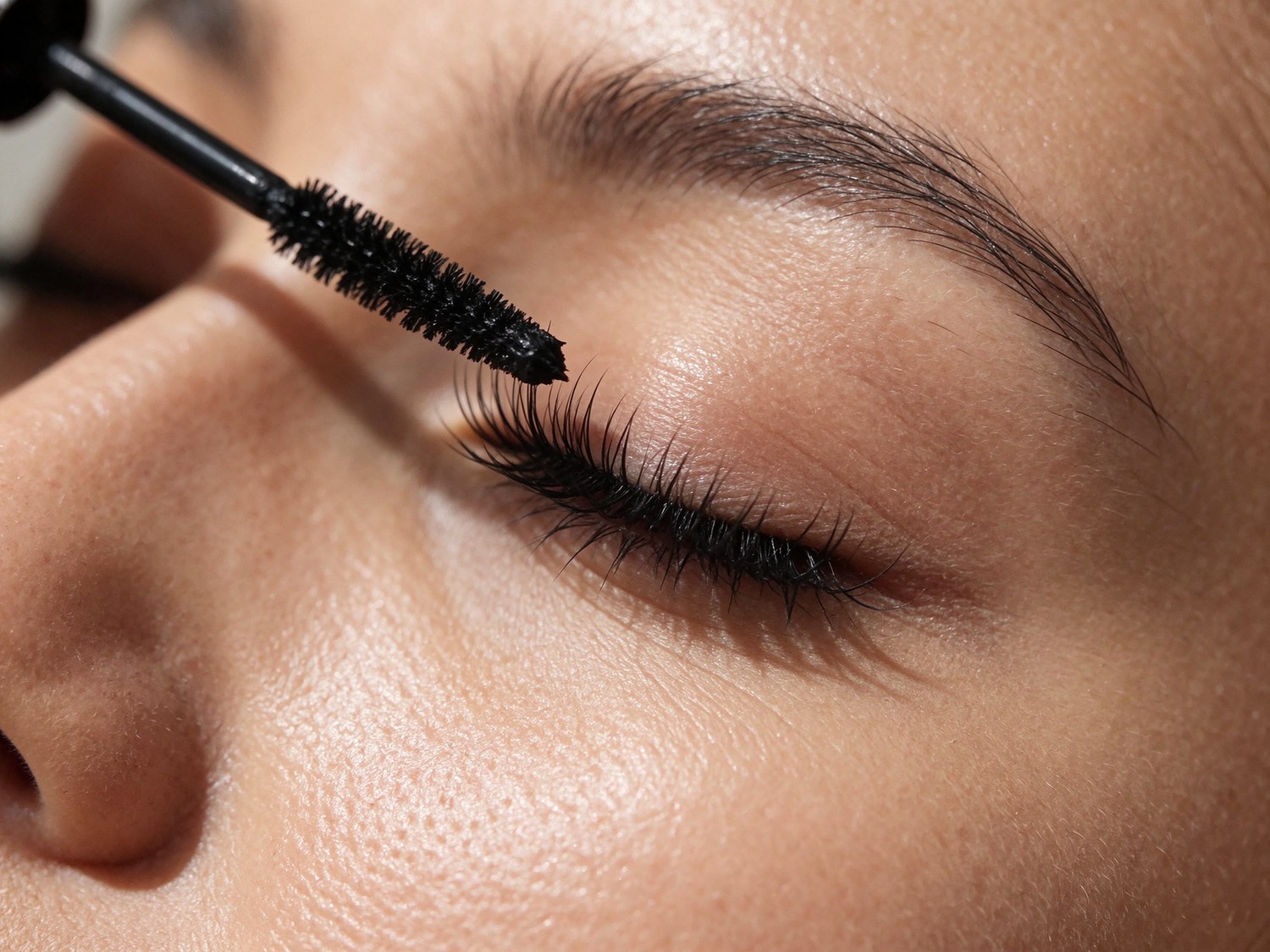
>Why the formula decides the outcome
An extension set is held together by cured adhesive at the base of each natural lash. That bond is strong in shear but sensitive to anything that can soften, swell or slip underneath it. Conventional mascaras are built around waxes, oils, film formers and solvents, and many waterproof versions lean harder on oils and water-resistant polymers. Used over extensions, those ingredients can travel into the attachment point, soften the cured adhesive and let the extension rotate or slide off the natural lash.
An extension-compatible mascara is formulated and tested against that bond. It is usually water-based, lighter in pigment load and designed to release with water rather than with an oil-based remover. The practical difference shows up in two places: how the set looks after removal, and how many extensions are still attached at the next appointment.
What to apply, and where to stop
The single most damaging habit is starting at the root. Pigment and wax collect at the attachment area, build a small collar around the base and gradually weaken the bond, and that collar is very hard to clean out without pulling.
- Start at the middle. Load the wand, then begin the stroke halfway up the extension and brush upward.
- One light coat. A second coat adds weight, clumps tips and makes removal harder without adding visible density.
- Never touch the base. If the root looks pale, that is a design or refill issue, not a mascara issue.
- Comb through. A clean spoolie right after application separates tips before the film sets.
When mascara is the wrong tool entirely
On volume and mega-volume sets, mascara does more harm than good. Those looks depend on open, feathery fans; a coating of mascara binds the fan tips together, closes the fan shape and turns a dimensional set into a heavy, clumpy line. The same applies to any set built from pre-made fans, where the fan geometry is the product. If a client wants more definition on a volume set, the answer is a darker diameter at the base, a slightly stronger curl, or a tighter refill schedule, not a mascara wand.
Classic sets are more forgiving, especially in the last week before a refill, and that is where a compatible formula earns its place. It is also the practical way to even out lower lashes when the top line is full and the bottom looks bare: a light stroke on the lower lashes, kept well away from the upper attachment points.
Removal is where most damage happens
Clients rarely damage a set while applying mascara; they damage it while taking it off. Rubbing, tugging and oil-based removers are the usual culprits. A compatible formula should come away with a lash-safe foam cleanser, warm water and gentle downward strokes with a soft brush, followed by a rinse and a blot dry. If a client needs a remover, it should be oil-free and labeled for extension wear.
Build the routine into the aftercare instructions rather than leaving it to guesswork:
- Cleanse morning and evening with a foam formulated for extensions.
- Use a clean spoolie to separate, never to scrape.
- Skip oil-based removers, cleansing balms and two-phase makeup removers around the eyes.
- Blot the lash line dry, then air dry before sleeping.
What to watch for between refills
Extensions that have started to twist sideways, sit at an odd angle or feel rough at the base are telling you the bond has already been compromised. Do not try to clean them back to health with more product. Remove the affected extensions, cleanse the natural lash properly, and check whether the client’s home routine includes an incompatible mascara or remover.
Retention is a chain, and mascara is one link in it. A compatible formula, applied from the middle up, removed with a foam cleanser and paired with a realistic refill interval will protect the set far better than any amount of careful brushing afterwards. LebestPro’s extension-safe cosmetics are built around that same principle: nothing that touches the lash line should be able to soften the bond beneath it.