
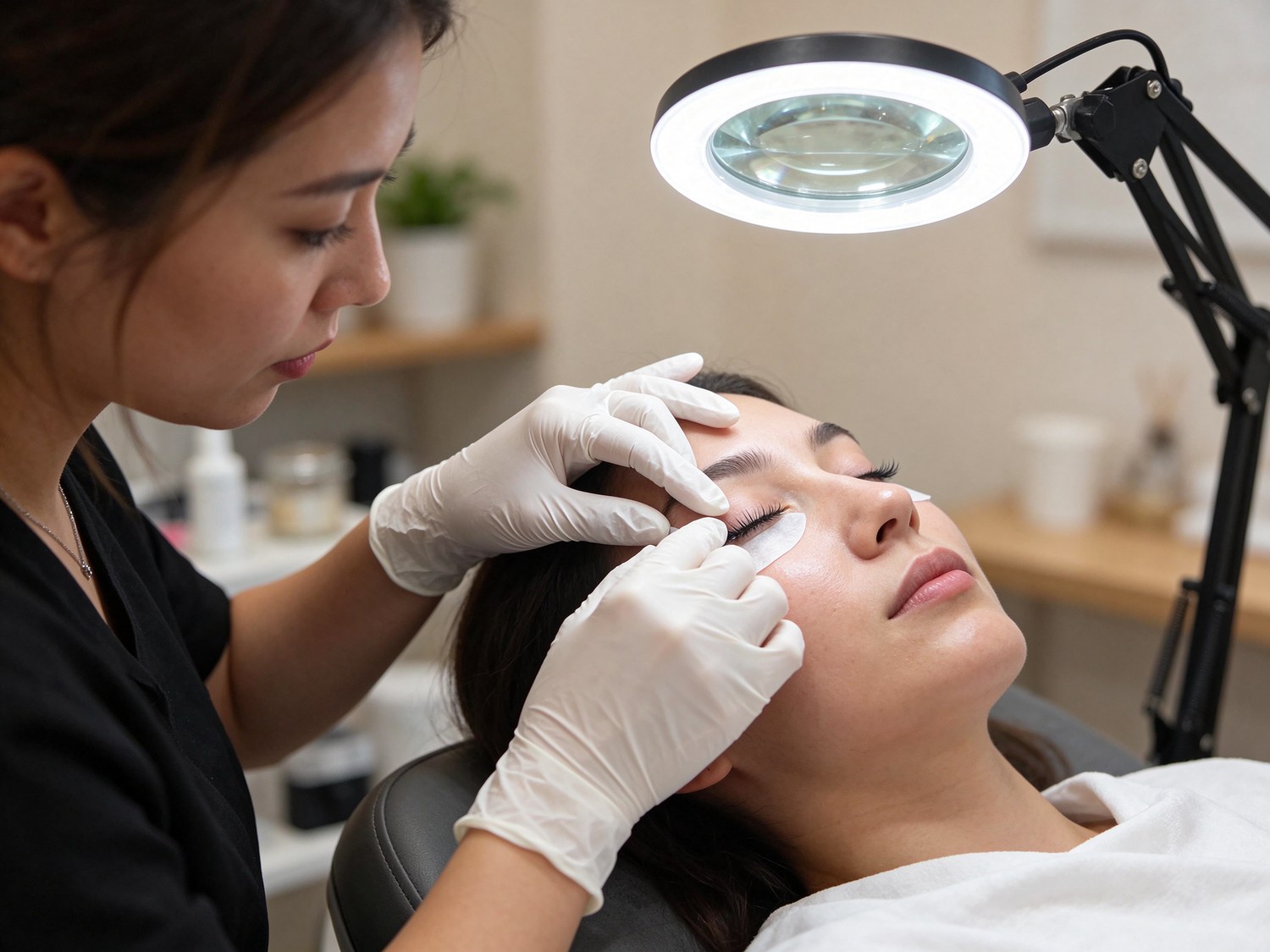
Most problems that show up at a lash appointment were decided before it. A client with an active eye infection, a sensitivity to acrylates or a habit of rubbing her eyes at night will have a difficult set no matter how good the application is. Screening is not paperwork; it is the step that protects the client, the stylist and the studio’s reputation.
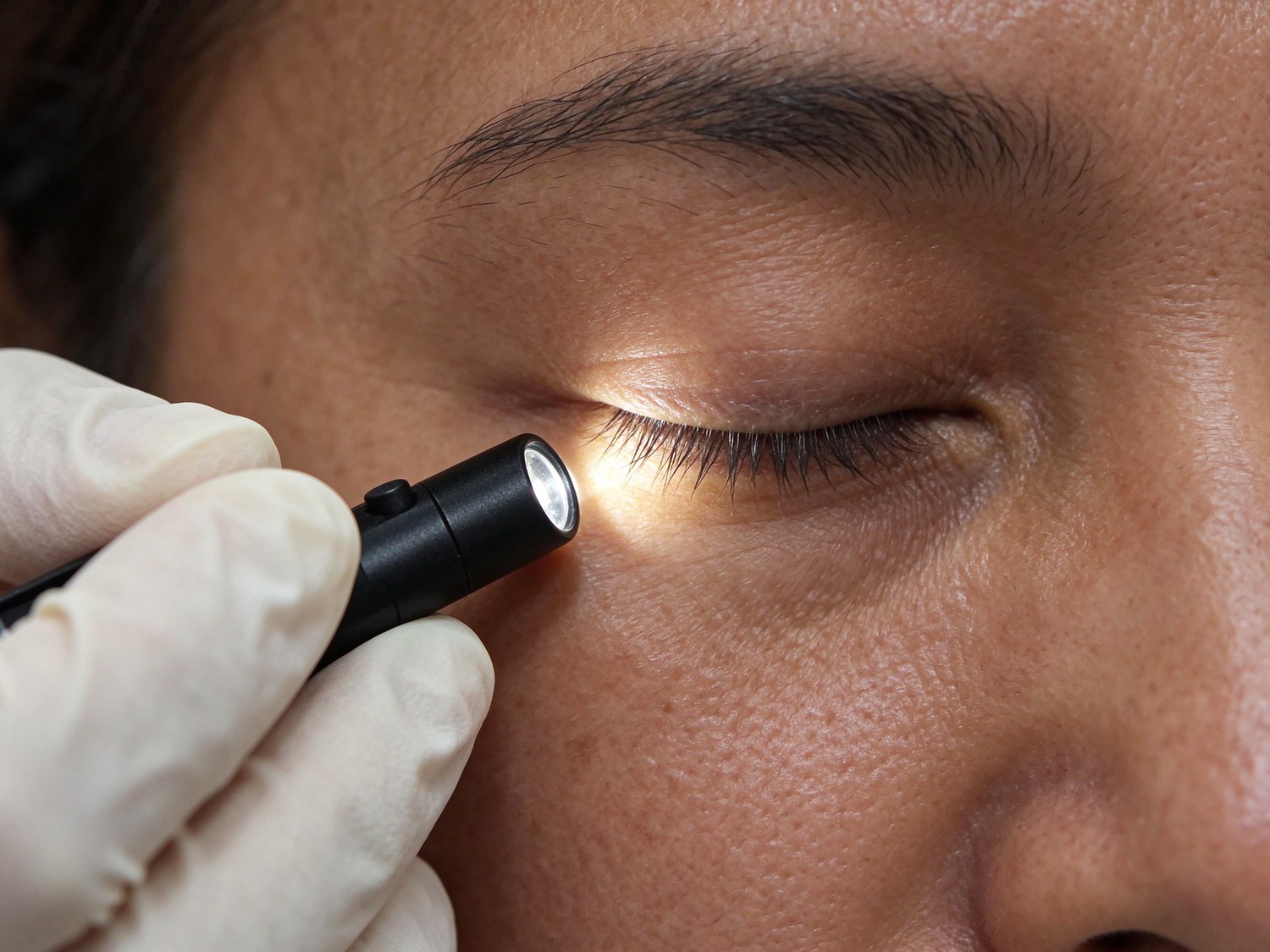
>Start with the eyes, not the lashes
Ask about eye health before anything else. The set can wait; an infection cannot.
- Any redness, swelling, discharge, flaking or broken skin? Postpone until it has cleared and been reviewed by a doctor if needed.
- Blepharitis, styes, dry eye or recurrent conjunctivitis? These need a conversation, not an automatic no, but the client should understand that extensions may aggravate a flare.
- Recent eye surgery or a recent procedure? Respect the recovery window given by the surgeon, and never work on an eye that is still healing.
- Contact lenses? Ask the client to bring glasses and remove lenses before the appointment; the first hours after application are not the time to reinsert them.
None of this is a diagnosis. The job is to notice, ask and refer, not to name a condition.
Allergies and sensitivities
Adhesive is built on cyanoacrylate, and acrylates are a known sensitizer. A client who reacts to nail adhesive, long-wear cosmetics or waterproof formulas may react to lash adhesive too. Ask directly:
- Have you ever had a reaction to nail glue or acrylate products?
- Do you react to waterproof makeup, aloe, coconut oil or fragranced eye products?
- Do you carry an adrenaline auto-injector or have a history of severe allergic reaction?
A positive answer does not automatically rule out extensions, but it changes the plan: patch test first, use the mildest suitable adhesive, keep the appointment short and have a removal path ready. A client with a history of anaphylaxis should be cleared by her doctor before any patch test.
Medical context and medication
Some conditions affect the service rather than forbid it. Pregnancy changes how long a client can lie comfortably on her back and how sensitive her eyes feel; it does not change the adhesive, but it does change positioning and appointment length. Clients in active cancer treatment should consult their oncologist, because skin and lash sensitivity vary enormously. Blood thinners and some supplements increase bruising at the lash line. Isotretinoin and similar treatments dry the skin and lashes and can make both application and retention harder.
Ask about recent cosmetic work as well: fillers, injectables, chemical peels, laser, microblading and brow waxing all have recovery windows, and the lash line is close enough to matter.
The lashes themselves
Look at density, length, gaps and the direction of growth before promising a look. Three specific situations need a different recommendation:
- Very sparse or damaged lashes. A heavy set will not fix gaps and may accelerate loss. Suggest a lighter map, a serum, or a lift instead.
- Recent tint, perm or lift. Wait at least twenty-four hours, and know that chemical services can leave lashes more fragile.
- Recent removal with solvent. Wait twenty-four hours and cleanse thoroughly before a new full set.
Willingness to comply
The last screening question is behavioural, and it is the one stylists skip. Can the client lie still with her eyes closed for two to three hours? Can she keep water, steam, heat and makeup off the set for the first hours? Will she cleanse daily and come back for refills on schedule? A client who cannot commit to aftercare will lose extensions regardless of technique, and saying so at the consultation is kinder than saying it at the complaint.
Before the appointment
Send a short pre-care list with the booking confirmation: arrive with clean lashes, no eye makeup, no facial oils or heavy creams around the eyes for twenty-four hours, no lash curler on the day, bring glasses if you wear contacts, and disclose any recent treatments. Clients follow written instructions far more reliably than verbal ones.
Record the answers. A signed consultation form with the screening checklist, the patch test result and the aftercare card is the difference between a professional service and an argument later. Screening takes ten minutes and prevents most of the appointments you would rather not have. LebestPro’s consultation and patch-test materials are built around that checklist, so the conversation has a consistent structure across every stylist in the studio.