

Growing a lash business past a certain point stops being a marketing problem and becomes a capacity problem. The bookings are there, the waitlist is there, and the only thing between the studio and more revenue is the number of hands on the beds. Hiring the first stylist is the decision most owners delay longest, usually because the math feels uncertain.
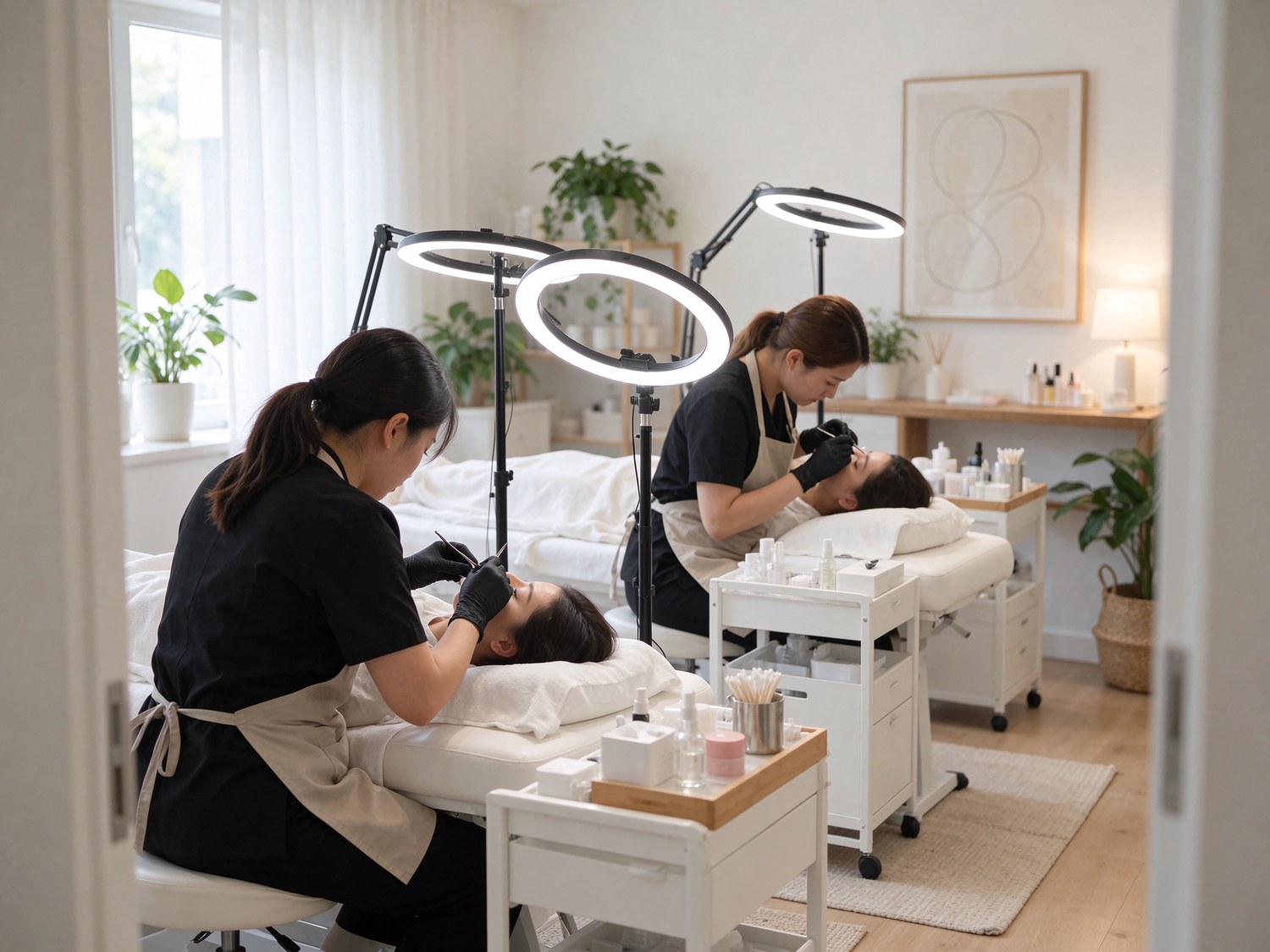
>Five signals that the ceiling has arrived
Demand fluctuates, so a busy month is not a reason to hire. Look for patterns that persist across the year:
- Bookings rise beyond seasonality. Holiday and prom peaks are normal; a baseline that climbs quarter after quarter is not.
- Lead times drift outward. When regulars are booking four weeks ahead instead of two, you are turning away people who will not wait.
- Supply orders keep stepping up. Adhesive, trays and aftercare volumes rising in parallel with bookings is a capacity signal in physical form.
- Someone is leaving. Turnover is normal; planning for it before the chair is empty is what protects revenue.
- You are doing everything. A solo owner who handles lashing, marketing, ordering, cleaning and admin has hit a personal ceiling regardless of demand.
The math before the hire
Run the numbers before writing a job ad, because a stylist is a fixed cost with a variable ramp:
- Revenue per hour at your current average ticket and service length.
- Utilisation, meaning the share of booked hours that are actually paid. New stylists start lower and climb.
- Chair cost, covering rent allocation, supplies, laundry, insurance and software.
- Ramp time, typically three to six months before a new stylist fills a reasonable schedule.
- Training cost, including the course, the practice sets and the product consumed while learning.
If the studio can absorb a partial schedule for a quarter and still cover the chair, the hire is viable. If it cannot, a part-time or commission arrangement is the safer first step than a full-time salary.
What to assess beyond a portfolio
Lash portfolios are curated; a trial set is not. Ask for one, on a model you provide, and watch the process rather than the result:
- Isolation habits. Clean separation, no tape on the lid, no shortcuts that save ten minutes and cost retention.
- Adhesive discipline. Fresh drops, correct humidity awareness, no re-dipping into a thickened drop.
- Sanitation. Hand hygiene, tool handling, a clean station at the end rather than a tidy one at the start.
- Client communication. Whether the consultation happens before the first lash, and whether the client is told what to expect.
- Pace versus quality. Speed can be taught; the habit of checking for stickies cannot be assumed.
The handover is the hard part
A new stylist inherits clients, and clients inherit expectations. Hand over more than a schedule:
- Mapping notes and photographs for every regular, including curl, length and any asymmetry.
- Adhesive and room settings, plus the retention history for each client.
- Aftercare wording used in the studio, so the message does not change with the face.
- A clear rule on which clients stay with the owner and which are offered to the new stylist, communicated before the switch, not after.
Introduce the new stylist as part of the studio’s standard, not as a substitute. Clients accept a new hand far more readily when the owner frames it as the same technique with more availability.
Retention beats recruitment
The cost of replacing a stylist is far higher than the cost of keeping one. That means predictable hours, a chair that is actually equipped, product supplied without friction, and a share of the retail or add-on revenue that reflects the work. Stylists who feel invested in stay long enough to build the client relationships that make a studio worth more than its lease.
Hiring is a capacity decision, not a reward for being busy. Do it when the numbers, the schedule and the handover plan all point the same direction, and the first hire becomes the start of a team rather than an experiment. LebestPro supplies the product consistency that makes a second and third stylist produce the same result as the first, which is what a growing studio actually needs.