
Lash lifts fail in predictable ways. The lift drops in a week, the curl comes out tight and kinked, one side lifts more than the other, or the lashes look frizzy rather than smooth. Almost every case traces back to one of five causes, and working through them in order is faster than guessing.
>Fault one: overprocessing
Overprocessed lashes look frizzy and corkscrew, and they feel rough. The usual cause is leaving the lifting lotion on longer than the hair can take, or applying it to the tips rather than to the mid-lengths and base. Timing should follow the client’s lash texture and health, not a fixed clock on the wall: fine, light lashes process faster than coarse, dense ones, and lashes that have been tinted or lifted recently are more fragile.
Apply from roughly a millimetre above the lash line up to the apex of the shield, keep the tips clean unless the system specifically directs otherwise, and check the lift before the clock says you should. If it has already happened, the fix is conditioning, not more chemistry: a bond-building conditioner and a few weeks without another chemical service.
Fault two: the wrong shield or rod size
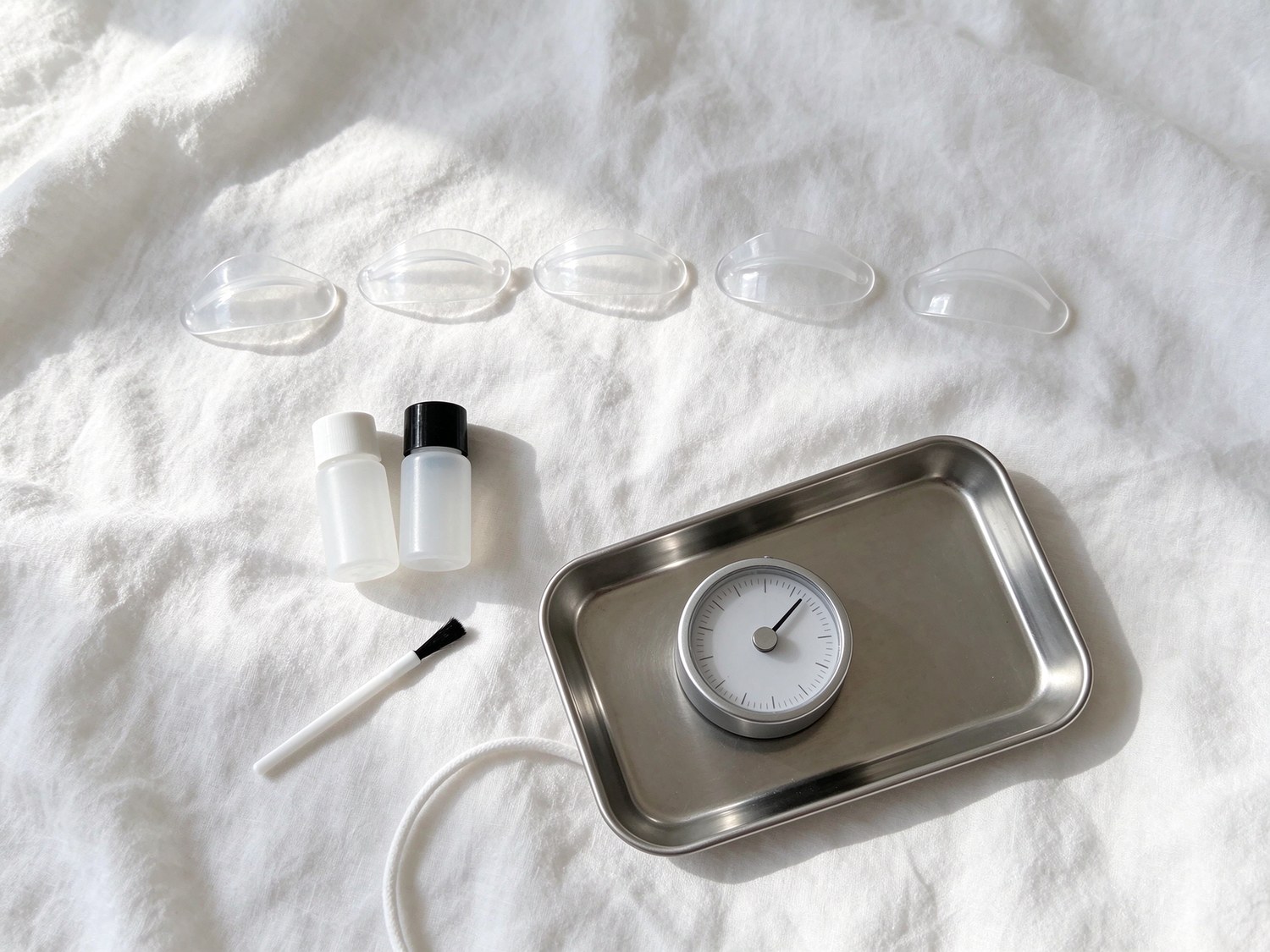
Shield size decides the curl. Too small a shield on long lashes produces a tight curl that points back toward the lid and looks cramped. Too large a shield on short lashes produces almost no lift, and the client reports that nothing happened.
Judge by where the tips land: they should wrap comfortably around the curve with the ends sitting just past the middle of the shield, not folded over and not stopping well short. When in doubt, size up for length and down for density rather than the other way around.
Fault three: placement
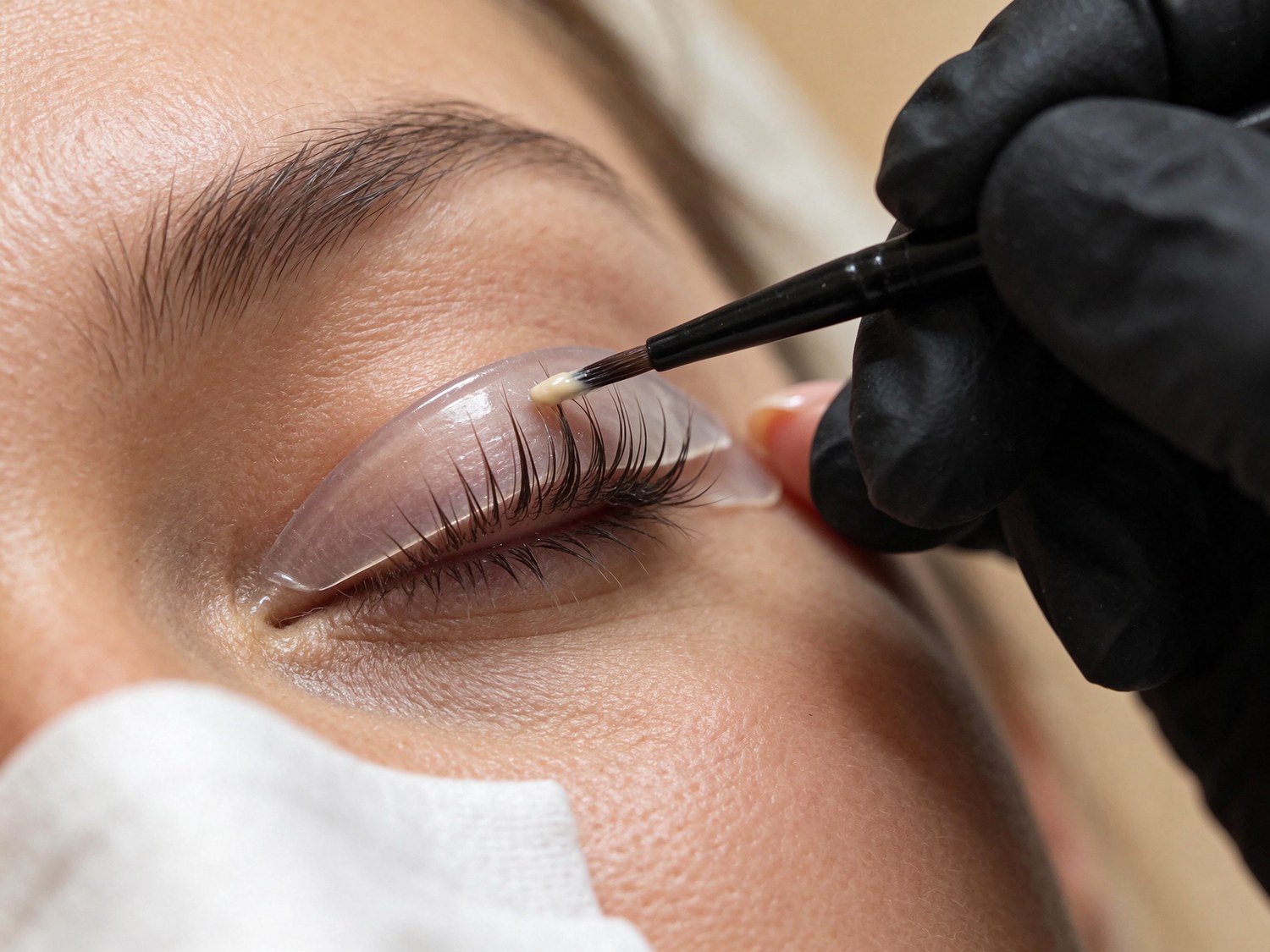
Every lash has to sit straight and parallel on the shield. Lashes that cross, clump or sit at an angle will set in exactly that position, and no amount of lotion will fix the geometry afterwards. Two habits prevent most of it:
- Separate before you process. Work through the whole lash line with a precision tool, straightening each lash, before any lotion goes on.
- Do not flip the lid. Lifting the eyelid to get a better view distorts the angle of the lashes on the shield and produces a flat, underwhelming result.
Fault four: adhesive quantity
Adhesive holds the lashes on the shield for the whole service, and both extremes cause problems. Too little and lashes detach mid-process, which produces an uneven lift or none at all on one section. Too much and the adhesive forms a barrier that stops the lotion from reaching the hair, so the lift underperforms even though the lashes stayed in place.
Work in small sections, apply enough to anchor without building a wall, and check that the lashes are still seated before applying the lotion rather than after.
Fault five: the solutions themselves
Expired, overheated or light-exposed solutions lose potency, and the symptom is a lift that looks fine on the day and drops within a week. Store products cool and dry, roughly 4–24°C, away from direct sun, rotate stock and check dates. Single-use sachets should be used immediately once opened; a half-used sachet kept for the next client is a variable you do not need.
The diagnostic order
When a lift underperforms, resist changing three things at once. Work through the list:
- Hair health first. Recently tinted, lifted, overprocessed or very dry lashes will not hold a lift well, and no technique change fixes that.
- Separation second. Were all lashes straight and separate before processing?
- Shield third. Did the tips land in the right part of the curve?
- Timing fourth. Was the process judged by the hair, or by the clock?
- Product last. Fresh, correctly stored, in date?
Then record what you found. A simple log of shield size, timing, product batch and result turns a frustrating service into a dataset, and after a few weeks the pattern is obvious. Consistency in lash lifts comes from controlling these five variables, not from working faster. LebestPro’s lift systems ship with clear timing guidance and storage requirements, which makes the diagnostic order something a whole team can follow rather than one stylist’s instinct.