

Most beauty professionals who add lash lifts already have a business. They are doing nails, brows, facials or makeup, and the question is not “should I start a lash studio” but “can I add one more treatment without rebuilding my life”. The answer, usually, is yes — with a realistic idea of what changes.
>Why a lift is an easy second service
A lash lift sits well alongside almost any beauty menu. It takes a comparatively short appointment, needs a small amount of equipment, requires no ongoing stock of individual extensions, and produces a result clients can see immediately.
It also sells to the clients you already have. The people who trust you with their nails or their brows are the warmest audience a new service will ever get, and a lift is a low-commitment treatment compared with a full set of extensions — no infills, no daily upkeep.
What actually changes
Three things, and they are worth knowing before you book your first paying client:
- Timings. The processing window is short and unforgiving, and it differs by product and by lash type. This is the part beginners find hardest — not the application itself.
- Fiddliness. Video tutorials make the service look effortless. In reality, separating lashes and keeping them positioned on the shield is a fine-motor skill that takes practice, especially at the inner corner.
- Working posture. You are bent over a face for the whole appointment. A setup that suits nails may not suit lashes; adjust the bed height and the light before you adjust your back.
Training: online or in person
Online training lets you learn around existing bookings, which is the practical advantage for anyone already working. In-person training gives you hands-on correction, which is the practical advantage for anyone who learns by being physically guided.
Either route needs the same follow-up: a written sequence you can refer to during your first appointments, the manufacturer’s timings in front of you, and someone to ask when a result does not behave as expected. Training without support is the expensive version.
A practice plan that respects clients
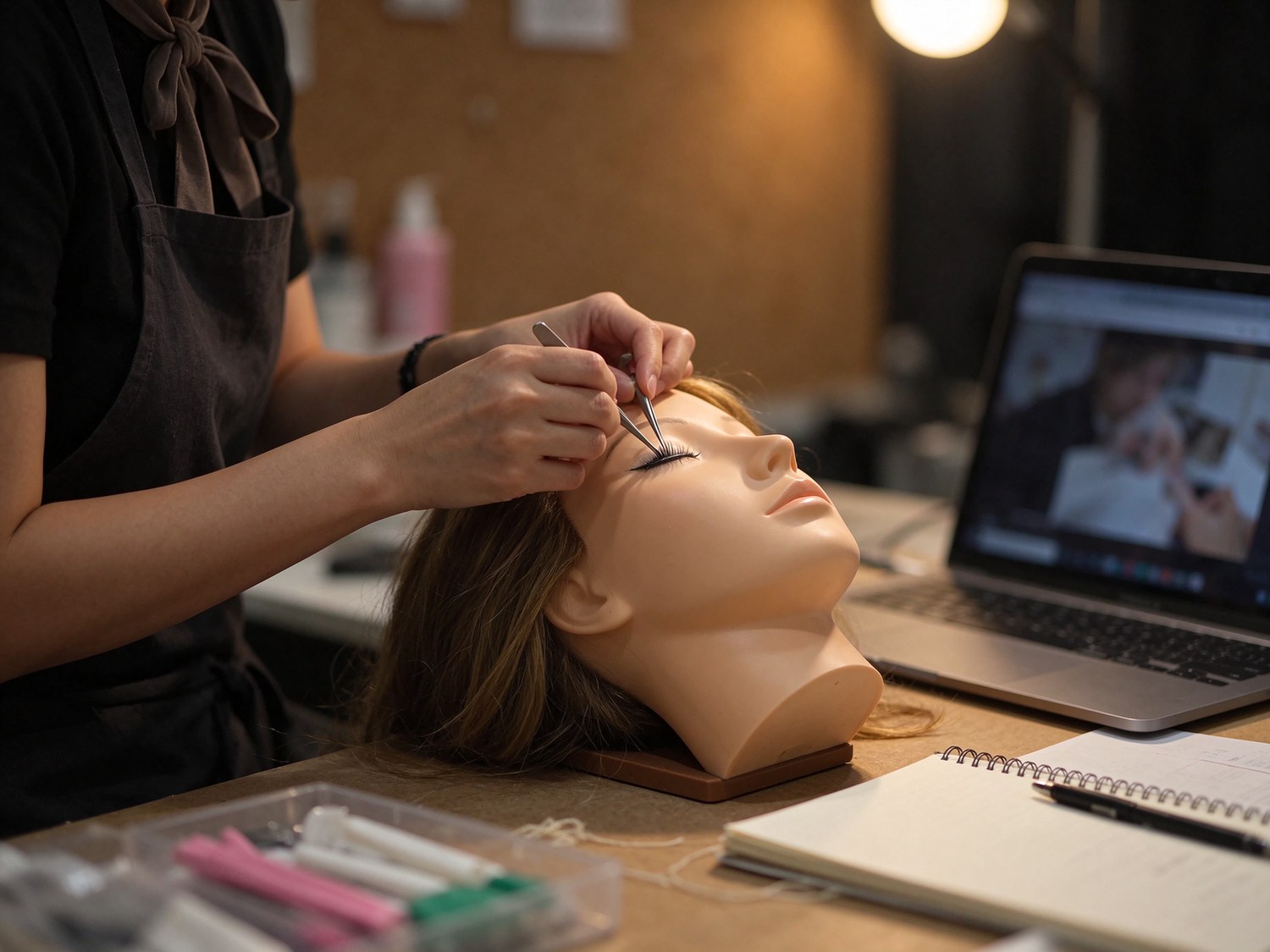
Mannequin first, until wrapping and separation are automatic. Then friends and family at a reduced rate, with the honest framing that you are practising and the appointment may take longer than a standard one.
Before charging full price, be able to answer yes to: the appointment finished in a predictable time, the lashes were evenly separated, the result matched the plan, and the client left with aftercare she understood. Until all four are true, the price should reflect where you are.
The mistakes new lifters share
They are consistent, and none of them are about artistry:
- Choosing a shield that is too large because it feels safer — the result is a lift that barely reads.
- Wrapping lashes without enough separation, then discovering the clumps in the final result.
- Extending processing time to chase a stronger curl instead of assessing the lashes.
- Rushing the lash bath, which leaves product behind and lets the hair keep processing.
- Not writing down the shield size and timings, so the next appointment is guesswork.
What the first month looks like
Slow and repetitive. Book fewer clients than you think you can handle, keep the sequence identical every time, and record what you did on each set: shield size, solution timing, how the lashes responded. After ten or fifteen lifts you will start to recognise lash types and predict results, which is when the service becomes comfortable rather than nerve-wracking.
Pricing the new service
Price against your time, not against competitors. Work out how long the appointment genuinely takes including set-up, consultation and aftercare, add your product cost, and set a rate that makes the slot as valuable as your existing services. A lift priced below your nail appointments will fill the diary and lower your hourly rate at the same time.
New skills, new clients
Adding a treatment does not require changing what you already do well. It gives your existing clients one more reason to book and gives new clients a specific reason to find you. The artists who make this transition smoothly tend to be the ones who treated it as a skill to practise rather than a service to launch — one appointment at a time, with notes.