
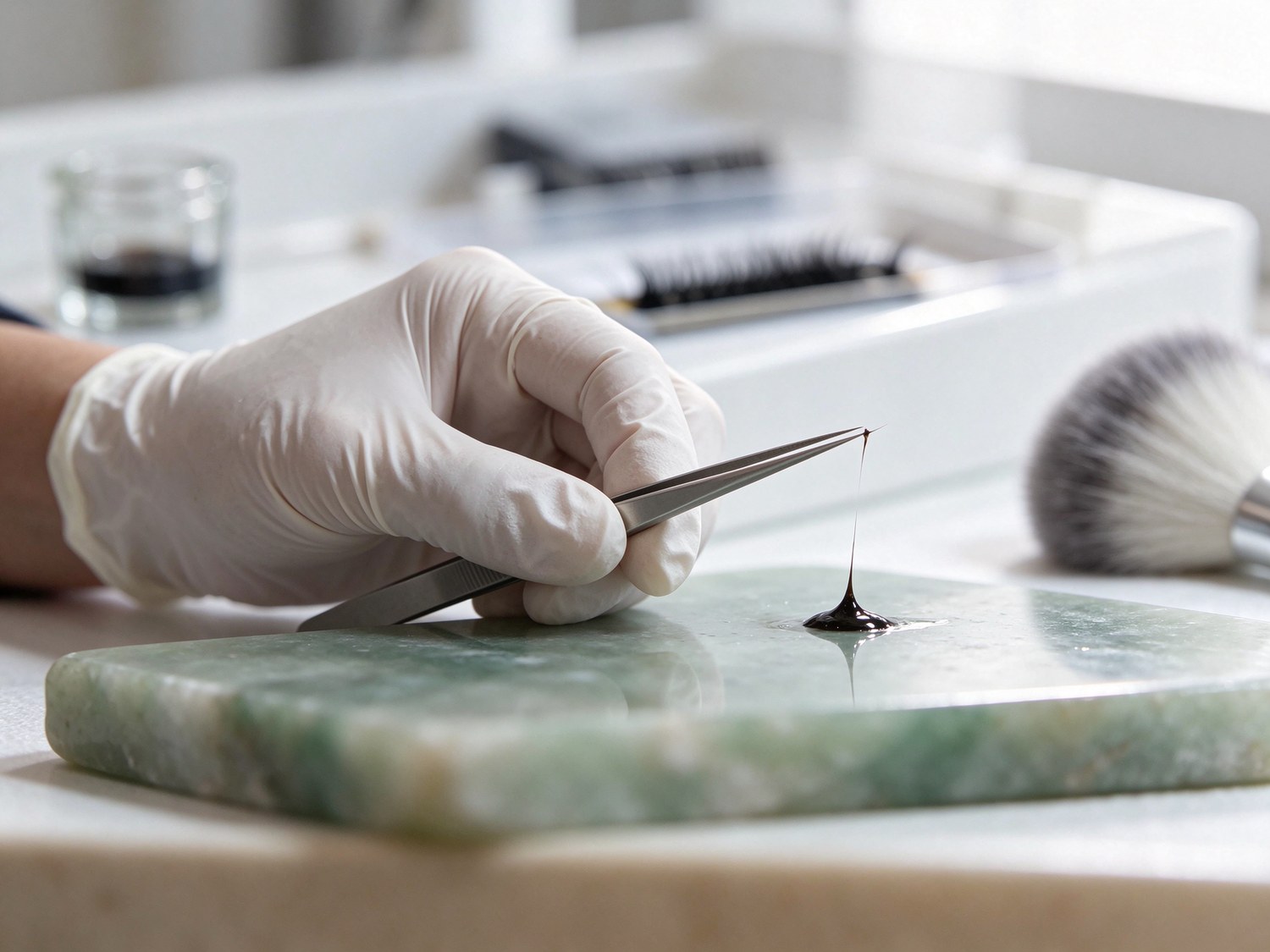
Every adhesive has a working life, and it announces the end of it in a very specific way: the drop starts to pull into threads. Stringy, goopy adhesive is not a small annoyance to work around. It is the first sign that the glue is past its best, and the results it produces — stickies, slow curing, poor retention — are the ones clients complain about two weeks later.
>What stringy adhesive means
A stringy or gloopy consistency means the drop is spent. If the adhesive comes out of the bottle in threads, the bottle is finished: there is no shaking, warming or diluting that brings it back. Replace it.
The distinction matters. Adhesive that goes stringy on the stone after fifteen minutes or so is normal — the drop has simply been sitting in air. Adhesive that leaves the nozzle stringy is not.
Why it matters more than it looks
Stringy adhesive is hard to control. You pick up an unpredictable amount, it cures more slowly than the formula is designed to, and it travels onto neighbouring lashes. That is how stickies happen, and stickies are both a visual failure and a risk to the natural lashes.
Retention follows. A set applied with tired adhesive loses lashes early, whatever the technique, and the client experiences it as “they didn’t last” rather than as a product problem.
The client side of the risk
As adhesive ages, its chemical composition changes, and that raises the risk of sensitivity. Fresh glue and good ventilation are safety measures, not just quality measures. If a client reports itching or redness, the adhesive’s age is one of the first things to check.
Date the bottle, every time
Two dates decide whether your glue is usable:
- The date of production. Ideally use the bottle within six months of manufacture.
- The date you opened it. Once opened, replace it every four to six weeks — no exceptions, no “it still looks fine”.
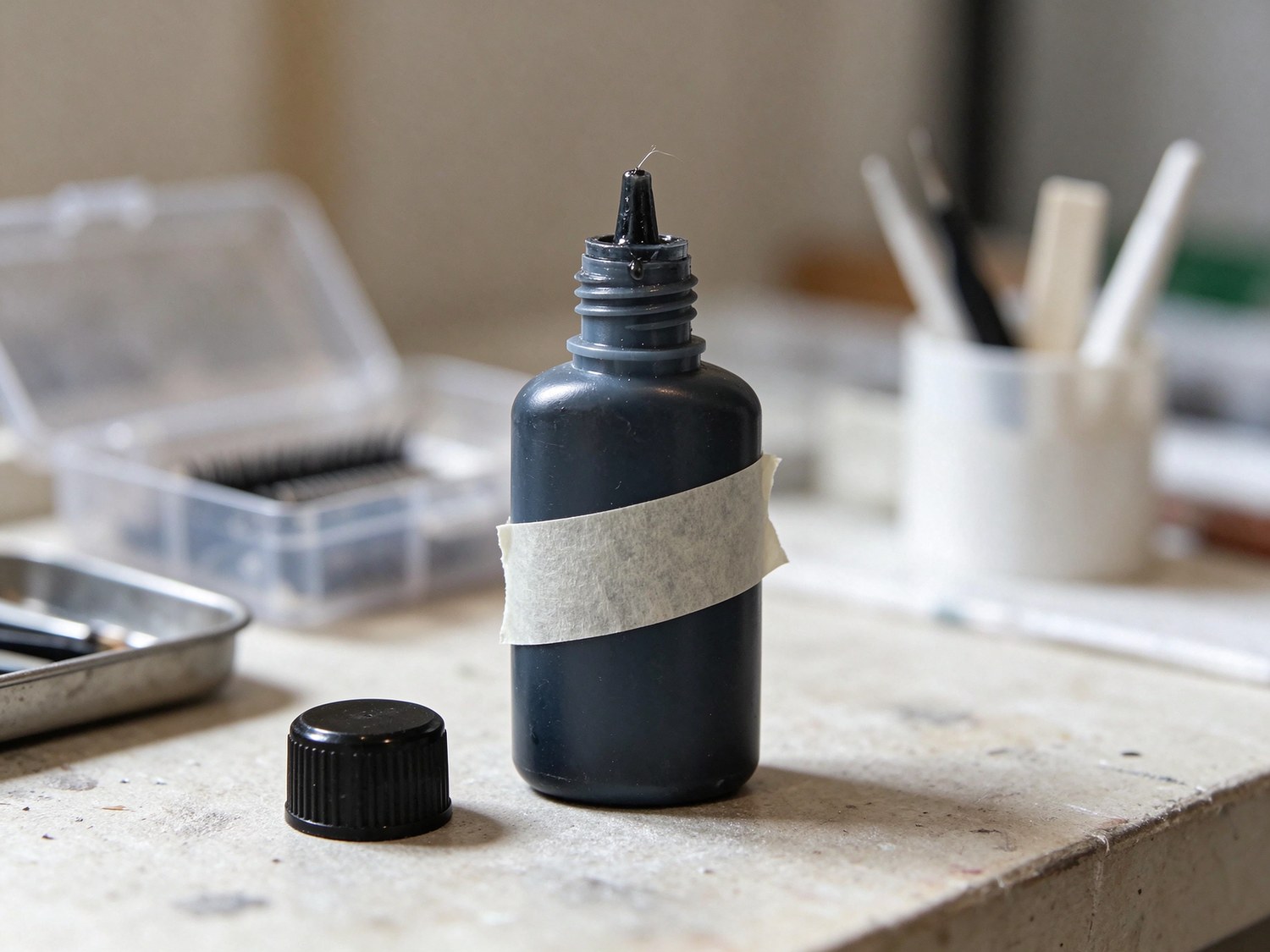
Write the opening date on a strip of tape on the bottle, or set a calendar reminder. Either works; doing neither is how artists end up using a six-month-old bottle and blaming their technique.
Storage rules
Unopened bottles can go in the fridge. Opened bottles must not: condensation forms inside and cures the adhesive before you have used it. Keep opened glue in an airtight container, away from heat and direct sunlight, ideally at 18–22°C. A car, a sunny window ledge or a warm studio shelf will shorten its life measurably.
Working with a jade stone
A jade stone keeps the drop workable longer than a glue ring and is easier to clean, which is why many artists prefer it. Expect the drop to start to thicken or string after roughly fifteen minutes, depending on room conditions. When it does, shake the bottle and dispense a fresh drop well away from the old one — do not try to revive the tired drop by adding new glue to it.
Tools that remove the guesswork
A glue shaker mixes the bottle consistently and quickly; hand-shaking for a minute is fine but inconsistent under pressure. A digital hygrometer tells you the temperature and humidity in the working zone, which is the variable that most often explains why this week’s glue “feels different”. Both are cheap compared with a week of re-dos.
The habits that keep glue good
- Fresh drop every fifteen to twenty minutes; never top up an old one.
- Cap the bottle immediately after dispensing.
- Keep the bottle out of direct light and off warm equipment.
- Never store opened bottles in the fridge.
- Replace the bottle on a calendar, not on symptoms.
- Work with ventilation, always.
If you remember one thing: when the drop starts to string, the drop is over. A fresh drop costs pennies; a set built on tired glue costs a client.