
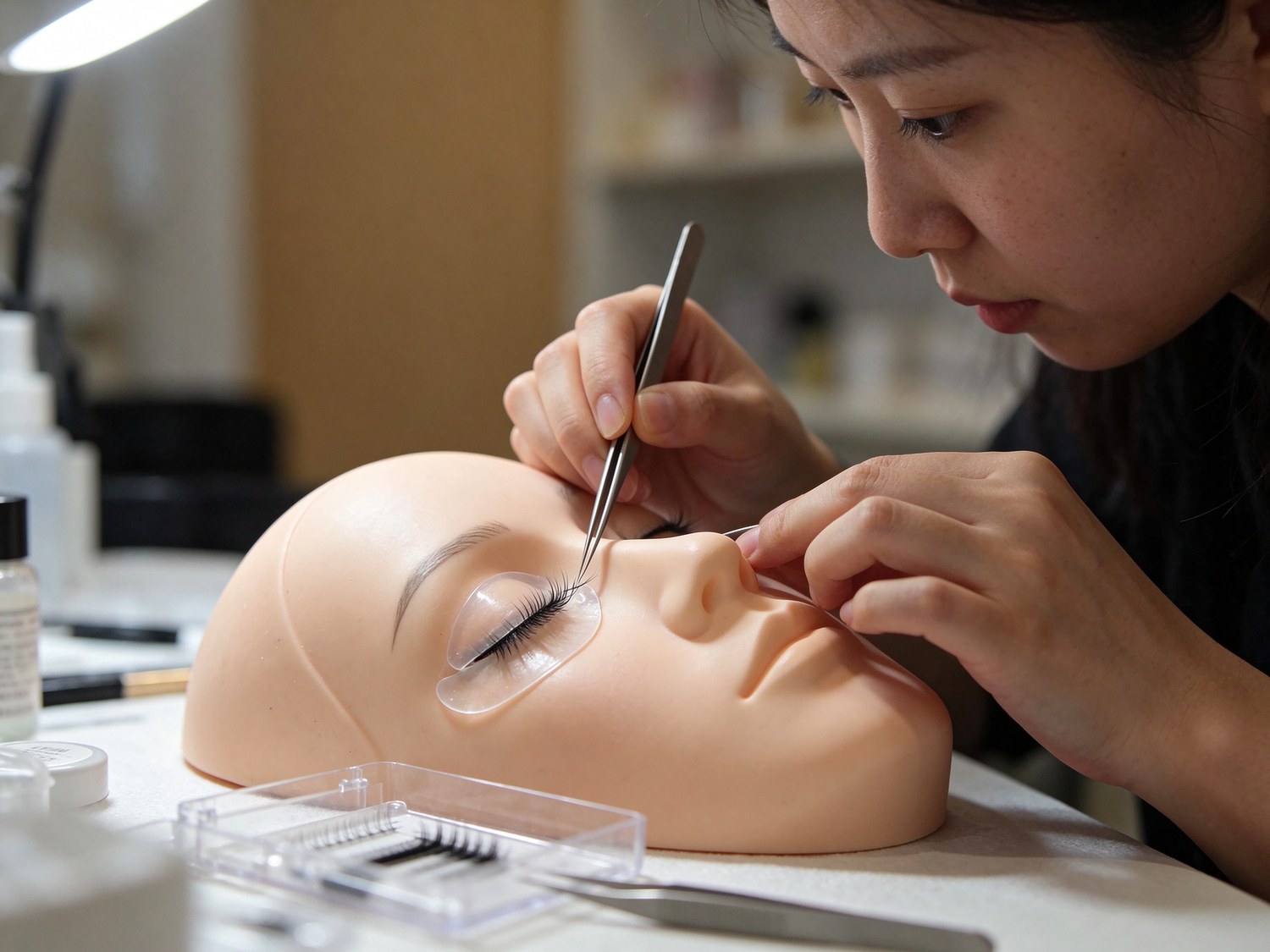
A lash lift is a perm for the lashes: a chemical service that curls the natural hair upward and changes its shape for roughly six to eight weeks. It is popular with clients because it needs no daily maintenance and no extensions, and popular with artists because the appointment is comparatively short. It is also the service where small technical errors show up most clearly — which is why the sequence and the handful of common mistakes are worth learning properly before you take paying clients.
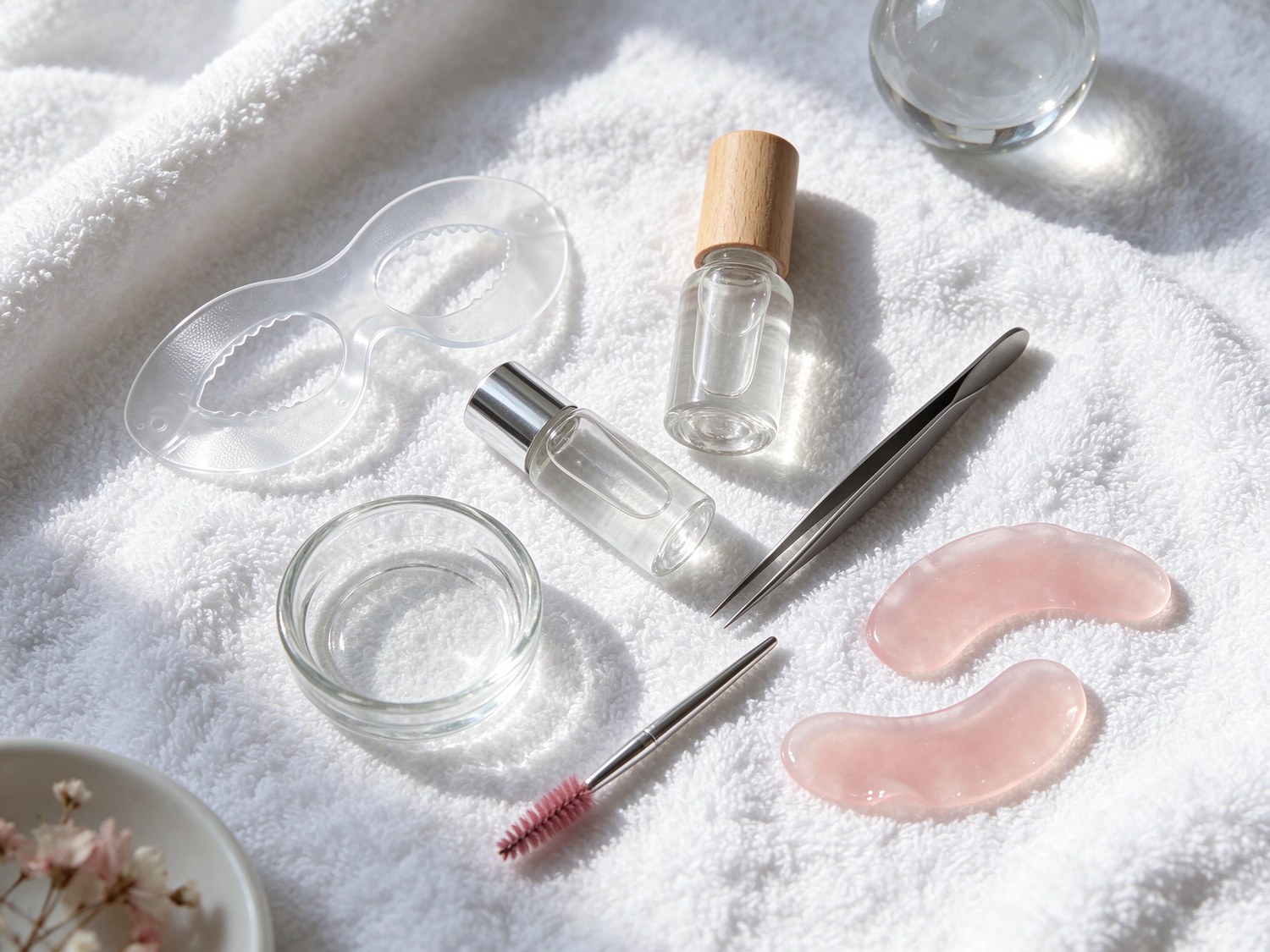
>What you need on the trolley
Silicone shields (a full size range, not just one), lifting adhesive or balm, lifting solution, setting lotion, under-eye gel pads, fine brushes, tweezers, a lash bath kit and aftercare. Quality matters more than quantity: a cheap solution with unclear timings will cost you more in re-dos than it saves.
The sequence, step by step
1. Cleanse thoroughly. Remove every trace of makeup and oil from the lashes. Solution cannot penetrate a coated lash, and a partial cleanse is one of the most common reasons a lift under-performs.
2. Protect the lower lashes. Place a gel pad under the eye to secure the lower lashes and keep the skin clear of product.
3. Choose the shield. Select the size from the client’s natural lash length and the curl they want. Place it close to the lash line and check the fit across the whole lid before going further.
4. Wrap the lashes. Use adhesive or balm to lift the lashes onto the shield, brushing upward so every lash is straight and separated. Take the time here: crossed or clumped lashes produce an uneven curl that no amount of careful processing will correct.
5. Apply the lifting solution. Work it through the base and middle of the lashes, keeping the tips clear where the system requires it. Stay within the manufacturer’s timings, and use flex and set checks rather than the clock alone to judge readiness.
6. Remove the solution. Take it off carefully and completely, without dragging the lashes off the shield.
7. Set the shape. Apply the setting lotion to lock the new position. This step is what stops the chemical process; skipping or rushing it undoes the lift.
8. Full lash bath. Clean away all adhesive, solution and shields. Then hydrate the lashes with an aftercare product — processed hair needs the moisture put back.
The five mistakes beginners make
- Over-processing. Leaving the lifting solution on too long damages the hair and produces frizz or breakage. Always follow the timing for the specific product, and use flex and set checks so the decision is based on the lash rather than on hope.
- The wrong shield size. Too large and the lift is barely there; too small and the lashes curl back too far. Both are decided at the assessment, not fixed later.
- Skipping the full lash bath. Residual solution keeps working after the client leaves, which means the lashes continue to process and can end up damaged. The bath is not a finishing touch; it is the end of the chemical process.
- Rushing separation. Every lash needs its own space. Clumps and crossings are visible in the final result and impossible to fix once the solution is on.
- Chasing a stronger curl with longer timings. If a client’s lashes are resistant, the answer is assessment and product choice, not extra minutes. Extending processing beyond the manufacturer’s maximum is the fastest route to a complaint.
Aftercare that protects the result
Tell the client to keep the lashes dry for the first 24 hours. Steam, heat and sweat can drop a lift before it has fully set, so saunas, hot showers and heavy exercise should wait a day.
After that: cleanse with an oil-free product, avoid rubbing the eyes, and skip waterproof mascara and lash curlers. Rubbing distorts the curl and can pull lashes out prematurely, which is often blamed on the lift rather than on the habit.
How to get good at it
Practice on a mannequin until the wrapping is automatic, then on models before charging full price. Video tutorials make the service look simpler than it is — the fiddly parts are separation, timing and keeping the product where it belongs. Book fewer clients than you think you can handle in the first weeks, and write down what you did on every set: shield size, timings, result. The notes are how you learn your own clients’ lashes.
Nobody’s first ten lifts are their best ten. The artists who improve fastest are the ones who keep the sequence identical and change one variable at a time.