
Most retention problems are blamed on the adhesive, and most of the time the adhesive is doing exactly what it was formulated to do. What changed is the environment around it: the temperature of the room, the humidity at the trolley, how the bottle has been stored, how old it is, and whether the technician’s hands and posture are steady enough to place a fan precisely.
Understanding those variables turns a mystery into a checklist.
>Local conditions beat room averages
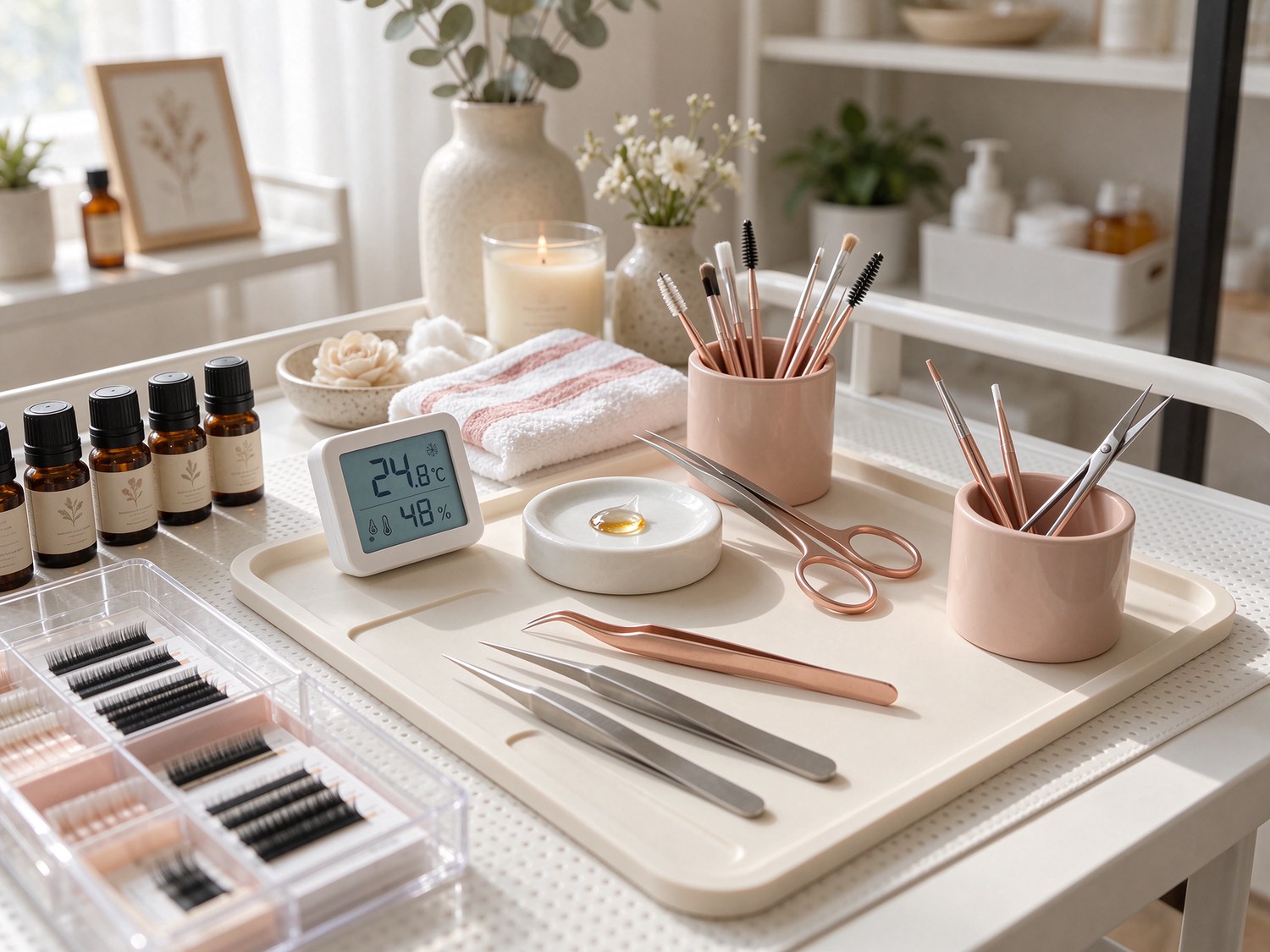
A hygrometer on the wall reading 50 per cent tells you about the wall, not about the corner where you are working. Small temperature shifts change adhesive viscosity mid-set: a slightly warm room makes a drop polymerise faster on the stone than on the lash, so the bond that felt perfect at 10am behaves differently by 3pm.
Check the reading at the station, not across the room, and note it against retention problems in your appointment records. Patterns appear quickly — the same client slot in the same conditions failing repeatedly is information, not coincidence.
Speed versus cure
Faster adhesives are not automatically better. A very fast adhesive demands perfect placement and a controlled environment; in a warm, busy room it can shock-cure before the fan is seated, which produces a weak bond that fails within days.
If retention is inconsistent, the answer is usually not a faster glue but a more stable setup: a consistent room temperature, a fresh drop on a clean stone, and enough time to place the fan correctly. Where the environment cannot be controlled, a slightly slower adhesive with a longer working window is often the more professional choice.
Storage is part of the formula
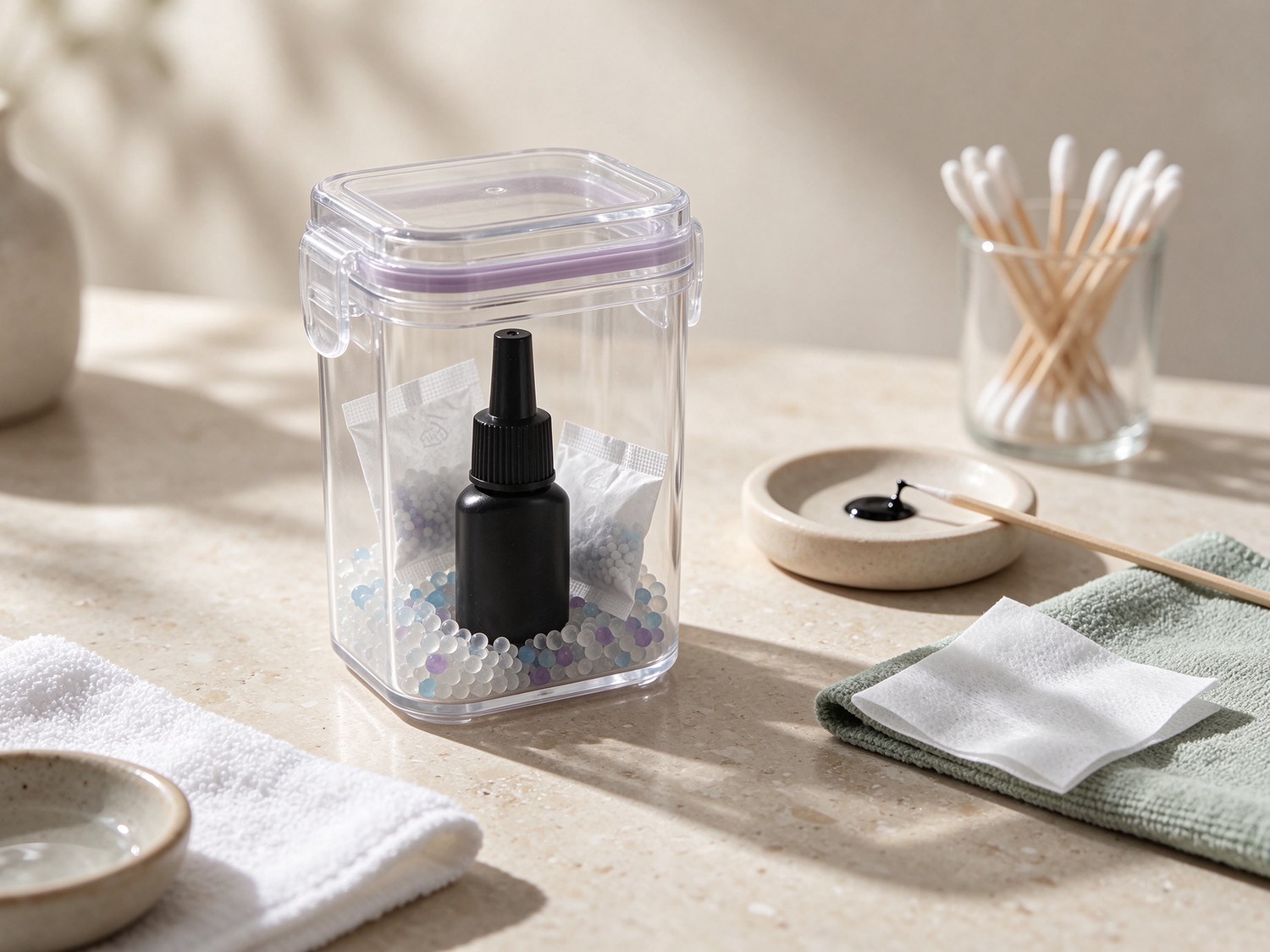
Cyanoacrylate degrades with exposure to moisture and oxygen. A bottle left open on a trolley all day is collecting both. Keep adhesive in an airtight container with silica packets, sealed between clients, and away from direct sunlight and heat.
The stabiliser-to-monomer balance the manufacturer designed only holds while the bottle is sealed properly. Once moisture has entered, no amount of technique will restore the original cure speed.
Shelf life is not a suggestion
Adhesive has a working life, and a bottle that has been open for months is not the same product it was in week one. Using the last of an old bottle to avoid waste is the fastest route to a retention problem, and the cost of one failed set is higher than the cost of the bottle.
Date every bottle when it is opened, keep a spare sealed, and rotate stock. Replace primer and nozzle wipes on the same schedule — a contaminated wipe or an old primer undermines a fresh adhesive.
The station itself
Hygiene and retention overlap more than people expect. Dust on a palette, adhesive residue on a stone, or a nozzle clogged with cured product all interfere with a clean bond. Fresh disposable stones, wiped nozzles and a covered palette are cheap insurance.
Ergonomics belongs in the same conversation. Lash work is sustained precision: if the neck, wrists or lower back are under strain, placement accuracy drops long before the technician notices. A comfortable client position, a trolley at the right height and a glue shaker instead of hand-warming all protect the part of the service that technique depends on.
Weekly checks that pay for themselves
- Calibrate or at least verify the hygrometer and thermometer.
- Move adhesives into a sealed container with silica.
- Replace nozzle wipes and check for contamination.
- Check open dates on every bottle on the trolley.
- Clear the station of anything not needed for the next set.
None of this is advanced technique. It is the maintenance that lets advanced technique show up consistently — and retention is simply the visible proof that the setup was right.