
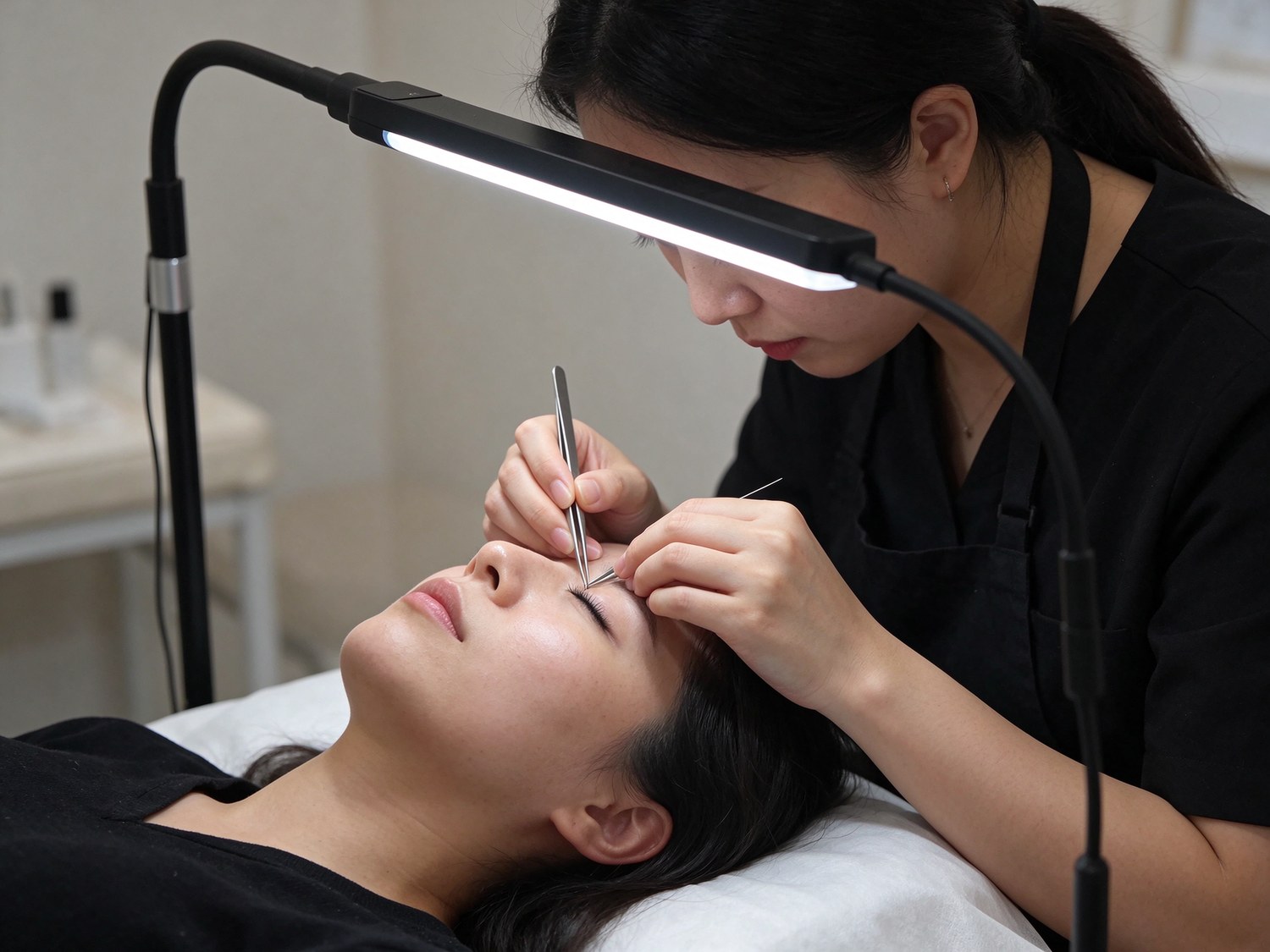
Lash education tends to focus on technique: isolation, direction, weight, wrap. A recent visit to the Japanese lash community in Tokyo made a different point. Technique there is taken for granted. What stands out is a philosophy — restraint, calm, and an almost architectural attention to what is not added.
The trip was an invitation to speak at a Tokyo lash event, and the lessons that came back had less to do with application than with how a salon is run and what a client is allowed to feel during an appointment.
>A culture built on precision and quiet
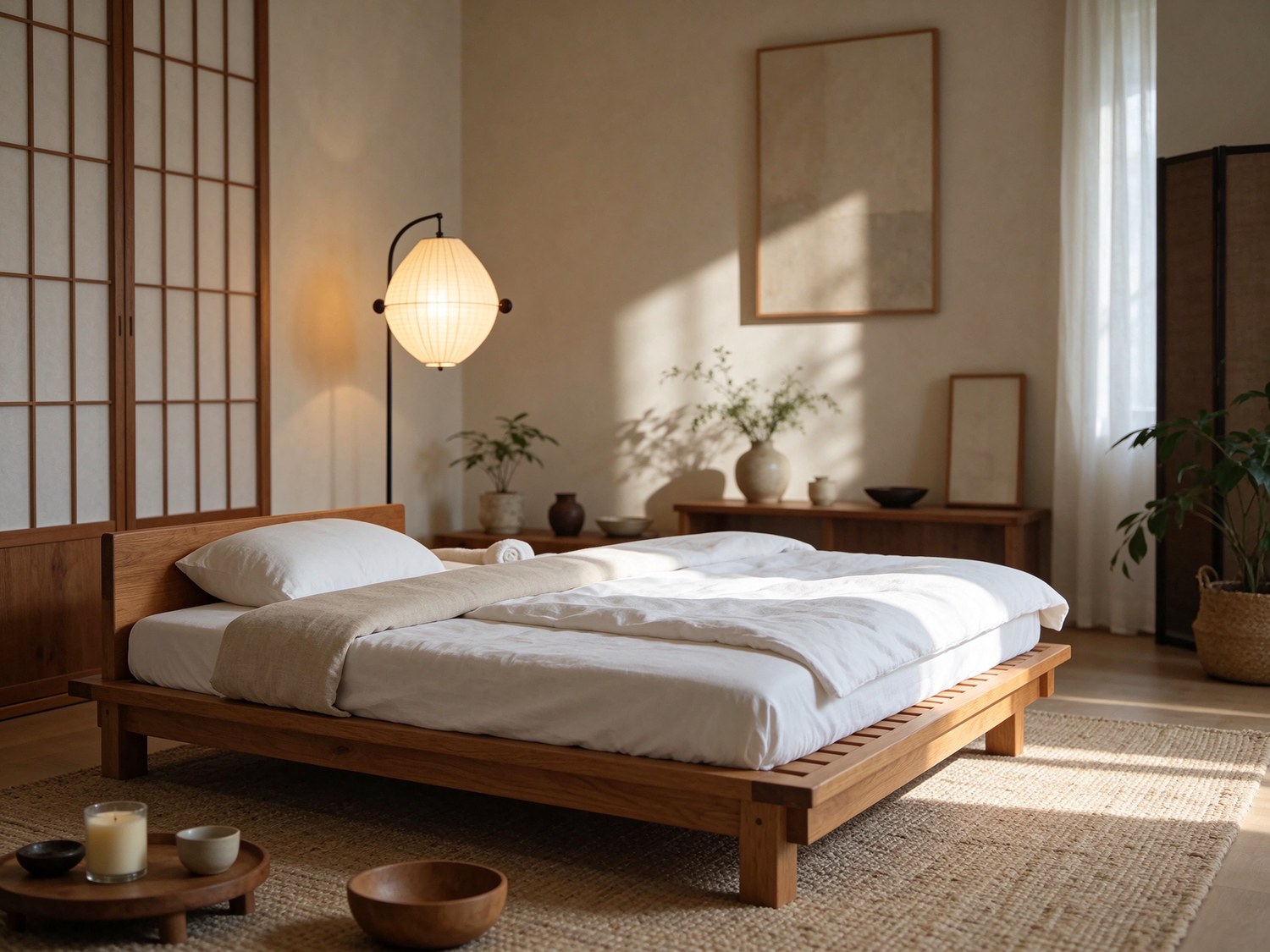
Japanese lash studios are calm in a way that is structural rather than decorative. Low light, soft sound, no background chatter, and a treatment that proceeds at an even pace. Nothing about the room asks the client to perform — no conversation expected, no music competing for attention.
That calm is not a luxury add-on. It is the operating condition for precise work. An artist who is not managing a conversation or a loud playlist has more attention for the lash in front of them, and clients feel the difference even if they cannot name it.
The commercial lesson is worth stating plainly: a quiet, considered space creates a premium impression without a premium interior. Clients read intention as value.
Less, but better
The clearest technical difference is coverage. Traditional Western training often treats full coverage as the target: every natural lash gets an extension, even the finest ones, even when the eye does not need it.
Japanese artists tend to work the opposite way. The aim is to enhance the eye with the fewest additions that achieve a balanced result. Sometimes the set is so light that extensions are barely detectable, and that is the point — the client looks like a better version of themselves rather than someone wearing a treatment.
Lighter diameters, classic and soft volume sets, and black lashes chosen to match naturally dark hair all support that goal. The look is designed to belong on the face, not to announce itself.
What clients are actually asking for
The demand for natural-looking extensions is not a Japanese preference that stayed in Japan. It is the direction the wider market has been moving for years, and Tokyo is simply further along the curve. Clients increasingly want refinement, not transformation: a set that photographs well, grows out gracefully and does not dictate their makeup routine.
That shift changes what a good consultation sounds like. Instead of asking how dramatic a client wants to go, the more useful question is what they want their eyes to look like on an ordinary Tuesday.
The appointment as the product
The most practical observation from the trip was about time. Japanese sets are often built in shorter sessions — around 60 to 90 minutes rather than the two to two and a half hours common in full-coverage work — and clients return more frequently for maintenance.
That model suits both sides. The client is not exhausted by the appointment, the artist is not locked into long blocks with no recovery time, and the set stays tidy because it is refreshed before it grows out unevenly. Fewer hours per client, more appointments per week, and stronger long-term relationships.
It is worth asking honestly: how many clients would be happier with a refined 60 to 90 minute result than with a 150 minute set they did not ask for?
What to take back to your own salon
None of this requires a new product range. It requires decisions:
- Reduce coverage where the natural lash line is already dense, and spend the time on the areas that need definition.
- Keep one length shorter than the longest in each section for a softer, more believable line.
- Protect the first and last fifteen minutes of an appointment as quiet time rather than admin time.
- Offer a lighter maintenance appointment as a standard option, not a downgrade.
- Train clients to expect refinement, so a subtle set is read as skill rather than as less work.
Why restraint lasts longer
A heavy volume set can be impressive in a photograph and difficult to maintain in real life. A precise, restrained set holds its shape, suits more of the client’s wardrobe and face, and keeps the natural lashes healthy enough for the next appointment.
Precision, calm and genuine attention to the client will always outlast the heaviest set in the room. That is the part of the Japanese approach worth copying exactly.