
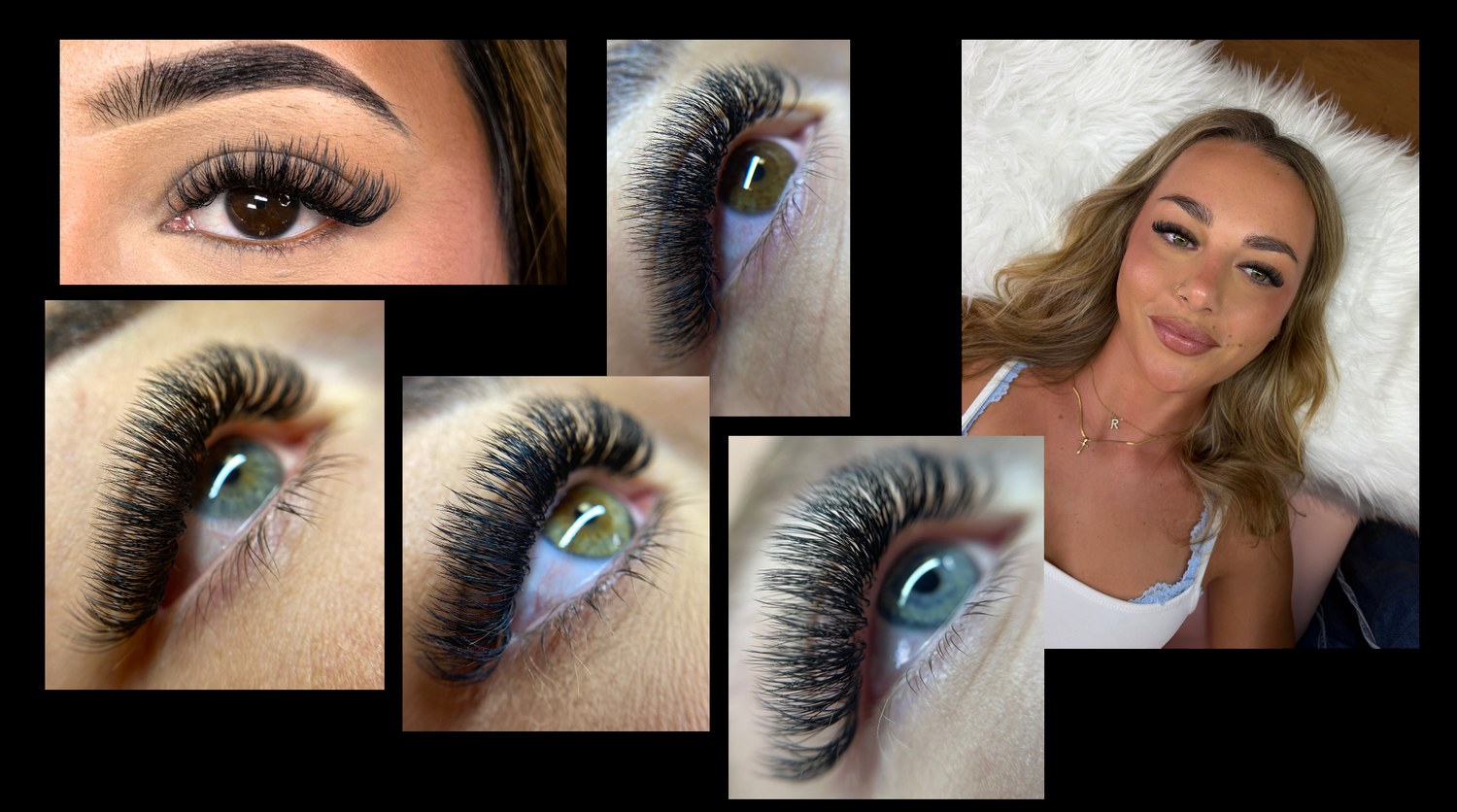
Building a hybrid set usually means one of two things: alternating between classic lashes and volume fans for the whole appointment, or making every fan by hand. Both produce lovely results and both cost time. A ready-made fan with an open base offers a third route — one tray, one rhythm, and a finish that reads as classic and volume combined.
>What makes a hybrid fan different
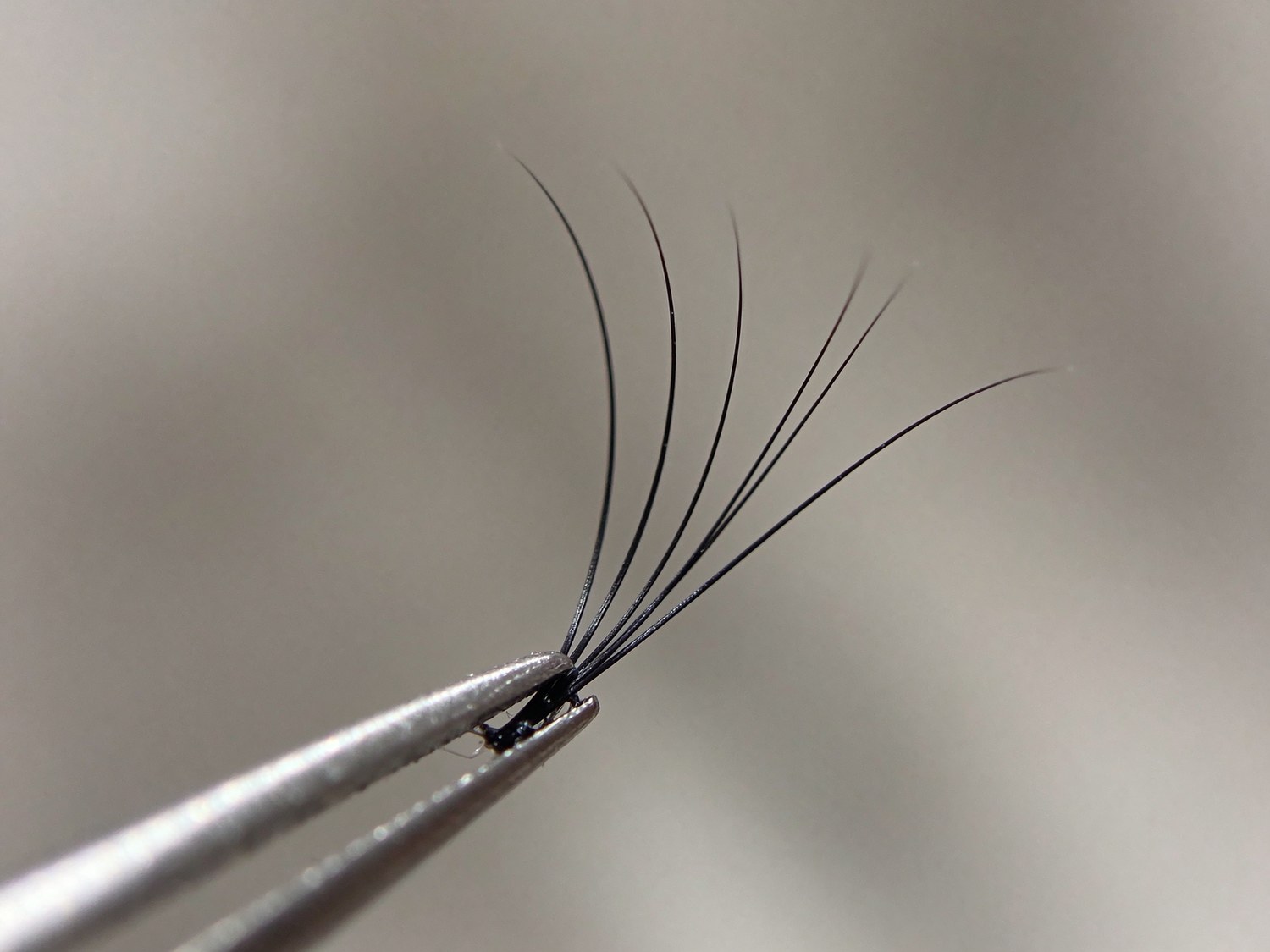
A hybrid fan is a four-fibre fan made from lightweight 0.07 lashes, so its total weight is close to a single 0.15 classic lash. That is the key detail: it looks fuller than a classic lash but does not add the weight of a standard volume fan.
The base is deliberately left open rather than bonded into a tight point. During application the loose base wraps around the natural lash, which increases the contact area between extension and hair. More contact means a stronger bond, and a stronger bond is what retention is built on.
At a glance
- 4D fan, four fibres per fan
- 0.07 diameter, lightweight PBT fibres
- Roughly 1,600 fans per tray
- Single-length and mixed-length trays, 7mm to 14mm
- Mixed trays carry extra 10mm and 11mm, the lengths most sets use up first
- Open, wrapable base
- Finished weight comparable to one 0.15 classic lash
Where they fit in a treatment menu
Hybrid sets are popular because of their texture: dense in places, soft in others, never uniform. The usual method is to alternate classic lashes and volume fans section by section, which means reaching for at least two trays at every appointment and keeping both stocked.
A hybrid fan compresses that process. Each fan is smaller than a volume fan and fuller than a classic lash, so a full set built from them reads as a hybrid without switching products. It suits artists who want soft, wispy sets, faster appointments, fewer tray changes and a more consistent finish across the whole lash line.
Who can use them
The learning curve is short. If you are comfortable with specialty lashes such as YY or clover styles, the pickup and placement feel familiar. Artists trained in classics can use them without further fan-making practice, and because the weight is low, they suit most healthy natural lashes.
Hybrid fans versus other options
Compared with standard ready-made fans, the difference is purpose and base. Standard fans are built for volume, with a bonded base and a denser finish. Hybrid fans are built for hybrid looks, with an open base that wraps and a softer, more textured result.
Compared with handmade fans, the difference is time and consistency. Handmade fans allow full customisation but are created during the appointment, need advanced fan-making skill and slow the set down. Ready-made hybrid fans are uniform, immediate and easier for a classic-trained artist to adopt.
How to apply them
- Isolate the natural lash as usual.
- Pick the fan up from above or below the crossover point — not across it, or the fibres will separate.
- Dip the base lightly into your professional adhesive.
- Wrap the open base around the natural lash and place it.
- Work section by section until the set is complete.
The one handling rule worth repeating: because the base is intentionally loose, grip it away from the crossover point. Squeezing the middle of the fan is the fastest way to break a good product.
Practical benefits
Beyond speed, hybrid fans simplify stock. Instead of keeping classic lashes and volume fans for hybrid appointments, one tray covers the look, which means less clutter on the trolley, fewer reorder points and fewer decisions during a set. The result is a softer set than a volume fan, better retention than a classic lash placed on its own, and a finish that stays consistent from the first section to the last.
Common questions
Are they better than standard ready-made fans? Not better, different. Standard fans build volume; hybrid fans build hybrid texture from a single tray.
Do I still need classic lashes? Not for hybrid work. Many artists keep a classic tray for pure classic sets and use hybrid fans for everything in between.
Why is the base open? So the fan can wrap the natural lash, increasing contact and improving how long the set holds.
How many fans does a tray hold? Approximately 1,600, which is roughly six full sets depending on the map and density.