
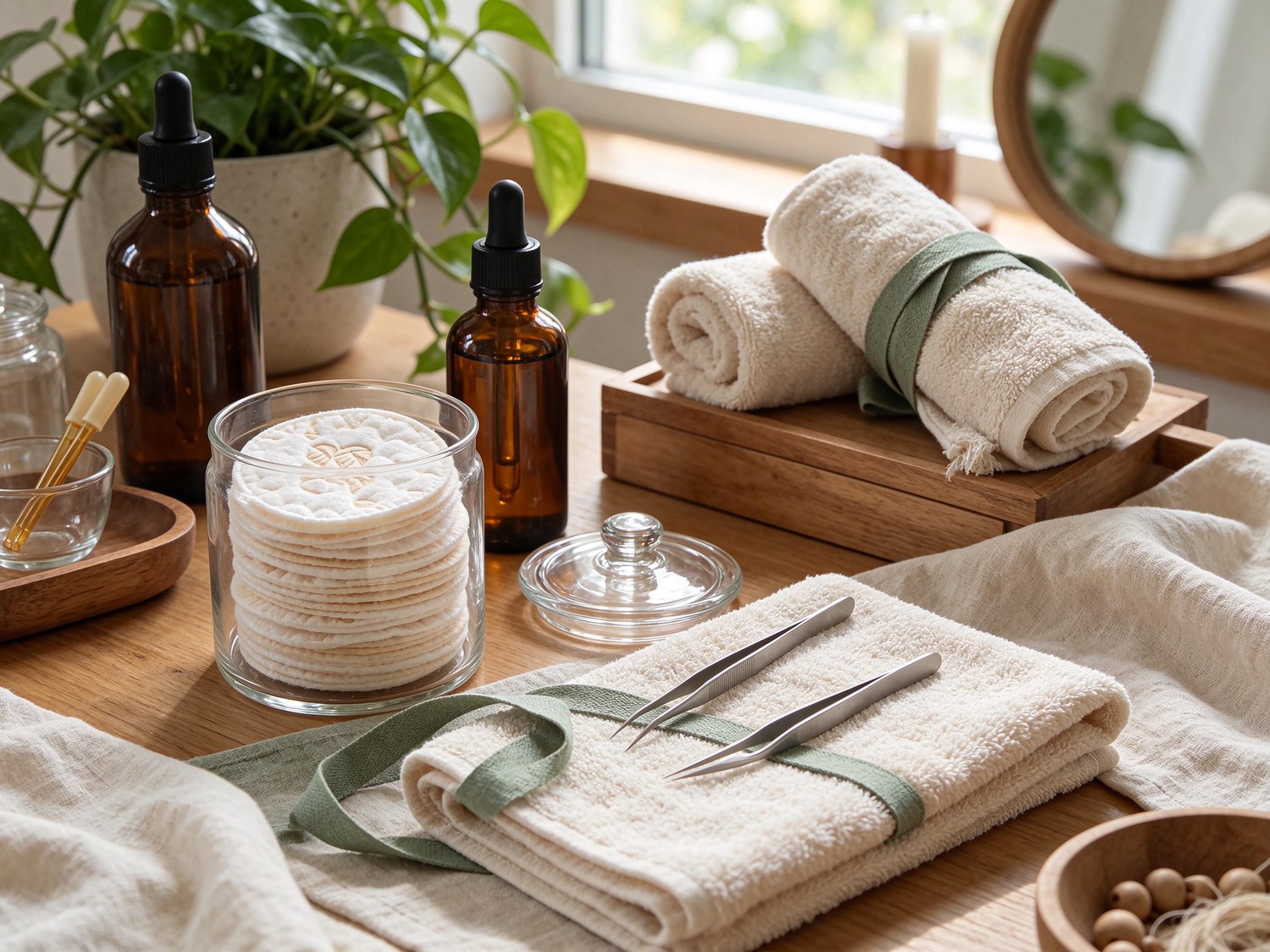
Sustainability in a lash studio rarely comes from a headline change. It comes from dozens of small operational decisions: how much product is dispensed, how tools are cleaned, how stock is stored and how often something is thrown away because it was opened and forgotten. None of these slow an appointment down, and most of them reduce cost as well as waste.
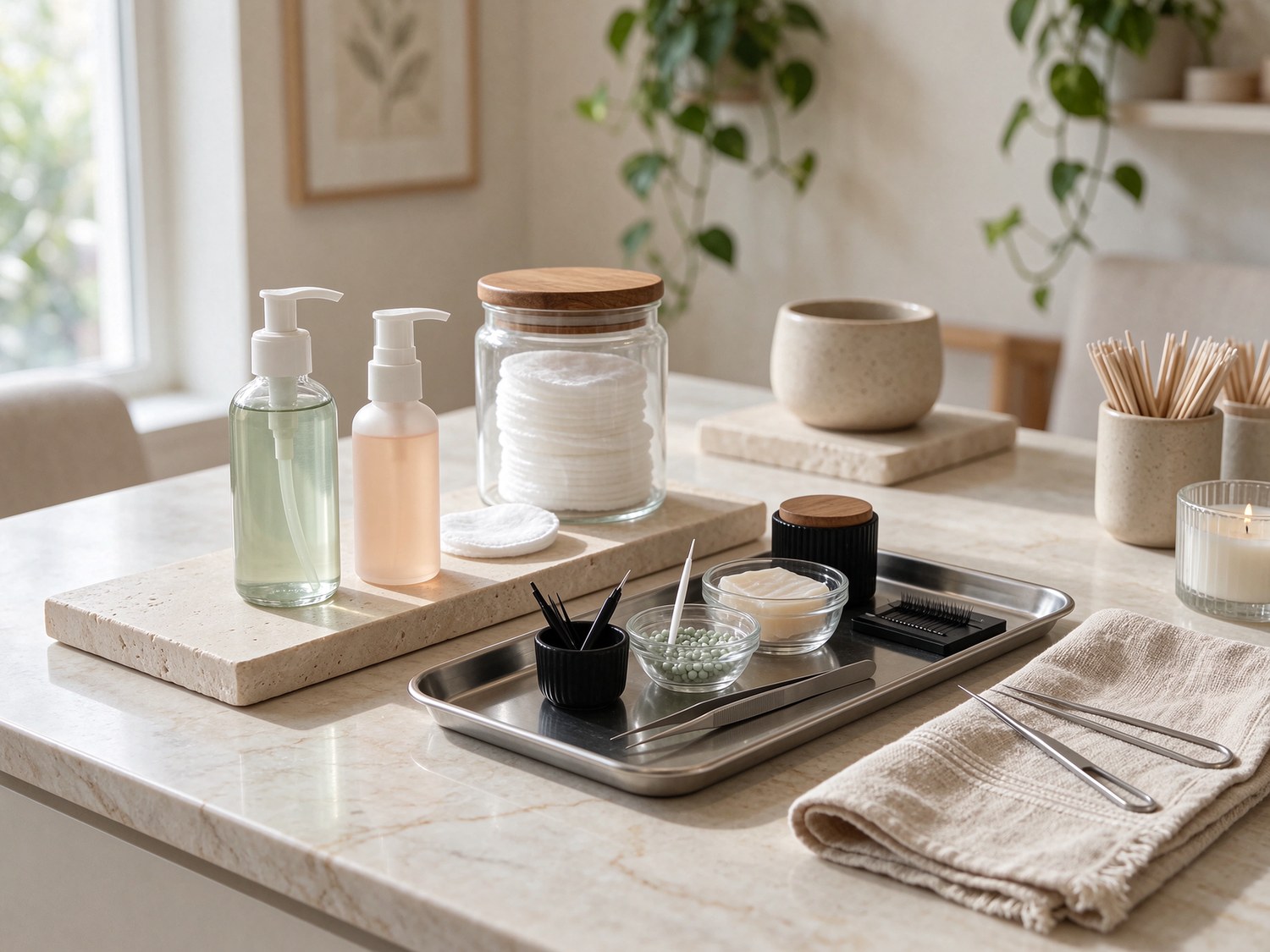
>Buy for consistency, not for choice
The least sustainable habit in any salon is re-doing work. A lifting system with predictable timing, clean application and dependable results reduces reapplication, remixes and apology appointments — all of which waste product and time.
A short, well-understood product range usually beats a shelf of half-used alternatives. Standardising on one lift system, one tint line and one adhesive per service type means fewer opened bottles, clearer training and less guesswork about which product is running low.
Reduce waste at the point of dispensing
Most product loss starts with over-preparation. Mixing more solution than the service needs, or dispensing to “be safe”, adds up quickly across a week, particularly on quieter days.
- Measure before mixing rather than estimating by eye.
- Use reusable tools wherever sanitation standards allow.
- Keep disposables organised so they are taken one at a time, not in handfuls.
- Label opened products with the date and rotate them first-in, first-out.
- Store products away from heat, sunlight and moisture, and seal them properly.
These habits protect product integrity as much as they protect the environment. A tint that has been sitting open in warm light for months is both a waste and a risk.
Give storage a proper home
Heat, humidity and poor sealing shorten the life of lift solutions, adhesives and tints. A dedicated, closed storage area with clear labelling and regular inventory checks prevents unnecessary reordering and stops expired stock being used by accident.
A monthly inventory review also reveals the truth about consumption: which products are actually being used, which were bought for one client and never touched again, and where the reorder points should sit.
Train the team, not just the owner
Education is a sustainability measure. Technicians who understand processing times, mixing ratios and placement make fewer mistakes, and fewer mistakes mean less product discarded mid-service. New team members benefit most: a confident beginner uses less, wastes less and asks for help earlier.
Simple habits are easy to teach and easy to audit: one pump of cleanser per client, a measured scoop of lift solution, no re-dipping into a pot with a used brush, and a check of the label before every treatment.
Make the choices visible
Clients notice a clean station, organised tools and products that are not covered in residue. Those signals build trust during a brow lamination or a tint, and they communicate care in a way that marketing copy cannot.
Sustainability does not need to be advertised loudly. A salon that dispenses accurately, stores properly and replaces only what it needs is already running a leaner, cleaner operation — and the guest experience improves rather than degrades.
Where to start
Pick one change this month: measured dispensing, or labelled and dated storage, or reusable tools where they are permitted. Get that habit consistent across the team before adding the next. Eco-friendly practice is a system of small reliable decisions, not a single product purchase.