
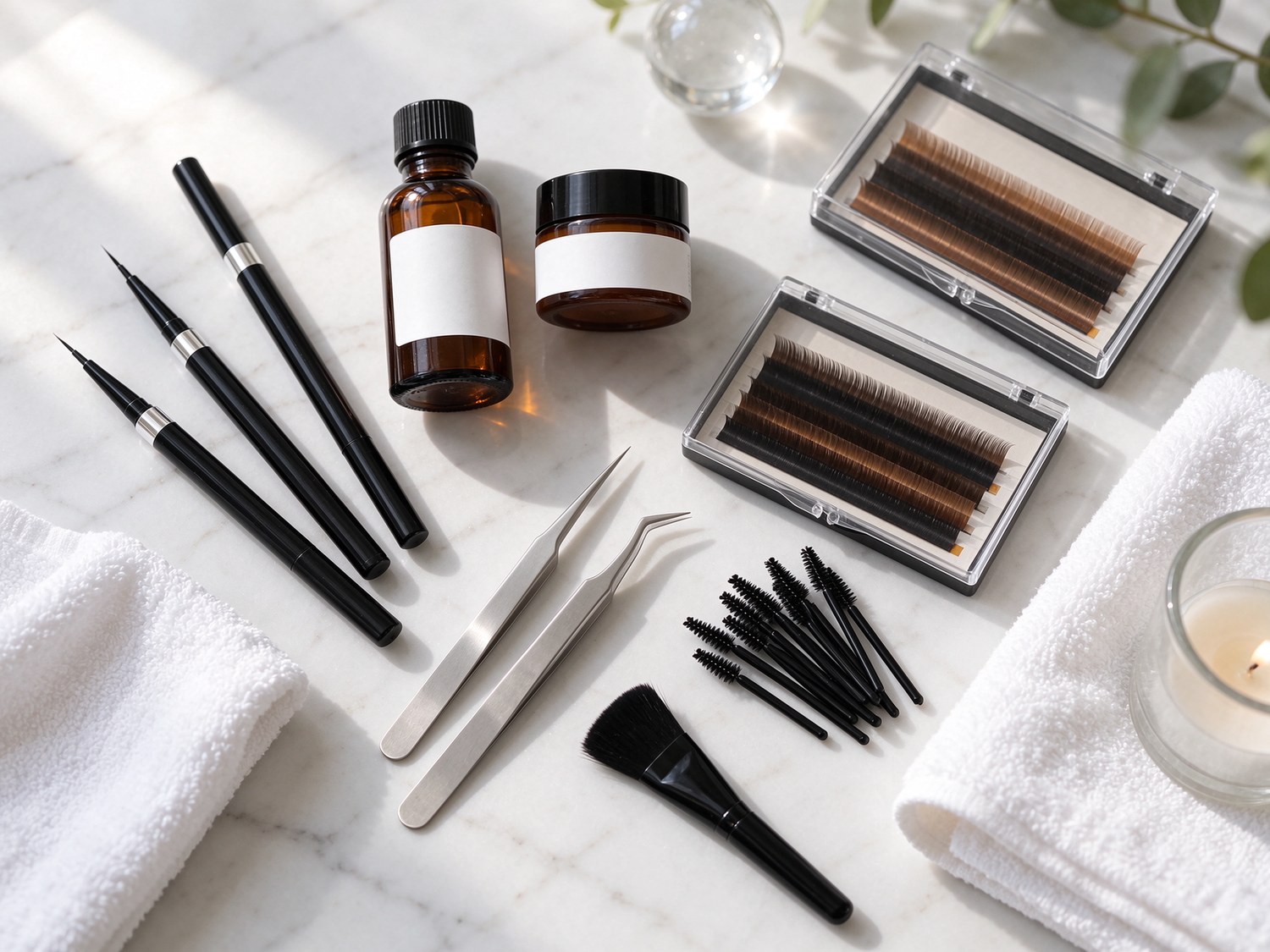
Every lash artist eventually settles into a short list of things that have to be within reach before the first client arrives. It is rarely the flashiest equipment. More often it is the quiet, unglamorous items that decide whether a set goes smoothly or turns into a problem-solving session.
These are the pieces a working kit should not be without — the ones that hold up to daily use, do one job properly, and never need a workaround.
>1. A tint range that covers more than black
If you offer lash and brow tinting alongside extensions, a single black tube is a limitation rather than a range. Lighter clients, blonde brows, redheads and anyone who finds black too heavy all need something softer. Six shades — blonde, light brown, medium brown, dark brown, auburn and blue black — cover nearly every consultation without mixing.
What matters is how the colour behaves after processing: it should stay true rather than shifting warm, last through a normal tint cycle, and mix cleanly if you blend two shades. A light brown and an auburn are the two that get reached for most in a warm-toned client base.
2. A liquid cleanser that preps rather than strips
Lash shampoo and a liquid cleanser are not the same job. Daily cleaning removes makeup and oil; a professional liquid cleanser finishes the work before application, clearing residue from the lash bath and bringing the natural lashes back to a balanced pH so adhesive can bond properly.
The detail that separates a good formula from an average one is how it leaves the hair: clean, but not tight or brittle. If lashes feel rough after cleansing, the adhesive will struggle and retention will drop within a week. Keep the bottle within reach for every set, not only for clients who arrive with heavy eye makeup.
3. Ready-made fans that do more than one job
A tray of four-fibre fans with a loose, wrapable base is the most versatile product on the trolley. The open base wraps the natural lash instead of sitting on top of it, so it holds better, and the small fan size sits between a classic lash and a volume fan. That means one tray can produce soft textured sets, hybrid looks and light volume without switching between three products.
Used well, it also cuts treatment time: fewer tray changes, fewer decisions mid-set, and a more consistent result from client to client.
4. A barrier balm for lift work
Lash lifts live or die on product placement. Step one belongs on the lashes, not under the eye shield, and a barrier balm is the cheap insurance that stops a stray millimetre of product from reaching the skin and causing irritation.
Apply it along the lower lash line and around the brow area before lifting or laminating, and it will also protect the skin during tinting. It is one of those items that seems unnecessary until the first client reacts, and then it never leaves the kit.
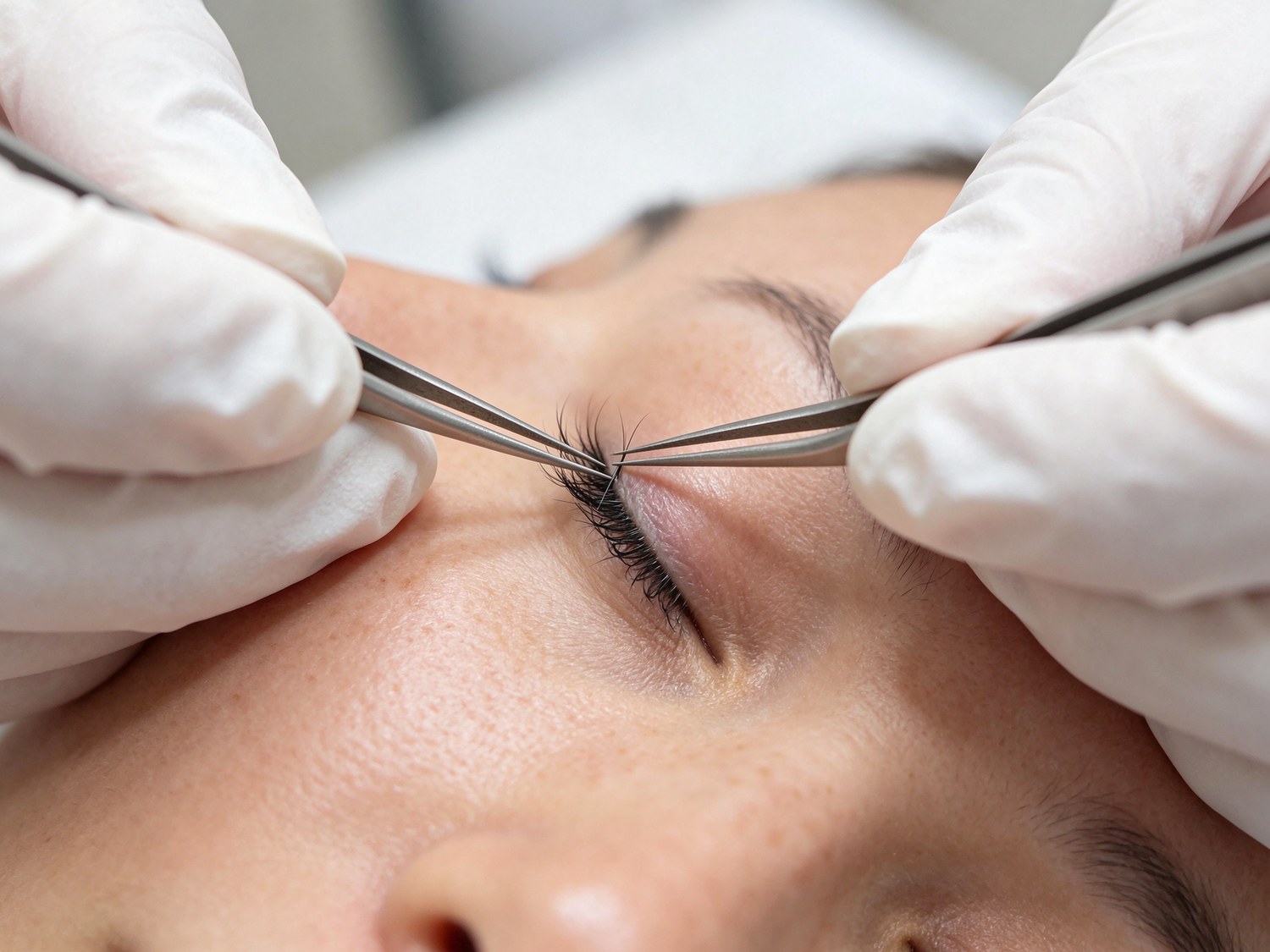
5. Isolation tweezers with the right angle
Isolation is the least visible skill in a set and the one clients feel most. Tweezers that are too wide, too long or angled wrongly make the bottom layers and inner corners a fight, and a fight costs time and accuracy.
Look for a slim tip, a comfortable grip and an angle that lets the hand stay relaxed while reaching across the eye. Once isolation feels effortless, speed improves on its own — and so does the finish, because every extension is placed on a properly separated lash.
What a non-negotiable list actually does
A short list of reliable essentials does two things. It removes the small failures that ruin a day — a tint that pulls warm, a cleanser that leaves residue, tweezers that cannot reach the inner corner — and it keeps the kit small enough to stay organised.
Everything else can be added as a treatment menu grows. The basics should simply work, every time, without a workaround.