
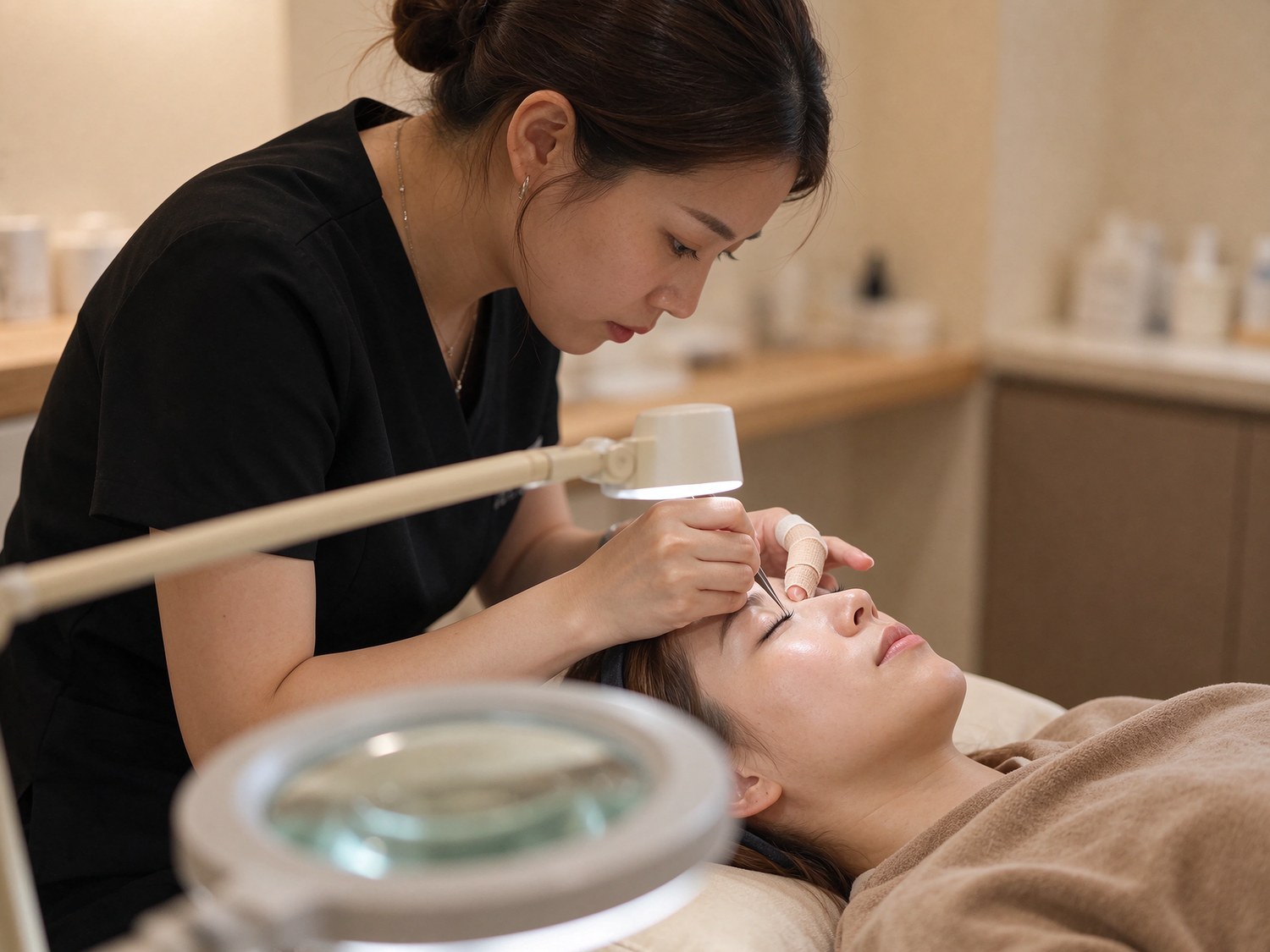
The refill appointment is where retention is won or lost, and most of that work happens in the first five minutes, before the first new lash is applied. A proper assessment of the previous set tells the stylist what the last three weeks actually did, and it tells the client why her set looked heavier at the outer corner than it did on day one.
>Start with the set, not the clock
Before cleansing, look at the whole lash line rather than the obvious gaps. Extensions that have grown out sit further from the lid than the 1 to 2 mm placement window and now hang at an angle instead of following the natural lash. They look fine at a glance and photograph badly, because the base of the extension is no longer at the base of the lash.
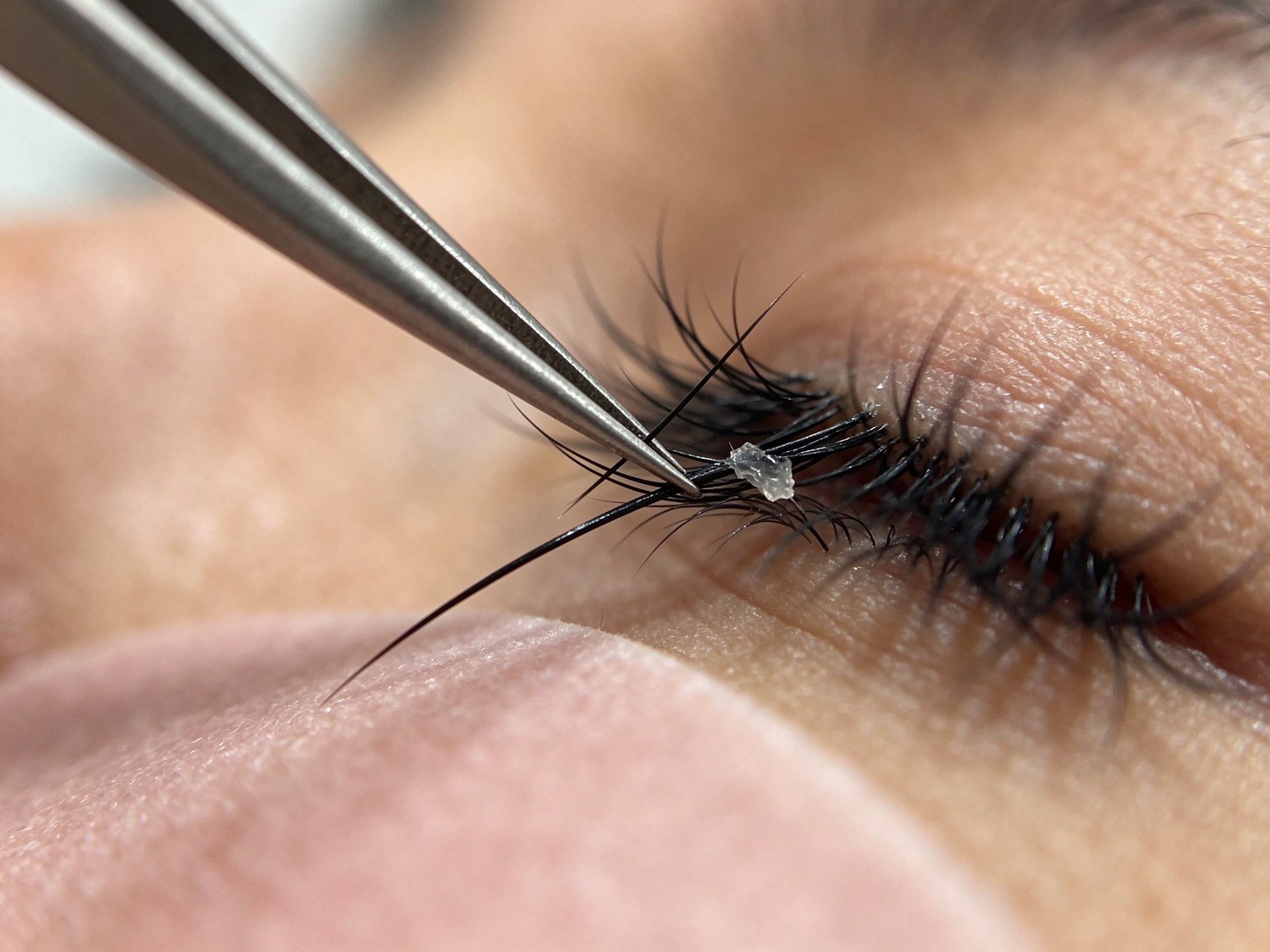
Two categories come off in almost every refill: extensions that have travelled beyond the placement window, and extensions left behind by a lash that shed its neighbour. The second group is easy to miss. When an extension disconnects from its natural lash it can fall alone, leaving a small ring of cured adhesive on the lash. A new extension applied over that residue sits on a bumpy surface and bonds to the old adhesive rather than to the lash, which is the beginning of a twist.
The removal sequence that protects the natural lash
- Assess the natural lashes before any cleansing, so residue and loose bases are visible.
- Discuss design changes with the client while her eyes are still open and the mirror is in reach.
- Cleanse the lashes and the eye area thoroughly, so each base can be seen at its true position.
- Peel only the extensions that have moved beyond the window, working from the tip down and supporting the natural lash between two fingers.
- Peel any visible residual adhesive from the natural lashes, never pulling against the direction of growth.
- Cleanse, prime and dry before any new lash goes on, then relash and record what changed.
The temptation to skip this step comes from the clock. Removing six or eight lashes takes minutes and cuts into the number of new extensions that fit in the appointment. The trade is worth it every time: a clean base accepts adhesive properly, feels weightless to the client, and holds its angle for the full cycle.
Never build on an outgrown base
Applying a new extension on top of an old one is the single fastest way to lose a client’s trust. The new base lands in the wrong place, a gap opens between the two extensions, and the bond to the natural lash is weaker because it is bonding to adhesive rather than to a clean surface. The set looks acceptable in the chair and starts to look uneven within days.
Using the assessment to change the design
What the assessment shows should influence the plan, not just the price. If the outer corner has dropped faster than the centre, the mapping weight is sitting where the natural lashes are weakest, and the answer is shorter lengths there rather than more lashes. If the inner corner is the only area shedding, the client is probably sleeping on her face or rubbing her eyes when she removes makeup. If retention is strong everywhere but the set feels heavy, the diameter is the variable to move, not the count.
Write the plan in the record: what came off, what went on, which diameters and lengths were used in each section, and what the client said about the last three weeks. Retention data collected this way is the most useful thing a lash business owns, because it turns a vague sense that some sets last longer into a pattern that can be repeated.