
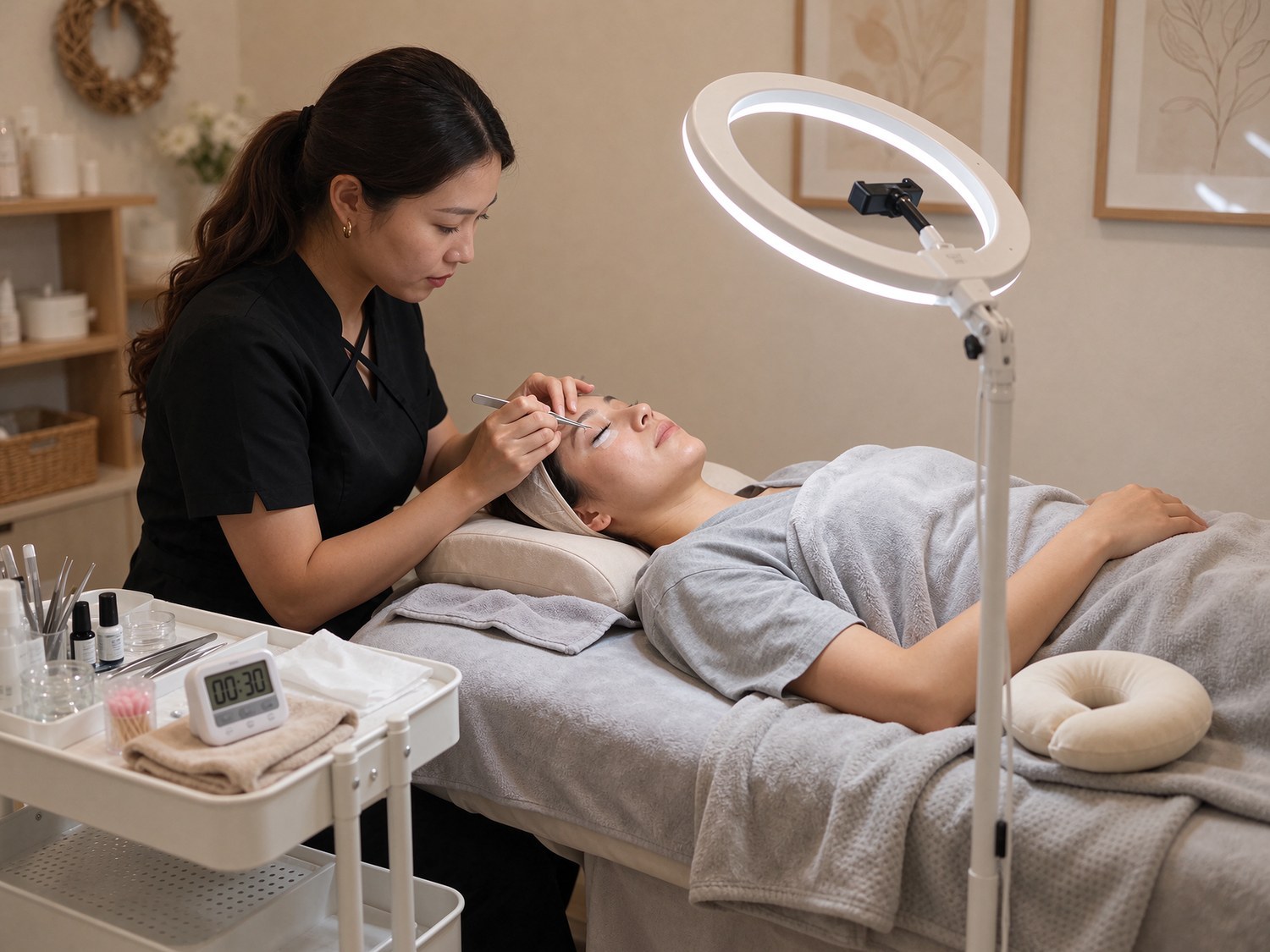
Every first-time client asks the same question at the desk: why does this take so long? The honest answer is arithmetic. A full set is not one action repeated a few times; it is somewhere between seventy and a hundred separate applications per eye, each one requiring isolation of a single natural lash first.
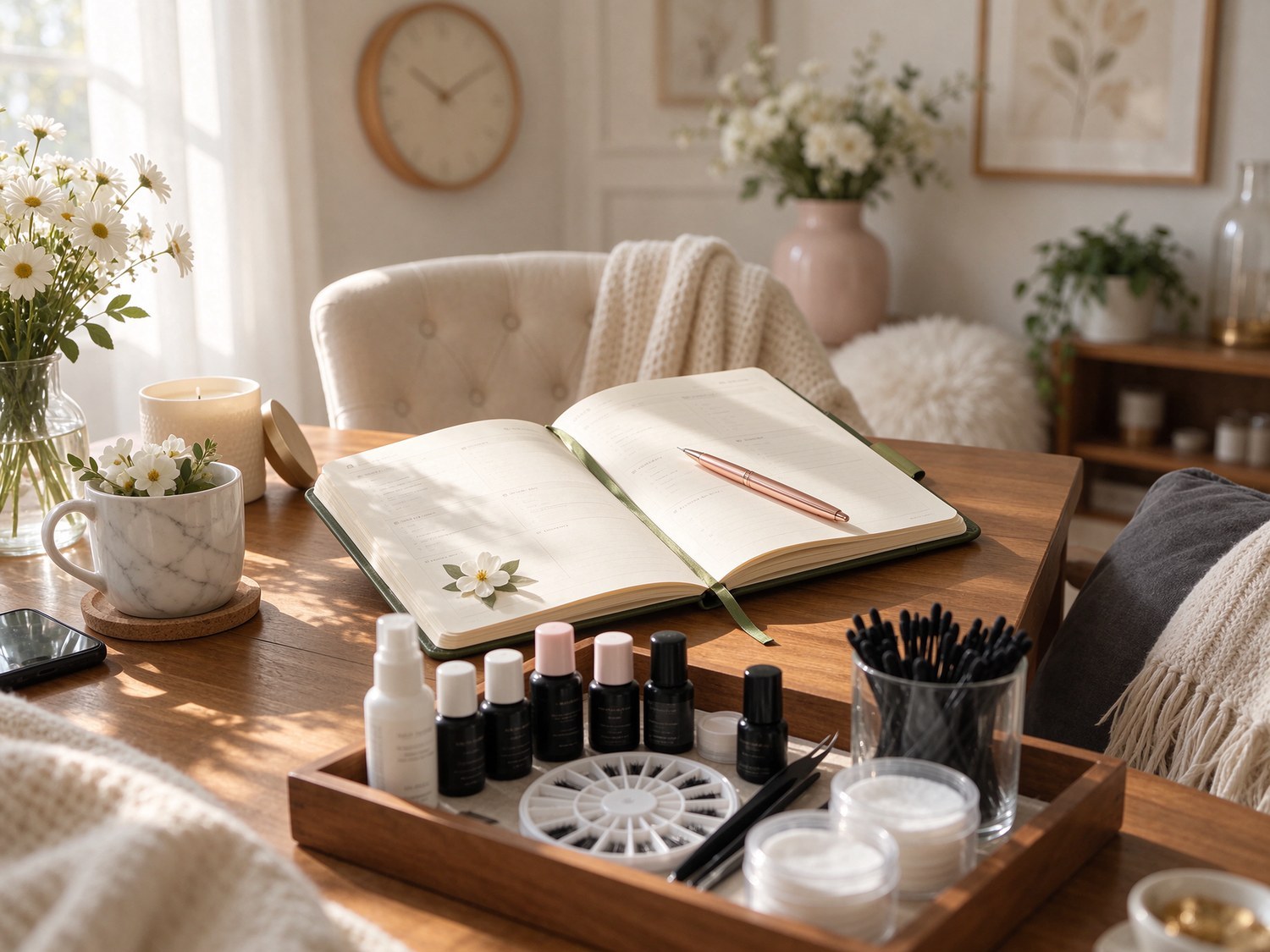
>Where the time actually goes
For each extension the stylist separates one natural lash from its neighbours, holds it clear, dips the extension, places it at the base with the correct angle, and checks the bond. On a volume set the extension is a fan, which has to be built first. Multiply by seventy per eye and the two hours stop looking like a long appointment and start looking like a fast one.
Experienced stylists can complete a full set in under two hours, and the difference between a ninety-minute set and a three-hour set is rarely speed of hand. It is preparation, isolation quality and how often the stylist has to stop and reset.
Why a refill is shorter
A refill only replaces what has been lost, typically a third to half of the set, and the isolation is easier because the lash line is already mapped. Most refills run under an hour and many run closer to forty-five minutes. That is the practical argument for maintenance: the two-hour commitment happens once, and everything after it is a short appointment on a regular cycle.
The exception is the refill that turns into a rebuild. If the previous set has grown out badly, or if most of it has shed, the appointment runs close to full-set length. That is worth saying out loud at booking, so the client is not surprised by the chair time.
What the client controls
Four habits decide whether the appointment runs to schedule, and none of them is about the stylist’s speed.
- Arrive clean. Mascara, liner and foundation around the eye area have to be removed before work starts, and that time comes out of the lash count.
- Skip caffeine beforehand. A jittery eyelid is hard to work on; the stylist waits, the clock runs.
- Settle the small things first. Water, the restroom, the last message, all before lying down.
- Put the phone away. Calls and notifications break the stillness the set depends on.
What the studio controls
Setup done before the client arrives, not during the appointment. A tray that already holds the mapped lengths, a patch and tape routine that takes two minutes instead of five, and an adhesive that reaches its working speed predictably all buy time back. So does a consultation that happened by message a day earlier: choosing a length and a curl in the chair costs fifteen minutes that could have been lash work.
The last variable is honesty at booking. Giving a first-time client the real window, and telling her which appointments run long, is what makes the schedule hold. A studio that promises ninety minutes for a full set and delivers three hours loses more from the calendar than it gains from the booking.