
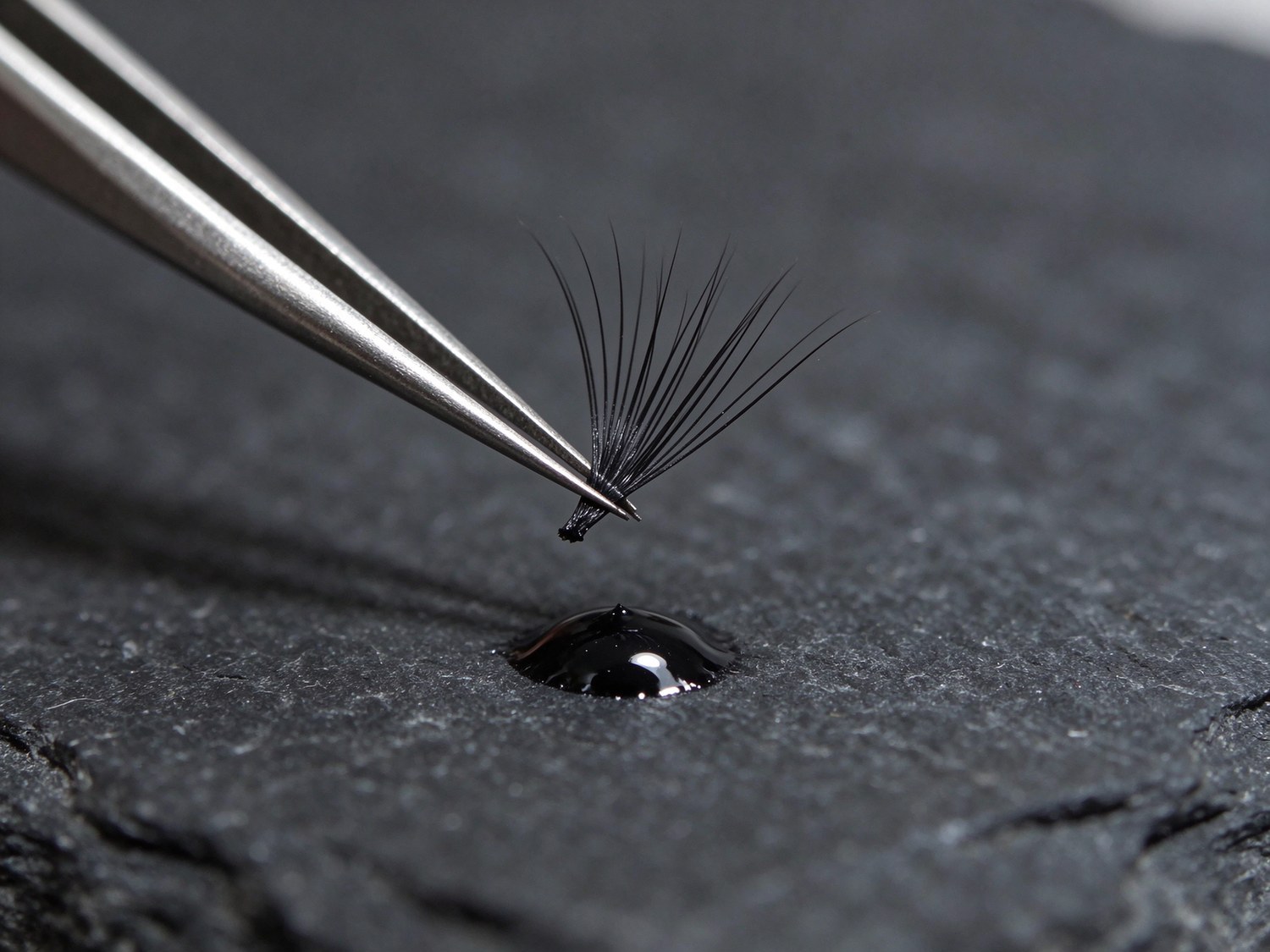
There is a specific kind of frustration in lash work that has nothing to do with the client: the fan is perfect in the tweezers, it goes into the adhesive, and by the time it reaches the natural lash the fan has closed into a narrow spike. The good news is that closed fans are rarely a mystery. They come from a short list of causes, and the fastest way to fix the problem is to work out exactly when the fan closes.
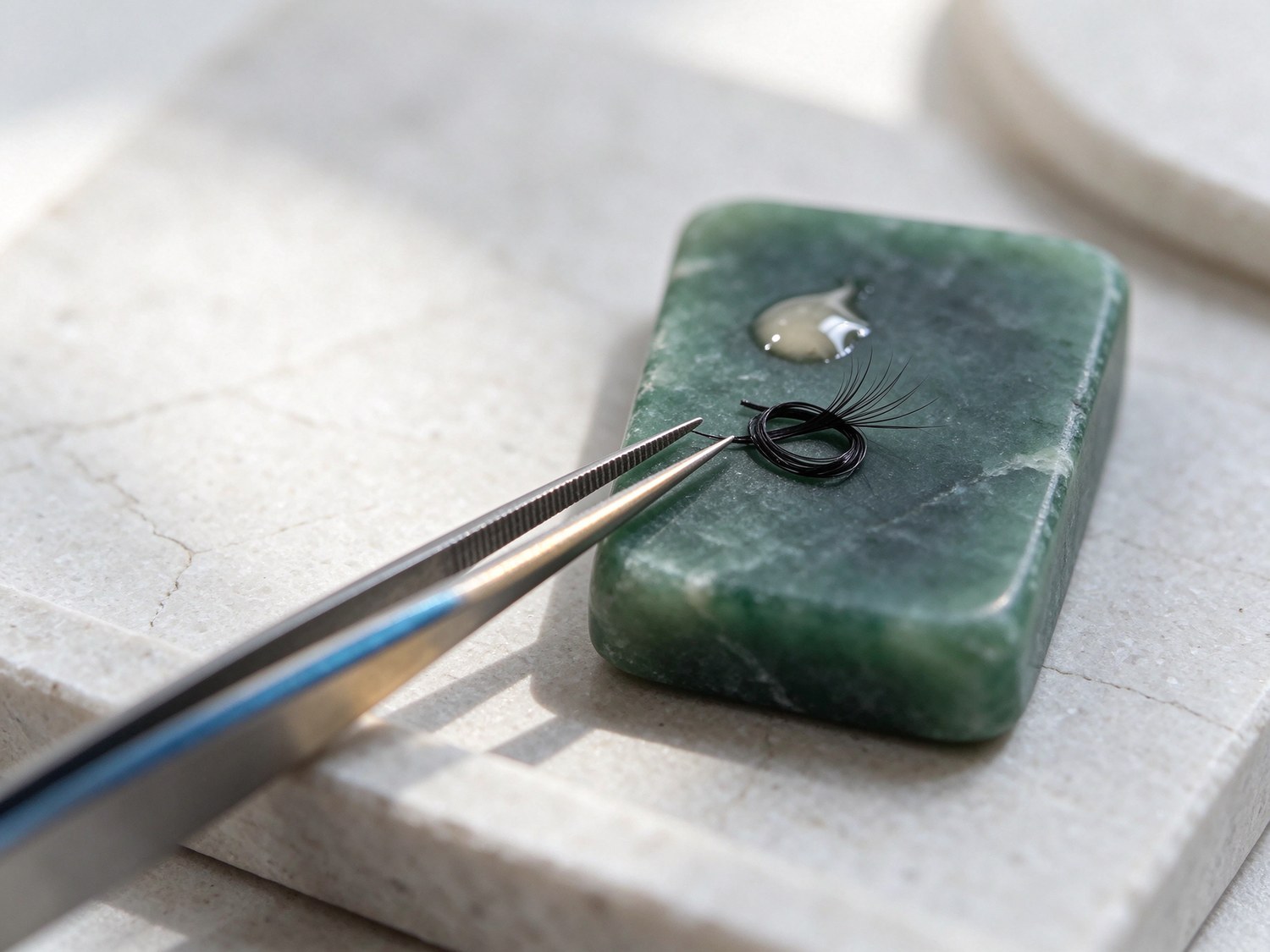
>When it closes tells you what to change
A fan that collapses while it is still in the tweezers is a construction problem. A fan that stays open until it touches the adhesive and then closes is a pickup problem. A fan that looks fine on the lash but has closed by the time the client sits up is a curing problem. Diagnosing the moment narrows the cause from nine possibilities to two or three.
The adhesive side
- Too much pickup. The most common cause by a distance. A generous dip lets adhesive travel up the stem and, as it spreads between the lashes, pulls them together. The base of the fan should enter the drop by roughly 1 to 1.5 mm, and there should be no visible blob on the base when it comes out. Tapping the excess against the edge of the drop is cheaper than rebuilding the fan.
- A glue that is too slow. Volume work needs enough cure speed for the fan to be placed and released. If the client is moving, or the fan is heavy, a slow adhesive gives the fan time to rotate before it holds.
- An old drop. Adhesive that has been sitting on the surface for fifteen minutes or more thickens, and a thickened drop both picks up more product and cures unevenly. Dispense a fresh drop well away from the old one rather than topping it up.
- A stringy bottle. If adhesive comes out of the bottle stringy, it is past its working life. There is no technique that rescues it, and the strings also make it impossible to control how much reaches the base.
The technique side
Placement speed and hold time are the two variables stylists most often underrate. A fan has to be set against the natural lash and held long enough for the adhesive to grab, typically two to three seconds, without the natural lash drifting underneath. If the natural lash swings during placement, the fan will close or attach at the wrong angle, and the cure will lock the mistake in place.
Tweezers matter more than they look. A pair with worn tips or insufficient grip lets the fan rotate between pickup and placement, and no amount of careful dipping compensates. If fans close only when a particular pair is in hand, the tweezers are the answer.
The room
Humidity and temperature change how fast adhesive cures, and the same glue behaves differently in a dry January studio and a humid July one. A room that is too dry slows curing and gives the fan time to move; a room that is too humid can cure the surface before the base is seated. Keeping a hygrometer on the trolley and adjusting the adhesive to the room is more reliable than adjusting technique to a glue that is behaving out of character.
A short diagnostic routine
When fans start closing, change one variable at a time and rebuild five fans between each change. Start with the dip depth, then the drop age, then the hold time, then the tweezers. Most stylists find the cause within the first two steps, and the fix usually improves retention at the same time, because a fan that holds its shape is also a fan with a clean, correctly placed base.