
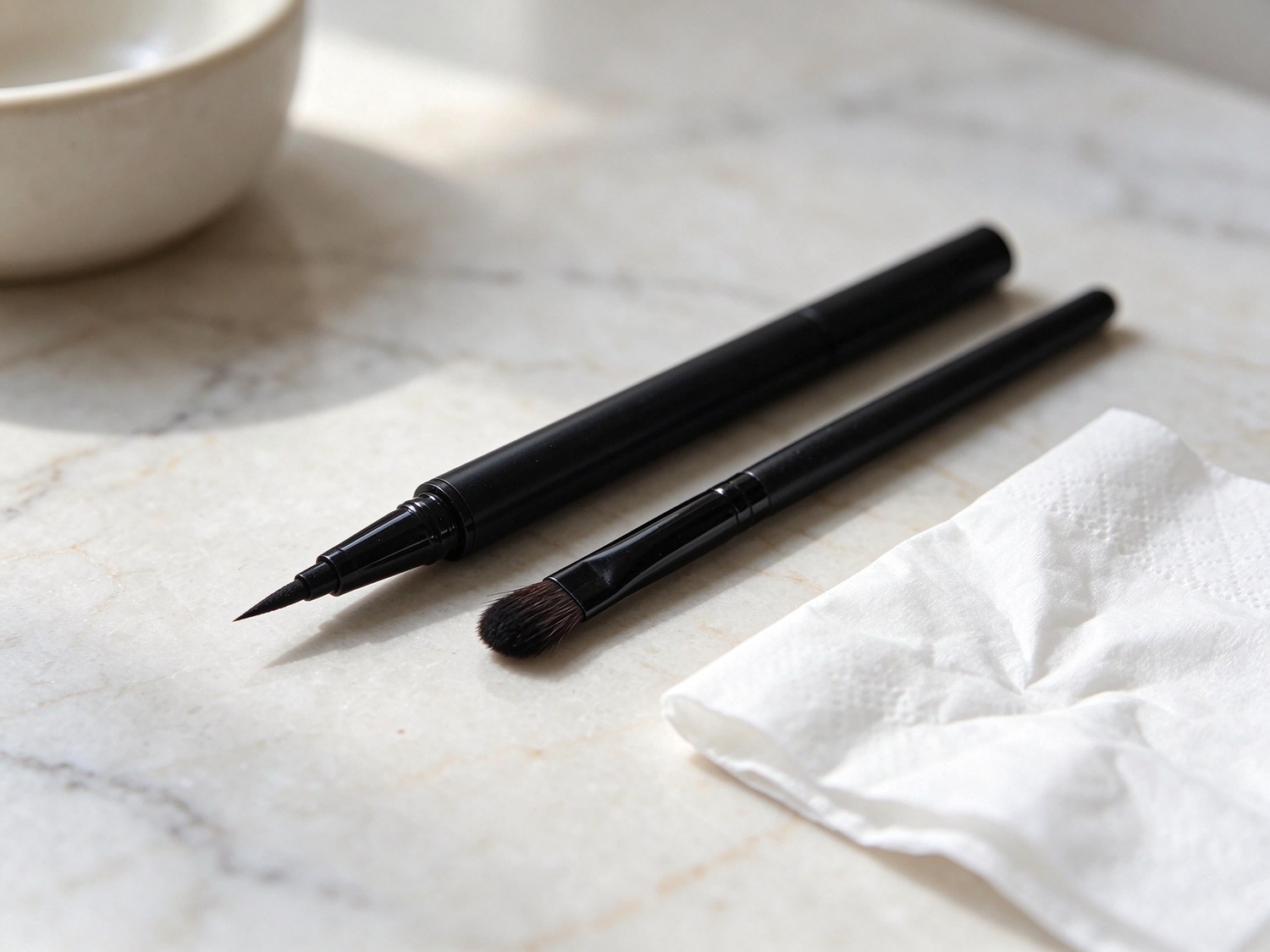
Eyeliner and lash extensions have a complicated relationship. Liner is the fastest way to make a set look denser and more defined, and it is also one of the fastest ways to shorten its life. The difference is not whether the client wears liner, but where the line goes, what it is made of and how it comes off.
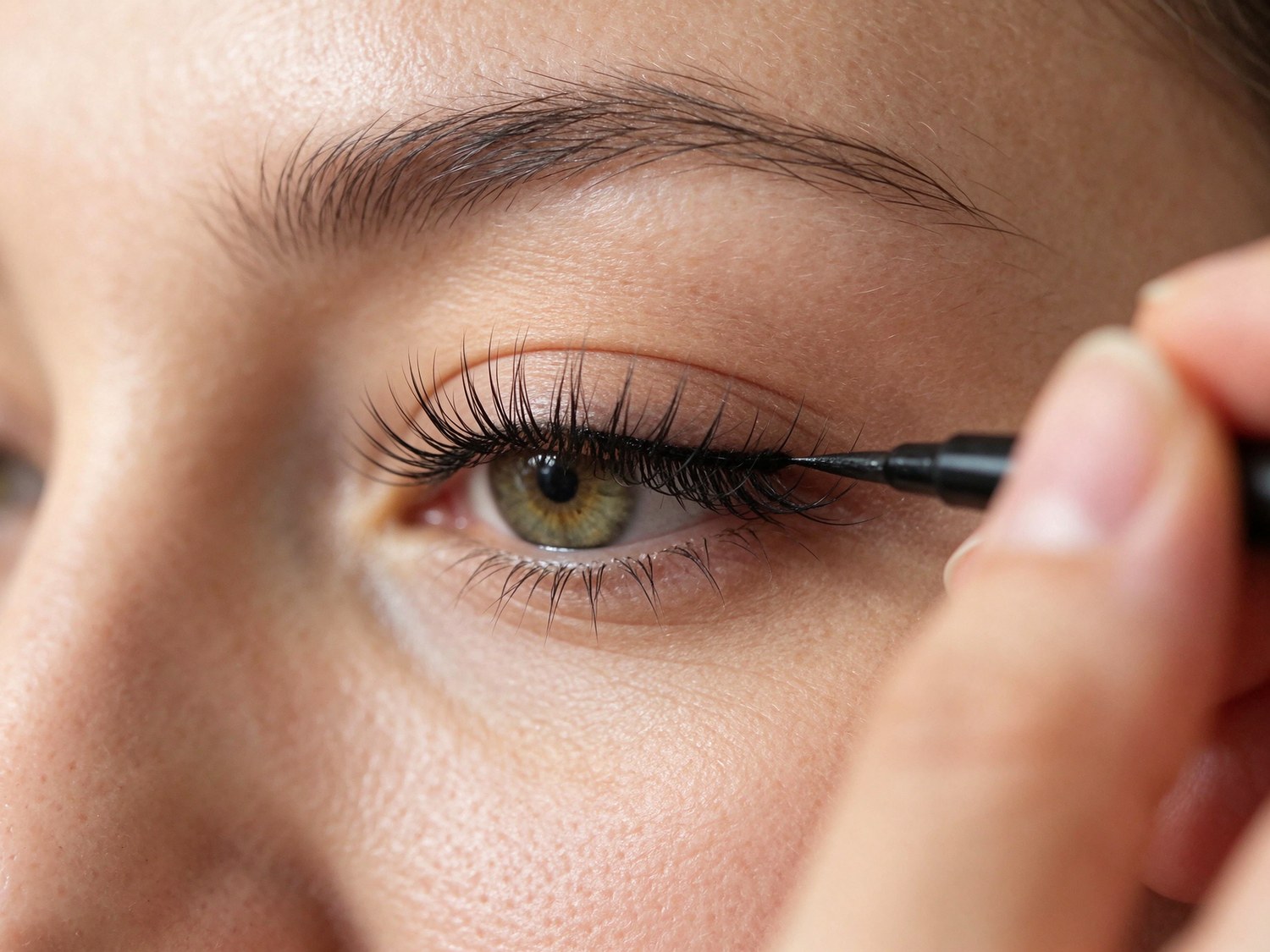
>Why liner and adhesive compete for the same square centimetre
Extensions are attached a millimetre or two above the lash line, at the base of each natural lash. Liner is applied along that same lash line, often right at the roots. Anything that lands at the attachment point can soften cured adhesive, and anything that has to be rubbed off will drag on the bond. That is the whole conflict in one sentence.
Oil is the main chemical risk. Pencil liners, cream liners and many long-wear liquids rely on oils, waxes or silicone resins to stay put, and those ingredients migrate. Friction is the mechanical risk: a liner that needs a remover pad and pressure to come off will take extensions with it over time.
Where to draw the line
The safest placement is above the lash line, on the skin of the lid, with a small gap between the pigment and the base of the extensions. The line reads as tight and defined from a normal viewing distance without touching the adhesive.
- Above the roots, not between them. Drawing between individual extensions pushes product directly into the bond.
- Fill gaps with dots, not strokes. Where the lash line looks sparse, small dots at the skin between extensions create density without coating the base.
- Keep the wing on skin. A flick that starts at the outer corner of the lid, not at the outer lash, avoids dragging the outermost extensions.
- Stop short of the inner corner. The tear duct area is where product collects and where clients rub most.
Choosing a formula that behaves
Water-based liquid liners with a film former are the most compatible choice: they dry quickly, sit on the skin rather than sinking in, and release with water and foam. Gel liners are workable if they are oil-free and applied thinly. Traditional pencils and cream shadows are the riskiest, because they need oil to glide and often need oil to remove.
Two practical checks before a client commits to a new liner:
- Read the ingredient list for oils, balms and silicone resins; if any of those are high on the list, keep it off the lash line.
- Test removal on the back of the hand: if it takes pressure or an oil-based remover, it will take pressure on the eyes too.
Color matters less than formula, but it does affect perception. Black sharpens the line and makes gaps visible; dark brown softens the whole eye and hides uneven density better, which is why it suits clients with finer or sparser natural lashes.
The peptide liner claims
Some liners now include lash-conditioning peptides and market themselves as growth products. Treat the claim calmly: a cosmetic liner can support the look of the lash line and may help condition, but it is not a treatment, and it will not replace a serum or change a growth cycle. It is also not a reason to skip a patch test. If a client wants density, the more reliable routes are a slightly darker diameter at the base, a denser mapping, or a growth serum used consistently for three to six months.
Removal without losing lashes
This is where most liner-related damage happens. The routine should be foam first, water second, pressure never:
- Apply a foaming lash cleanser directly to the closed lid and lash line.
- Let it sit for a few seconds, then work it in with a soft brush in small circles.
- Rinse with water directed away from the eye, not down over the lashes.
- Blot dry, then check the lash line for residue under good light.
- If liner remains, repeat rather than scrub. If it still will not budge, it is the wrong formula for extension wear.
Clients who wear liner daily should be told the trade-off plainly: a compatible formula and a gentle removal routine cost two minutes a day, and an incompatible one costs retention. Most choose the two minutes once they understand the mechanics.
Makeup should support the set, not compete with it. LebestPro’s eye cosmetics are formulated oil-free for exactly this reason, so a client can keep the definition she wants without paying for it at the refill.