
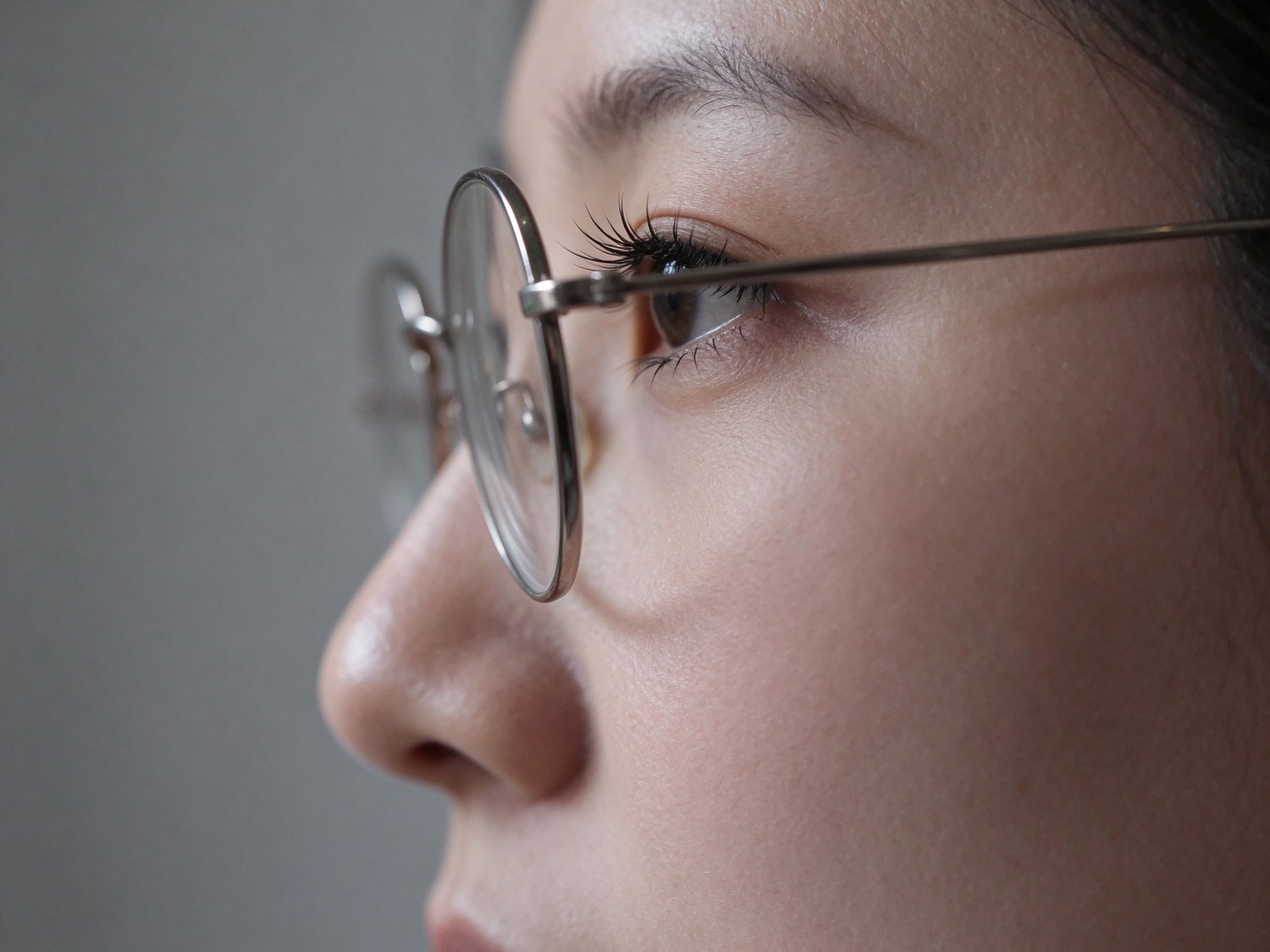
Long extensions and eyeglasses are a combination that looks effortless in photographs and feels complicated in real life. Lashes touch the lens, the lens collects smudges, the client blinks more, and the set that looked perfect in the mirror starts to feel like a nuisance by the end of the week. Most of it comes down to geometry, and geometry can be adjusted from either side.
>Why lashes hit the lens
Glasses do not sit vertically on the face. They are tilted so the bottom of the frame sits closer to the cheek and the top sits slightly further out; that angle is called pantoscopic tilt. The distance between the eye and the back surface of the lens, the vertex distance, also varies with the prescription and the frame. Long lashes extend forward and upward, right into that gap. When the gap is small, contact is unavoidable no matter how carefully the set was applied.
The consequences are practical: mascara-free smudges on the lens, extensions flicking against the frame, and a client who starts avoiding the set because it interferes with work.
Choosing frames with lashes in mind
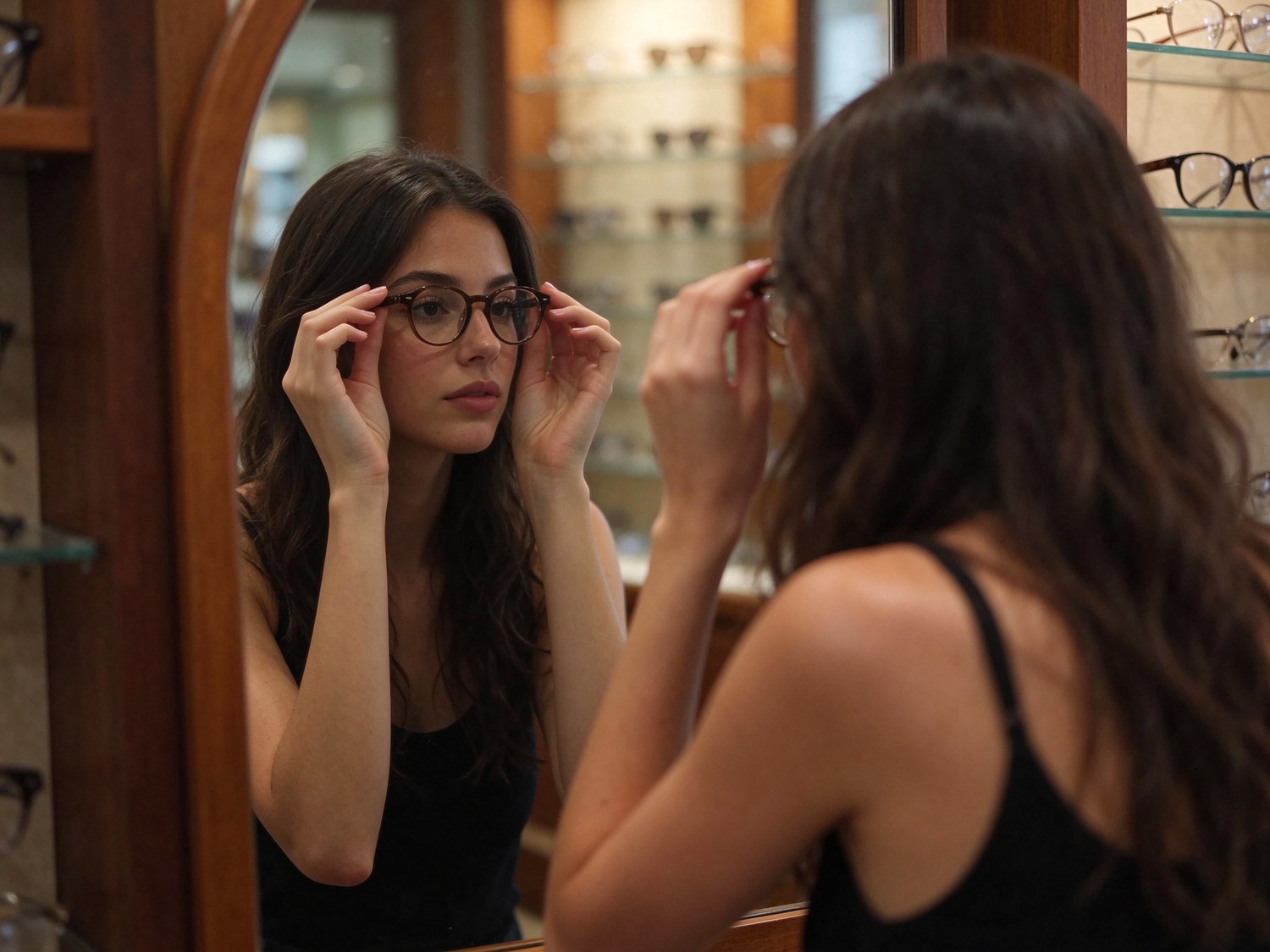
Frame shape matters more than most clients expect. Flat, narrow frames sit close to the face and leave very little room. Rounded and curved shapes, with a deeper lens and a frame front that bows away from the eye, create space for the lashes to sweep through. When a client is shopping:
- Try frames on in person, with the lash set in place, and blink slowly several times.
- Look for a rounded or softly curved front rather than a flat plane.
- Check the gap at the outer corner, where long lashes reach furthest forward.
- Prefer a frame with a slightly larger lens depth so the lash tips stay inside the opening.
Adjusting the glasses the client already owns
An optician can often change the fit without changing the prescription. Increasing the pantoscopic tilt moves the top of the frame further from the face and the bottom closer in, which is exactly the direction lashes need. Temple arms can be adjusted so the frame sits slightly further forward on the nose, and a fresh set of anti-reflective coating makes any smudging far less visible. Send the client to the optical office with a specific request rather than a vague complaint, and ask them to bring the glasses to the next lash appointment so you can see the result.
Designing the set around the frame
Adjusting the lashes is often faster than adjusting the glasses, and it is the part you control. Three levers do most of the work:
- Curl. A more dramatic curl sweeps upward rather than outward. The lash tip travels along the frame instead of into the lens, which is the single most effective change.
- Length map. Keep maximum length where the lens gap is largest, usually the outer third, and shorten the sections that sit directly behind the lens.
- Density. A slightly denser, shorter set reads as full without pushing tips forward; very long, very fine sets are the ones that flick and catch.
Map with the glasses on. Ask the client to put them on mid-consultation, blink, look down and look to each side, and mark the areas where tips touch. That takes two minutes and prevents a week of complaints. If the client wears progressives or high-index lenses, assume a tighter vertex distance and design shorter than you would otherwise.
Daily habits that keep both working
Cleaning lenses daily matters more for extension wearers, because a smudged lens is usually a sign of contact rather than of product. Microfibre cloths, no oil-based lens cleaners near the frame, and a quick blot of the lash line after cleansing keep the contact zone clean. Sunglasses should follow the same rules as optical frames: rounded shapes, enough vertex distance, and a case rather than a pocket.
If a client’s lashes are weak or the frame gap cannot be changed, a lash lift can be the better answer: it lifts the natural lash without adding length in front of the lens, and it removes the daily friction entirely. The right recommendation depends on the frame, the lash health and how the client actually wears the set, which is why the consultation should include the glasses rather than treat them as an afterthought. LebestPro’s curl range gives stylists the option to solve most of this at the lash bed, before the client ever reaches the optician.