

Retention problems are rarely a mystery. They usually trace back to one of four things: application, adhesive handling, the environment, or what the client does at home. Hair conditioner belongs to the fourth group, and it is one of the most common culprits that never gets blamed.
>What conditioner leaves behind
Most conditioners are built on silicones, fatty alcohols, quaternary ammonium compounds and oils, all designed to leave a film on hair so it feels smooth and combs easily. That film is the point of the product. On natural lashes, it is a barrier. Adhesive cannot bond reliably to a hair that is coated in silicone or oil, and the same residue interferes with the cleanser used before application, so the lash never gets truly clean.
The result is not a dramatic failure. It looks like inconsistent retention: a set that holds well on the inner half and loses extensions at the outer corners, or a client who returns at ten days with eight or nine loose lashes and no obvious cause. In the worst cases, the extensions slide rather than detach, twisting as the bond fails.
The pre-appointment cleanse is the real fix
Every appointment should start with a proper lash cleanse, even when the client swears she arrived clean. Build it as a fixed step, not a favor:
- Cleanse twice with a foaming lash cleanser, working along the lash line with a soft brush.
- Rinse with water directed away from the eyes, not down over the face.
- Blot dry, then air dry fully before isolation. Moisture at the base weakens adhesion.
- Check the lash line under good light for film, lint or residual makeup before you start mapping.
If the lashes still feel coated after two cleanses, the client is arriving with conditioner residue, and the conversation should move to shower habits rather than to more product.
Coaching the shower, not just the shampoo
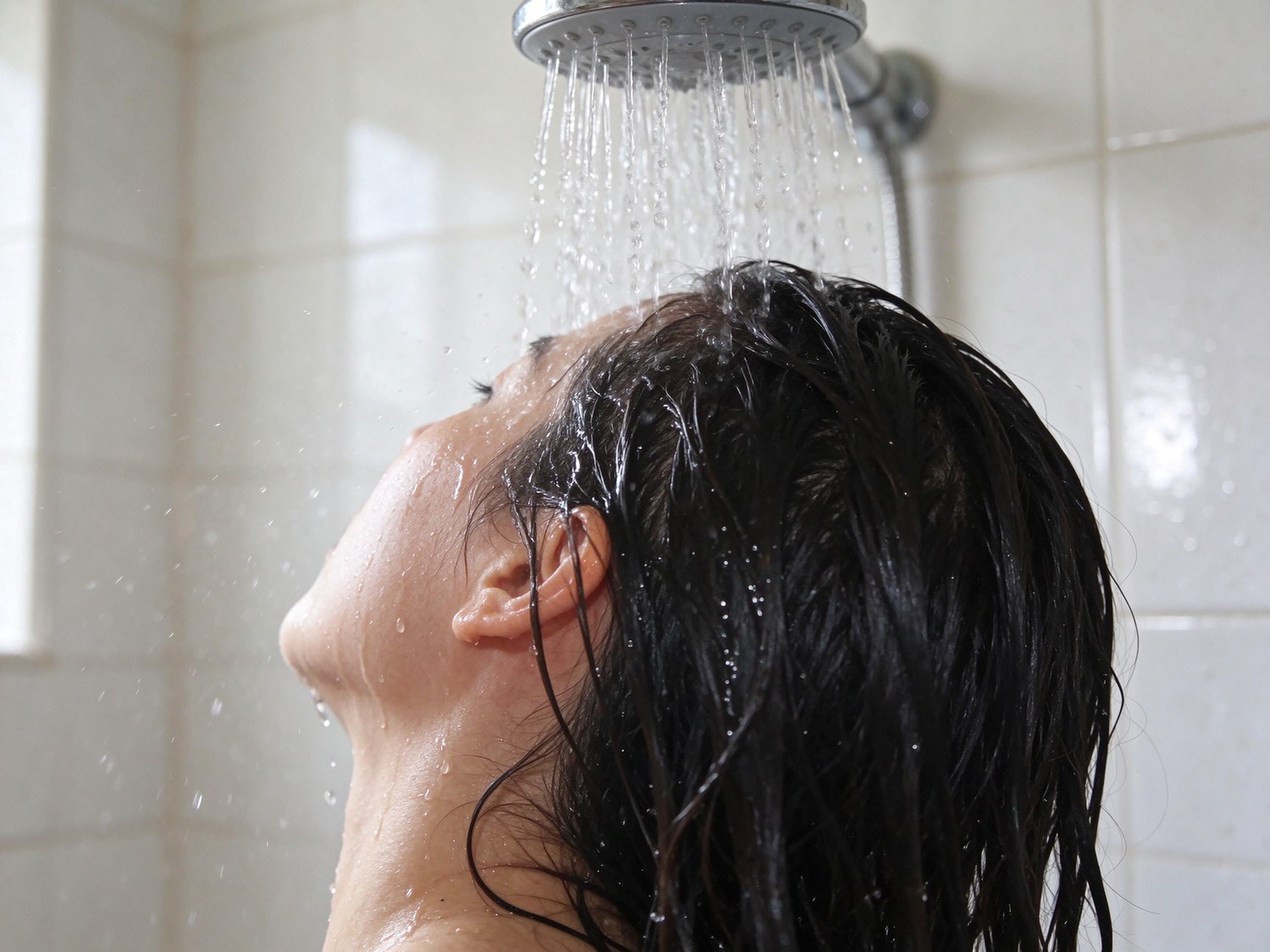
Clients do not usually condition their lashes on purpose. Conditioner reaches them as runoff: it is applied higher up, rinsed, and travels down over the face. Four small changes in the shower solve most of it:
- Condition the ends only. Keep conditioner below ear level and away from the roots.
- Tilt the head back. Rinse with the face angled up so water and product run behind the head rather than over the eyes.
- Use a handheld shower head. Directing the flow makes the tilt effective and keeps runoff off the lash line.
- Rinse last, then cleanse the lashes. A quick foam cleanse at the end of the shower removes anything that landed during rinsing.
Cooler water helps as well: hot water softens the adhesive more and opens the cuticle, which makes hair more receptive to conditioner film.
The salon backwash problem
Stylists spend their day leaning over a basin, and a client who has just had her hair washed is a client whose lashes may carry conditioner residue. Two habits reduce the risk: keep a neck towel or eye shields in place during any hair service that precedes lashing, and never let a conditioning treatment be the last step before application. If both services are booked together, wash and condition first, then cleanse the lashes as a separate step at the lash station.
What to hand the client
Keep the home instruction to four lines, written rather than spoken:
- Condition from mid-length down, never near the roots.
- Tilt your head back and rinse with a handheld head.
- Cleanse lashes with foam after every shower.
- Skip leave-in hair oils and serums near the hairline.
Then check the result at the next refill. If retention improves, the cause was the shower. If it does not, look at the room, the adhesive drop and cure time, in that order. LebestPro’s lash cleansers are formulated to cut through that kind of film without stripping the adhesive bond, which makes the pre-service cleanse a reliable reset rather than a guess.