
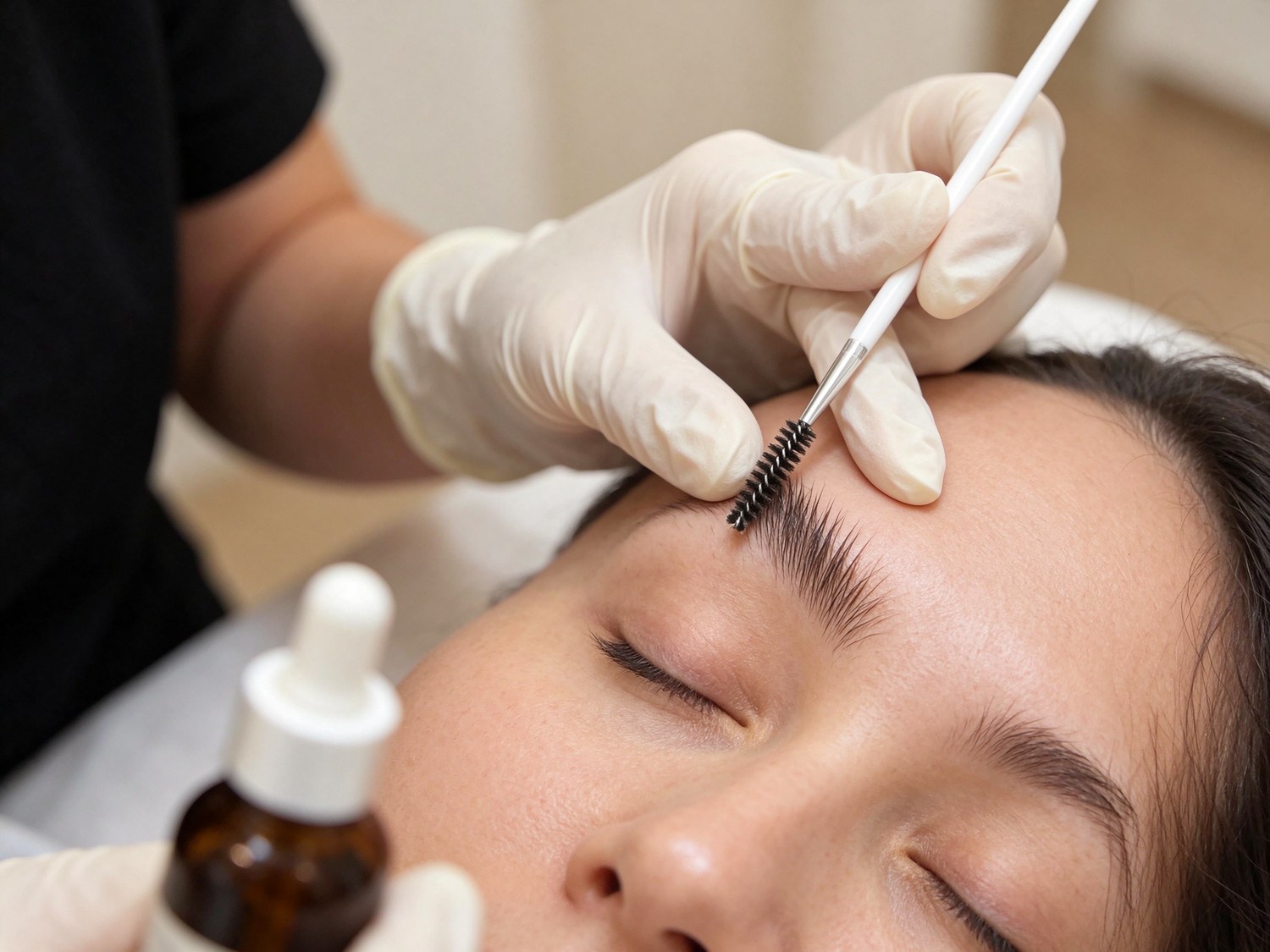
Brow lamination is judged in the mirror on the day, but it is really maintained in the weeks afterwards. The service changes how the hairs sit and gives the artist control over direction and shape; what happens at home decides whether the brows still feel soft and manageable when the client returns for their next appointment.
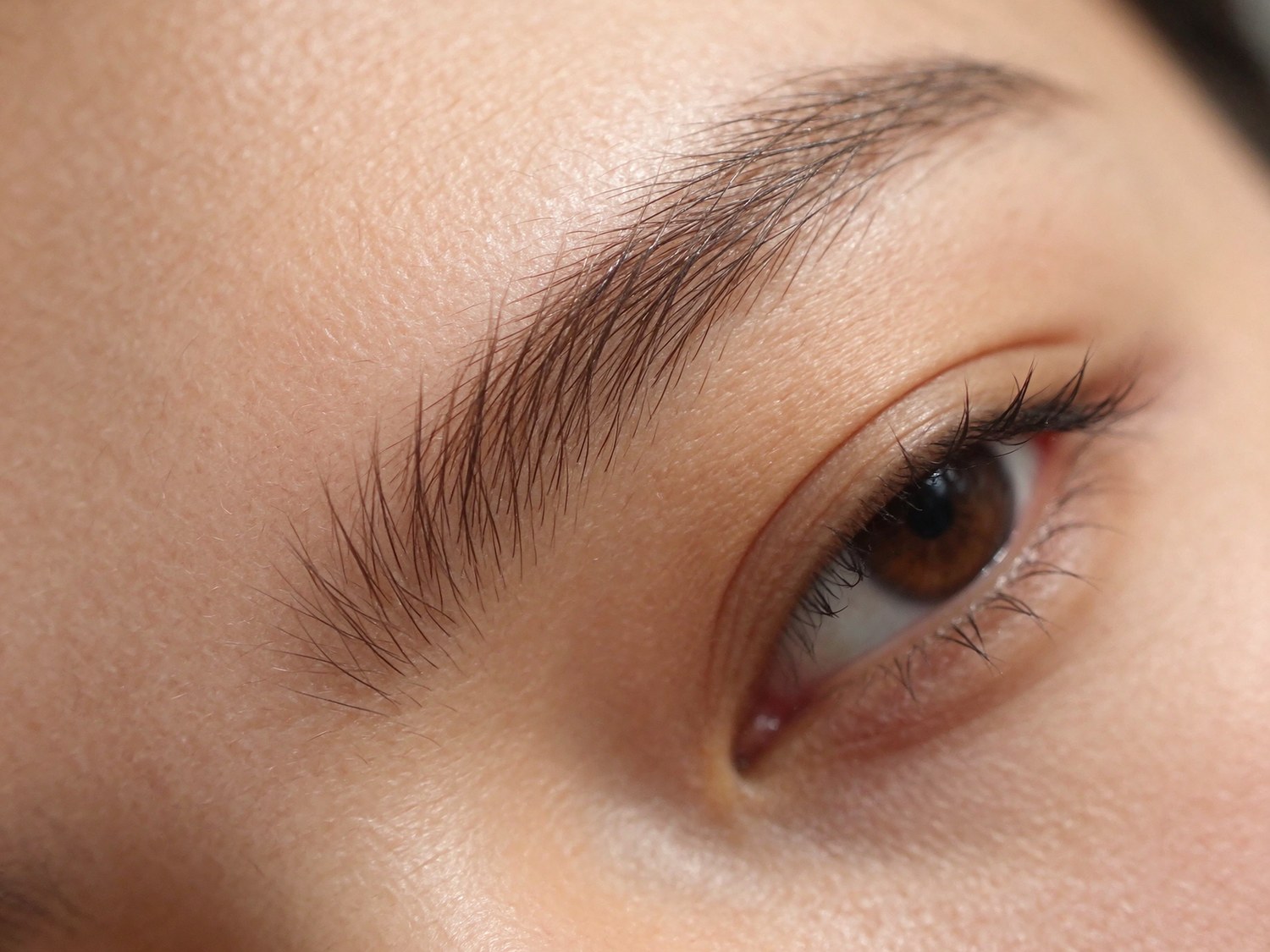
>What lamination does to the hair
Lamination redirects the brow hairs so they sit in a more uniform shape. It is particularly effective on brows that grow downward or in conflicting directions, because it lets you place hair rather than fight it.
It is also a chemical service. The hairs have been processed, and their behaviour during styling has changed. That is the single most important thing to explain to a client, because it frames the whole aftercare conversation: this is not a styling session, it is a treatment with a recovery period.
Why conditioning belongs in the conversation
Clients tend to look at shape first. Artists know that condition matters just as much: dry or unruly hairs are harder to brush into position, and they make the finished brow feel coarser than the client expected.
Conditioning supports a softer, smoother feel and makes daily grooming easier. Explaining why — rather than just handing over a product — is what gets the routine done at home. A client who understands that conditioned hairs brush into shape more easily will use the product; a client who is simply told to use it often will not.
When to start
Timing depends entirely on the lamination system used. Follow the manufacturer’s directions for the specific product, and give the client a clear date rather than a vague “after a while”.
Most systems require the brows to stay dry for a set period after the service, commonly around 24 hours, and conditioning starts once that window has passed. Because the rule differs between systems, avoid generic advice that may not match what you actually applied. Product-specific guidance sets a clear expectation and keeps home care connected to the treatment the client received.
Fitting it into a real routine
Clients want aftercare that slots into what they already do. Keep it to three steps, in order: cleanse gently, condition while the hairs are still slightly damp, then brush into shape once dry.
Explain how much product to use — a rice-grain amount is usually plenty for two brows — and where to put it: along the hairs rather than onto the skin, so the brow does not become a greasy patch. Show the brushing direction with your own hand on their brow, and tell them how often: once or twice daily is enough; more does not make the hair healthier.
What to hand over before they leave
Clients forget detail the moment they step outside, especially when they are pleased with the result. Keep the guidance short, specific and written down:
- When they can begin the conditioning routine
- How to groom the hairs at home, with the direction demonstrated
- Which aftercare products suit the service — the ones you actually used
- What to avoid in the first days: water on the brow area, heavy makeup on the hairs, rubbing, saunas and steam
- How to reach you with questions, and when to come back
A short written card plus a one-minute demonstration covers almost everything a client will actually retain. The demonstration matters more than the card, because brushing is a physical habit.
Not every client needs the same routine
Brow texture and growth patterns vary, and so do beauty habits. Ask how the client normally grooms and whether they wear makeup on the brow area before recommending anything.
A client who fills her brows daily will want a routine that keeps the hairs cooperative under pencil and powder. A client who does nothing to her brows needs the simplest possible version, or she will abandon it. Keep the manufacturer’s guidance at the centre and adapt the delivery, not the product.
Conditioning is a small addition to the service and a large one to the result. Clients who leave with a routine they can actually follow come back with brows that still look like the ones you finished — which is the best advertisement a lamination service has.