
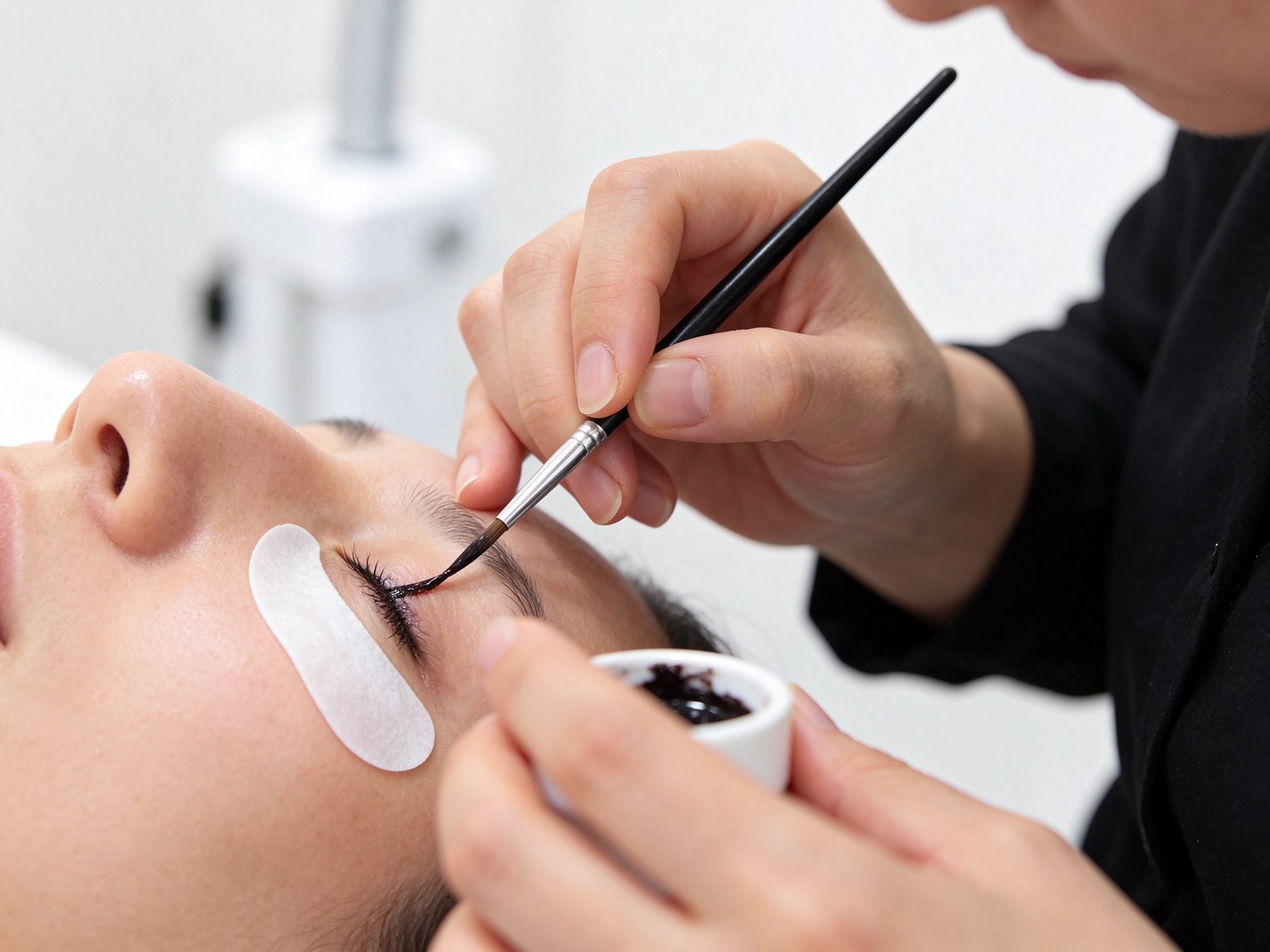
Some clients want darker, more defined lashes without adding mascara to their morning routine. A professional lash tint can deliver exactly that — but only when it is offered to the right client at the right moment. Knowing when to suggest it turns an add-on into a genuinely useful recommendation rather than an upsell.

>When a client wants definition, not length
Clients with naturally blonde or light brown lashes often find that their lash tips disappear in daylight without makeup. A tint deepens those lighter hairs, so the natural lash line reads as more defined and the eye looks more open.
Medium-brown lashes can also benefit from a richer shade, particularly for clients who keep their eye makeup minimal. The limit is worth stating during consultation: tinting changes colour, not thickness or length. If a client wants density or a curl that holds, a lift or extensions are the better conversation.
A useful opening question is simply what they would change about their natural lashes. If the answer is “I wish they were darker”, tinting is likely the whole solution.
Pairing a tint with a lash lift
Lifts and tints work well together when the products and protocols allow it. The lift creates the curl; the tint adds depth. For clients with pale tips, the combination makes the lifted shape far more visible and gives a polished result that survives without mascara.
Before recommending both in one appointment, check lash condition and treatment history, and follow the manufacturer’s guidance on compatibility, processing times and service order. Combining is a protocol decision, not a convenience decision.
Keeping the finish believable
A client who wears soft, understated makeup usually wants a tint that sits within her own colouring. Someone who wears black mascara every day may prefer a deeper shade. Ask about their usual makeup rather than guessing from hair colour alone, and set expectations clearly for first-time tint clients.
The most common disappointment is not the colour itself but the contrast: a shade chosen for a photo can look heavy in office lighting. When in doubt, go one step lighter and reassess at the next appointment.
Clients who want a lower-maintenance routine
Tinting fits neatly into the routine of anyone who would rather not spend time on eye makeup. The colour sits on the hair as it grows and fades gradually with the natural lash cycle, so there is no daily product and no removal at night.
Ask how often they wear mascara and what they like about their current routine. A client who rarely touches eye makeup may find subtle definition is all she needed; a client who loves dramatic volume will still want mascara or extensions, and a tint alone will feel like a compromise.
Before holidays and events
Travel is a natural prompt. A tint means no mascara in the suitcase and no smudging on a long flight, which appeals to clients preparing for a beach trip or a weekend away. Events create a second opportunity: clients who want definition in photographs without heavy makeup often prefer a tinted natural lash line to a full set.
Timing matters, especially for first-timers. Discuss sensitivity testing and book the appointment early enough that an unfamiliar treatment is not being introduced the day before a wedding. And avoid promising waterproof results or guaranteed longevity — the outcome depends on the product, the client’s lash character and aftercare.
When to say no
A good tint starts with a careful consultation, not a patch test alone. Review eye health, previous cosmetic reactions and current lash condition before offering the service.
- Known sensitivity to tinting products or their ingredients — do not proceed.
- Redness, inflammation or irritation around the eye — postpone until it settles.
- Damaged, over-processed or very sparse lashes — treat lash health first.
- Recent eye surgery, active infection or an ongoing eye condition — refer to a medical professional.
Declining a service is part of professional judgement, and clients read it as care rather than as refusal. A tint offered at the right time, in the right shade, is one of the simplest ways to make a natural lash line look finished.