
Semi-permanent lash extensions currently depend on one chemistry: synthetic fibers bonded one by one to natural lashes with a cyanoacrylate adhesive. There is no practical alternative at scale, which makes understanding reactions part of the job rather than an optional extra.
Why reactions happen
Cyanoacrylate is a reactive monomer. Once cured it is largely inert, but during curing it releases vapor. Reactions usually come from cumulative exposure to that vapor rather than from one dramatic incident.
“Sensitive” and UV adhesives
Low-sensitivity adhesives reduce the cyanoacrylate concentration. The trade-off is retention: weaker bonds mean more frequent fills, and across a year that can mean more total adhesive exposure rather than less. UV adhesives genuinely shorten the fume window because curing is immediate, but they still contain cyanoacrylate, so they lower risk rather than remove it.
Patch tests are worth offering, especially for new clients or anyone with a history of sensitivity. Be honest that a negative patch test does not guarantee safety — most reactions build gradually over months or years.
How often it really happens
Genuine allergic reactions are uncommon. Experienced artists typically see one or two across five years, and reactions almost always develop slowly. Long-standing clients are more likely candidates than first-timers.
The early warning is specific: itchy or slightly puffy lids in the days after an appointment. Do not dismiss it. Stop extensions and consider a lash lift instead, since lifts use a different chemistry and are usually tolerated by clients who react to adhesive.

When reactions are a technique problem
Artists seeing reactions more often than average usually find the cause in application rather than in the client. Three patterns recur:
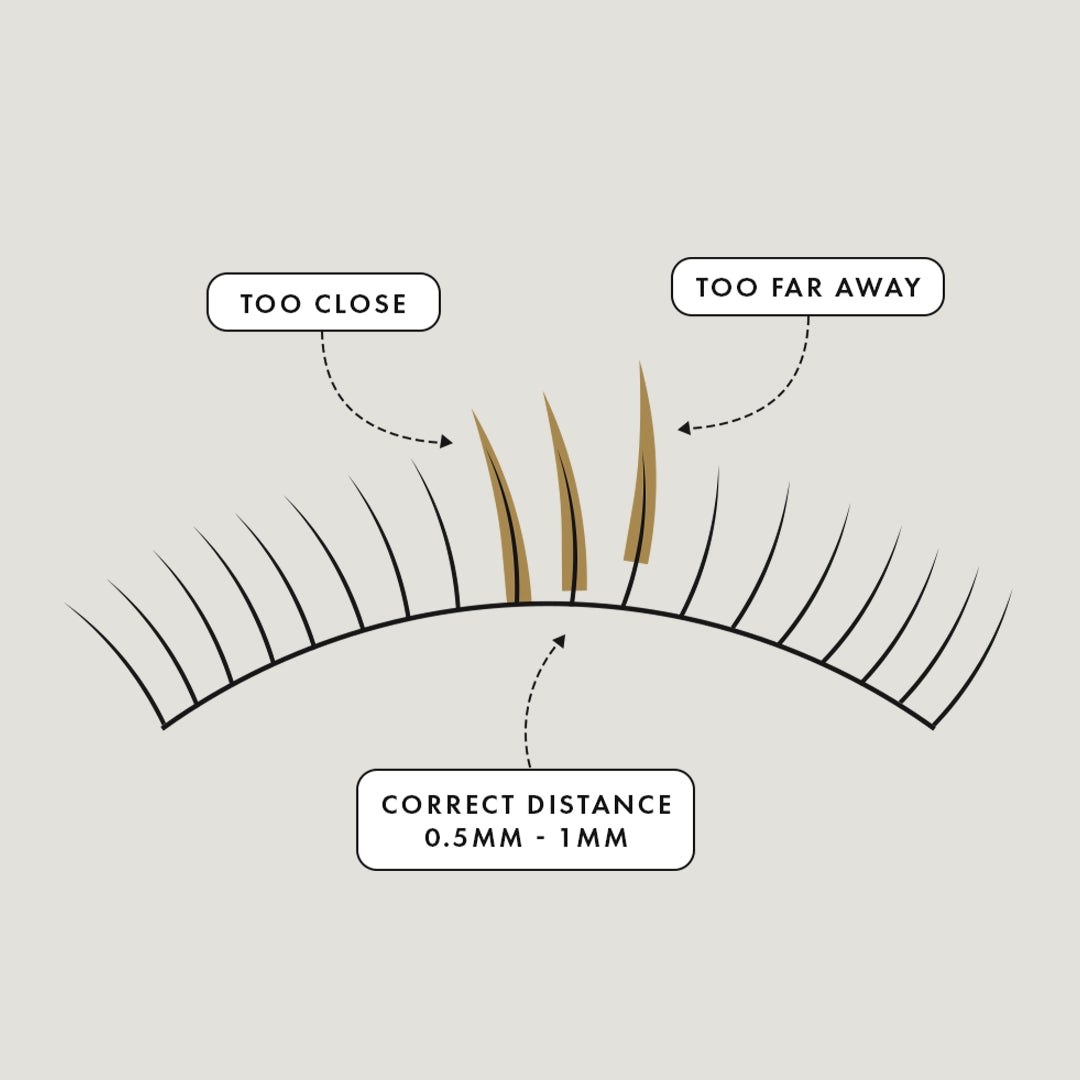
- Too much adhesive too close to the eyelid. Bond points nearer the skin raise risk sharply.
- Eyes not fully closed. Taping that exposes the waterline increases vapor contact with one of the most absorbent membranes on the face.
- The glue drop left near the client. Vapor is inhaled as well as absorbed, so distance matters more than most people assume.
Technicians are exposed every day
Clients are exposed once every few weeks. Artists are exposed every working day. Persistent headaches, sinus irritation, puffy eyes and fingertip eczema are the classic technician symptoms, and once sensitized the condition rarely resolves.
Ventilation is the single highest-value investment: an extractor fan, or at minimum a window kept open. A mask and eye protection should be non-negotiable, the drop stays far from both faces, and adhesive should come from suppliers who can evidence regulatory compliance. Widening the menu — brows, lifts, facials — cuts daily adhesive hours and extends a career.
LebestPro adhesives are manufactured to documented safety standards, and the technical team can advise on the retention-versus-sensitivity trade-off when choosing a glue for a reactive client.