
A lash lift lives or dies on the shield. The shape sets the curl direction, decides how the natural lashes sit against the silicone, and ultimately controls what the client sees in the mirror. Choosing it deliberately — rather than reaching for the same shield every time — is the difference between a lift that suits the face and one that fights it.
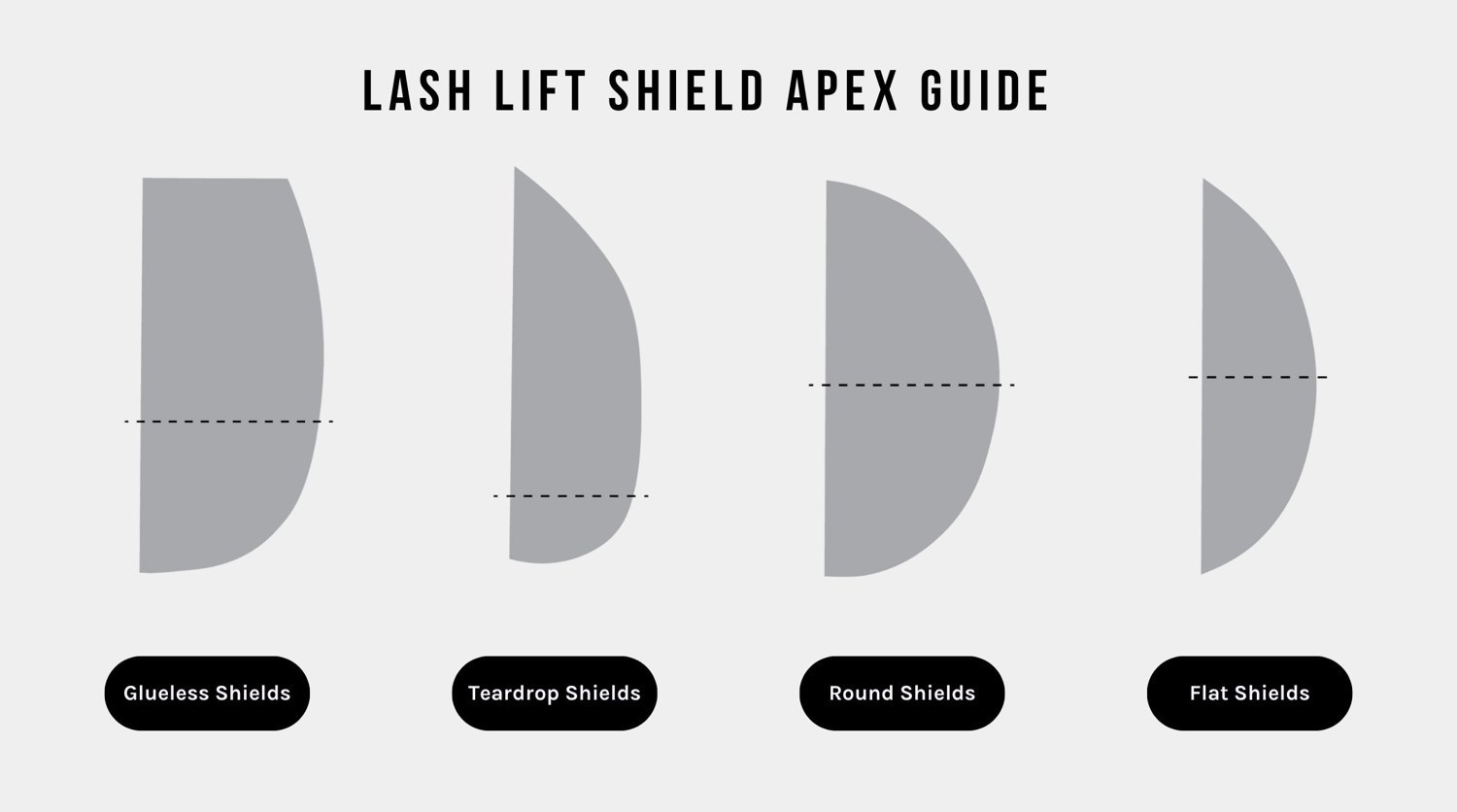
Shield shapes and what they do
- Round shields are the workhorse for downward-growing or stubborn lashes. They produce a strong, even curl and suit hooded or deep-set eyes particularly well.
- Flat shields work best on lashes that already lift naturally, or when the goal is a softer, more defined result rather than maximum curl.
- Teardrop shields create a bolder, more upright curl — the dramatic, camera-ready lift. They tend to flatter protruding eyes and naturally long or already-lifted lashes.
- Glueless (hybrid) shields are the all-rounder, usable on most lash types and the usual route to the soft Korean-style lift.
Sizing: the dry-wand test
Before committing, use a dry applicator wand to press the lashes onto the shield and check the fit. If the lashes spill over the body of the shield onto the flap, size up. If they do not reach the edge, size down until they do. A shield that is too small crowds the lashes; one that is too large flattens the curl.
Apex and placement
The apex is the highest point of the shield, where the natural lashes curl most. Where you place the lifting solution relative to that point decides the finished curl:
- For a soft, natural lift, apply roughly 1 mm below the apex.
- For a dramatic curl, work 1–2 mm past the apex.
- Match placement to shield type and to the client’s lash length and thickness — and stop short of over-processing.
Placement errors show up quickly: uneven curl with one side stronger than the other, flared or over-processed tips, and a root area that stays flat against the lash line. Each of those points back to the shield position, not the product.
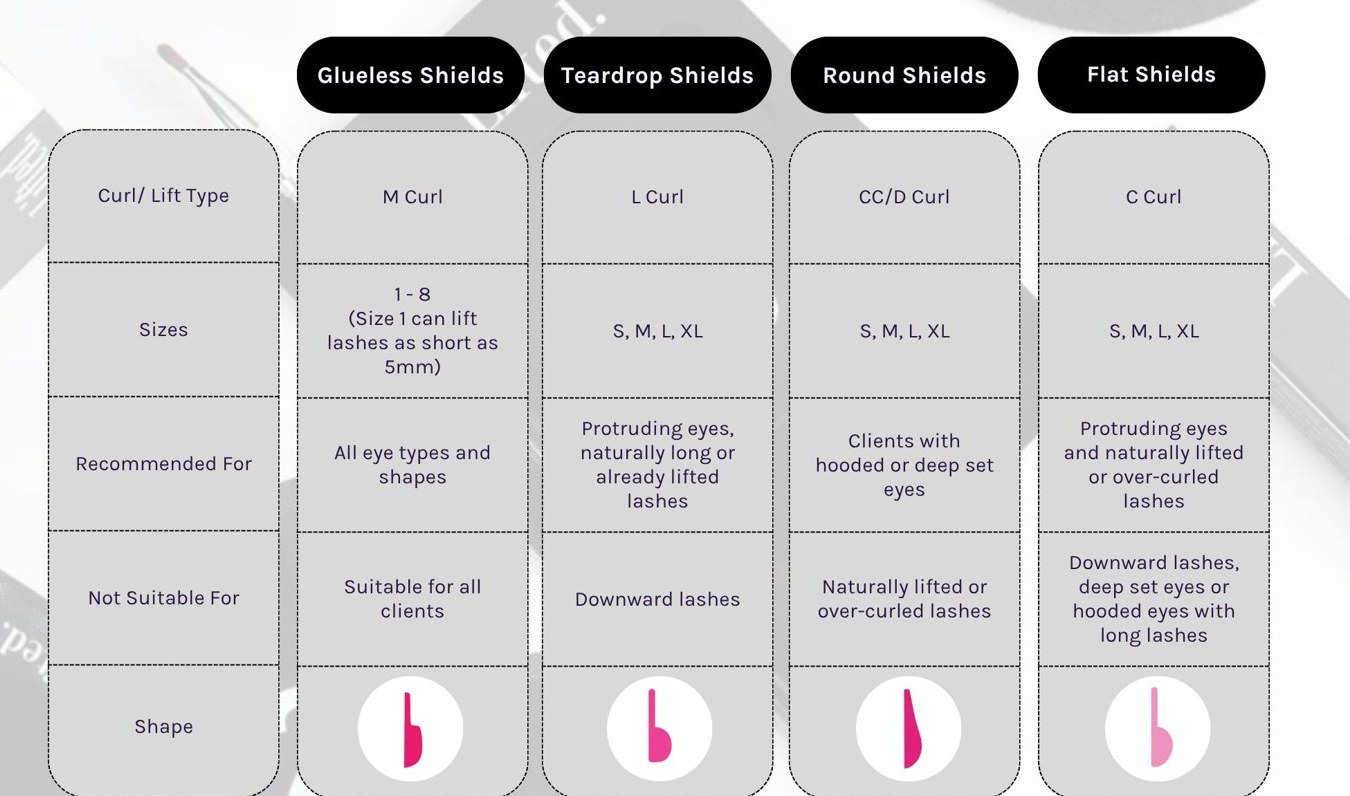
With cysteamine-based systems the lotion can be worked along the whole lash, so apex placement matters less; with traditional thioglycolate lifts it is central to the result.
The takeaway
Shield choice is not “pop it on and process”. It is a decision built on anatomy, shield science and client care. Get the shape, the size and the apex placement right, and the lift looks effortless — which is exactly the result clients come back for.
LebestPro supplies lash lift shields in round, flat, teardrop and glueless profiles, along with the lifting solutions and tools to match, so you can build a shield set that covers every eye shape on your books.