
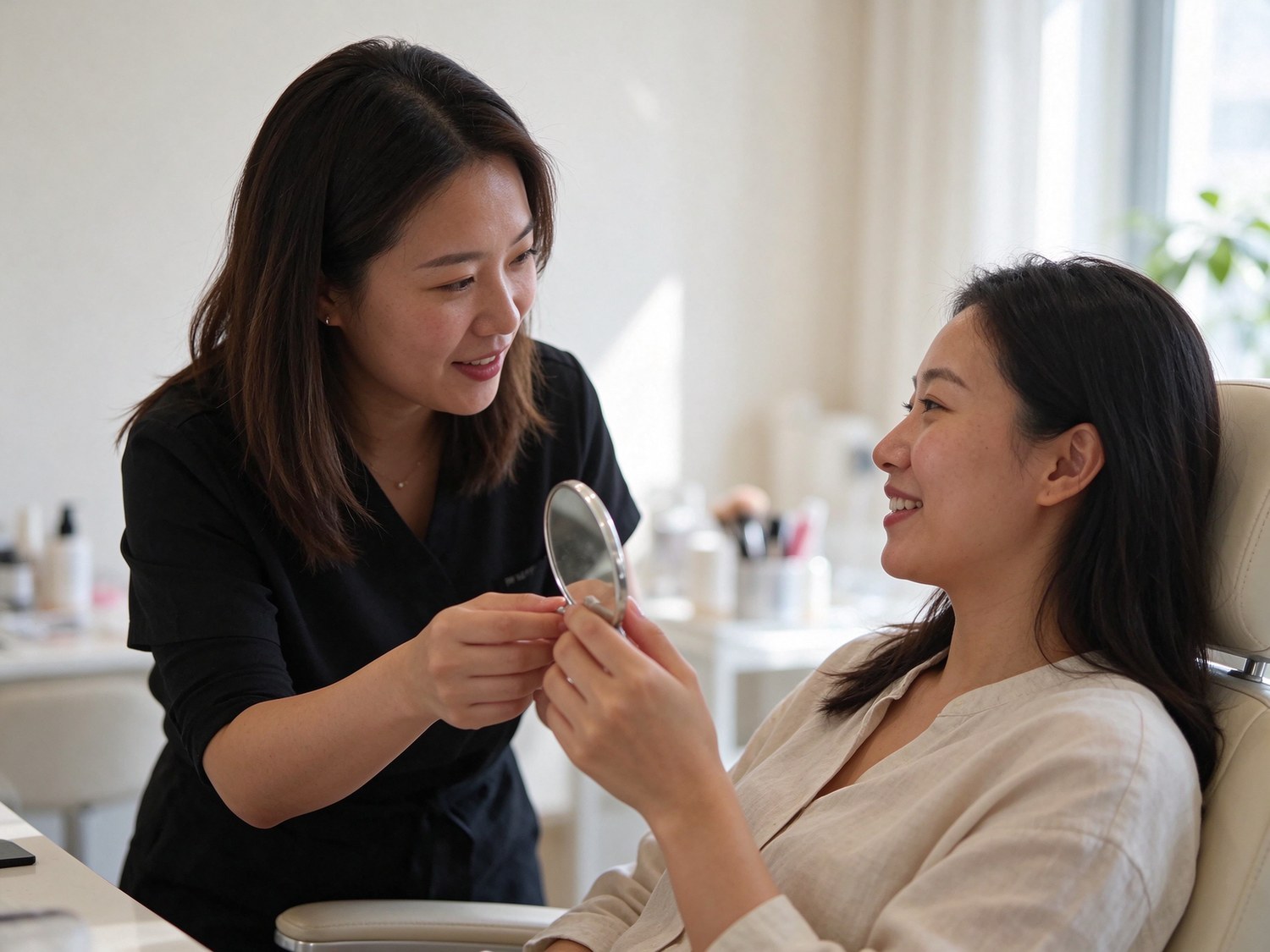
The client experience does not end when the last lash is placed. It ends when she decides, probably in the car, whether she will come back. That decision is made from a handful of small signals in the final ten minutes and the two days that follow, and they cost almost nothing to get right.
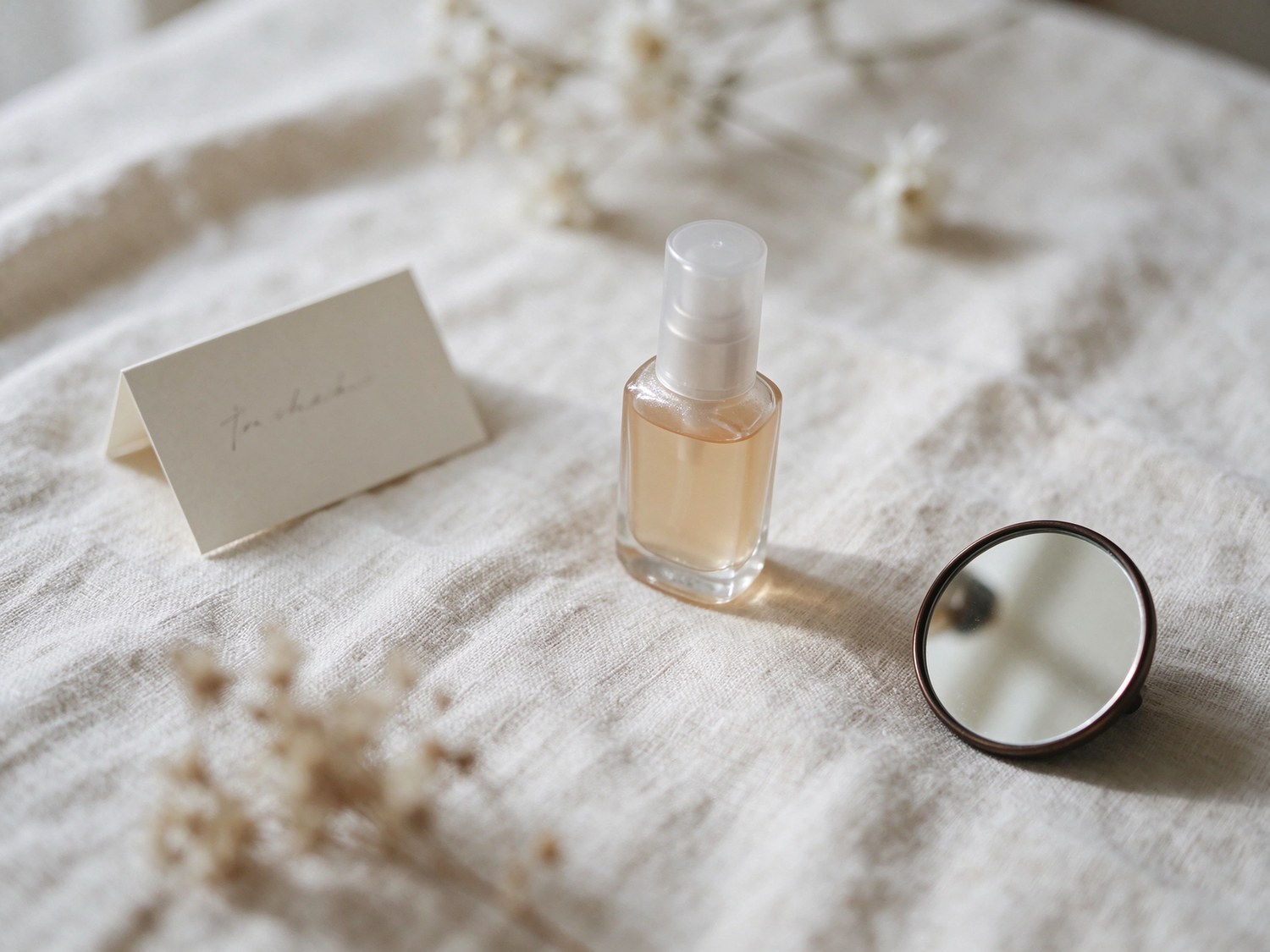
>Touch one: the mirror moment
Hand her the mirror before she gets up, and stay in the room while she looks. The instinct to tidy the trolley is strong, and it is wrong. This is the moment she forms her opinion, and it is the moment to name what she is seeing: the outer corner she asked for, the length she was worried about that now looks right, the way the set opens the eye. Specific language beats compliments, because it teaches her what to look for at the next appointment.
If something is not what she expected, this is the only comfortable moment to discuss it. A length she finds too long is a two-minute adjustment now and a week of discomfort if she leaves without saying so.
Touch two: the aftercare handoff
Aftercare should be handed over in person, with the product in her hand, not attached to an email she will read later. Two sentences cover the essentials: what to avoid for the first day, and how to clean. Then the third sentence, which most stylists skip, explains why. Clients follow rules they understand and quietly break rules they were simply told.
This is also the natural place for retail, and the honest version works better than a pitch. If her cleanser is oil-based, show her the one that is not. If she swims, mention the coating. A client who leaves with the one product she actually needed remembers the recommendation, not the sale.
Touch three: the two-day follow-up
A short message the day after the appointment, asking how the set feels and reminding her of the cleaning step, does three things at once. It catches the client who has convinced herself the lashes feel too heavy and is about to pick at them. It gives her permission to report a problem early rather than at the refill. And it puts the studio’s name back in her messages at the exact moment she is most likely to recommend it to someone.
Keep it short and specific, and send it at a consistent time so it reads as service rather than as marketing. The same message, sent by hand to forty clients, is also how a stylist learns which designs settle well and which generate complaints.
The rebooking habit
Retention is decided at the desk, not by the quality of the set alone. Ask for the next appointment before she pays, offer two specific slots rather than an open question, and write the date on the card with the aftercare instructions. A client who leaves with a date in her hand is a client who is already booked; a client who leaves intending to call has to remember to call.
Then close the loop with the record: what she said about the last set, what changed this time, and what she asked for next. The stylist who remembers a detail from three appointments ago is not performing memory, she is reading her own notes, and that is what a returning client experiences as being known.