

Online lash training has gone from an emergency substitute to a permanent part of how people enter the trade, and the range of quality is enormous. Some programmes are live, trainer-led and end with an assessment on a real model. Others are a folder of videos and a certificate. The difference is not visible from a sales page, so it has to be checked deliberately before money changes hands.
>Start with who is teaching
Look for a named trainer with a licence and a documented background, not a brand name alone. A registered nurse or a long-practising stylist brings a different frame to the material: infection control, contraindications and anatomy tend to be treated as core content rather than as a disclaimer at the end. If the programme cannot tell you who will be assessing your work, that is the first warning.
Live or recorded
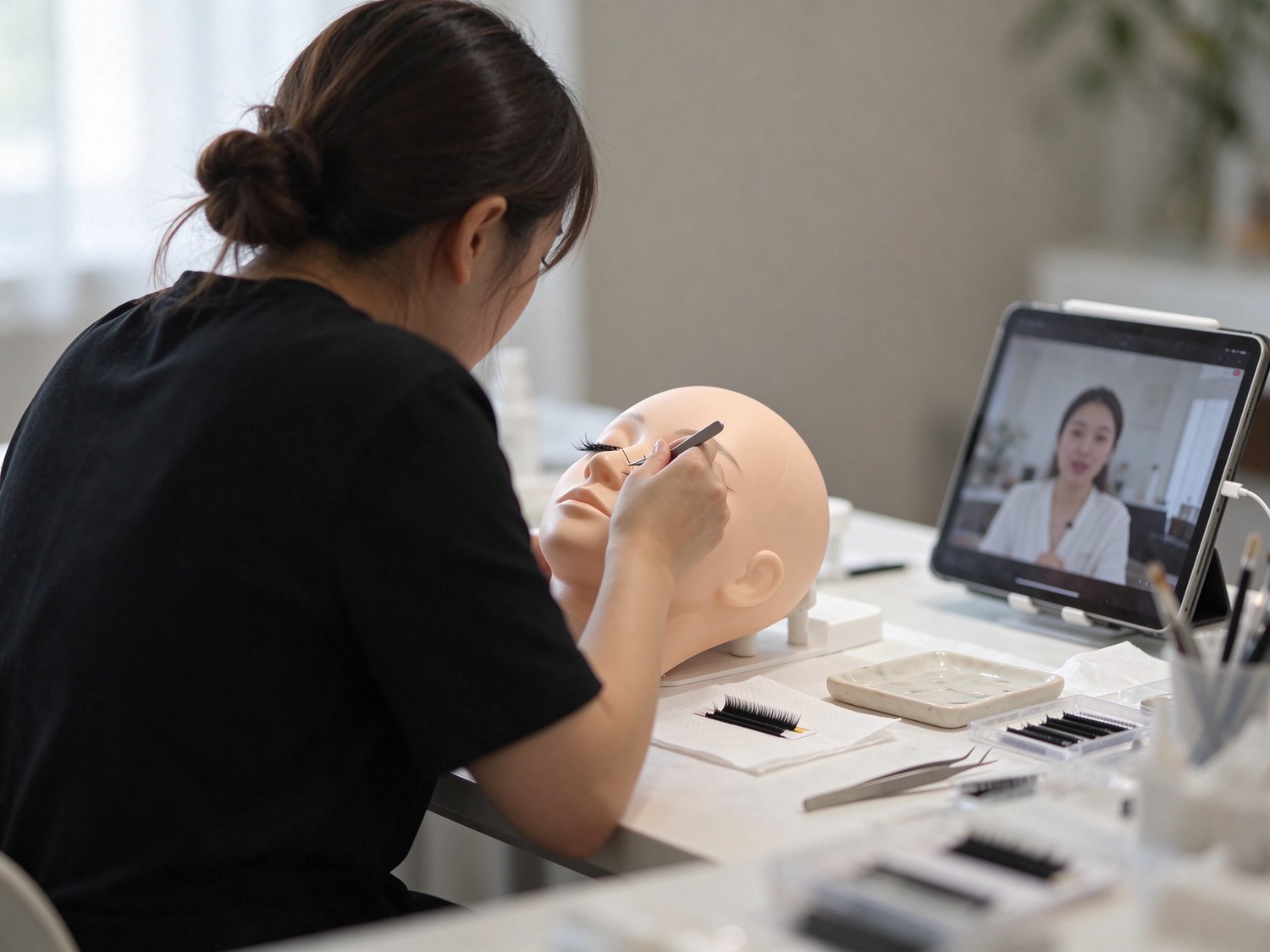
The single most useful question is whether the training happens live. A live session, even by video, allows a trainer to watch your hands, correct your isolation and stop a bad habit before it becomes muscle memory. Recorded content is fine for theory, and it is the wrong format for the part of the job that lives in the fingers. Ask explicitly: is there a scheduled live component, how many hours, and is attendance required?
Is there a hands-on assessment
Certification that never involves applying lashes to a real person under supervision is a certificate for attendance, not competence. The better programmes include supervised applications on live models, with the trainer able to see the isolation, the bond and the finish. Ask how many applications are required, whether models are provided, and what happens if your work does not pass.
What is included in the price
Compare total cost rather than headline cost. A cheaper course that requires you to buy a kit, a lamp, a bed and a full range of adhesives separately is usually the more expensive route. Ask for an itemised list: lashes, adhesive, tweezers, patches, tape, lamp, cleansing products, and any furniture. Also ask what is consumable and what will need replacing within the first month, because that is where the real running cost sits.
Payment plans exist in most of the market and are worth reading carefully. Zero-interest instalments and financed plans are not the same product, and the difference can be a meaningful percentage of the course fee.
Business content, not only technique
A course that teaches application and stops there leaves the hardest part unaddressed. Ask whether the programme covers consultation, contraindications, pricing, retention, aftercare retail and the first ninety days of building a book. A short module on each is more valuable than an extra lash style, because most people who leave the trade do so for commercial reasons rather than technical ones.
Support after the certificate
The weeks after certification are when questions actually appear: an adhesive that behaves differently in a humid room, a client who reacts to a patch, a set that does not hold past ten days. Ask what support exists then, whether it is a person or a forum, whether it is time-limited, and whether troubleshooting calls are included. A programme that answers within a day is worth more than one with a longer syllabus.
Checking the claims
Student reviews, a directory listing, and a public refund policy are three things to verify independently rather than accept from the sales page. Read the refund terms before enrolling: many programmes treat a deposit as non-refundable once materials ship, which is reasonable but should be stated up front. If a course is reluctant to put its terms in writing, treat that as the answer.