
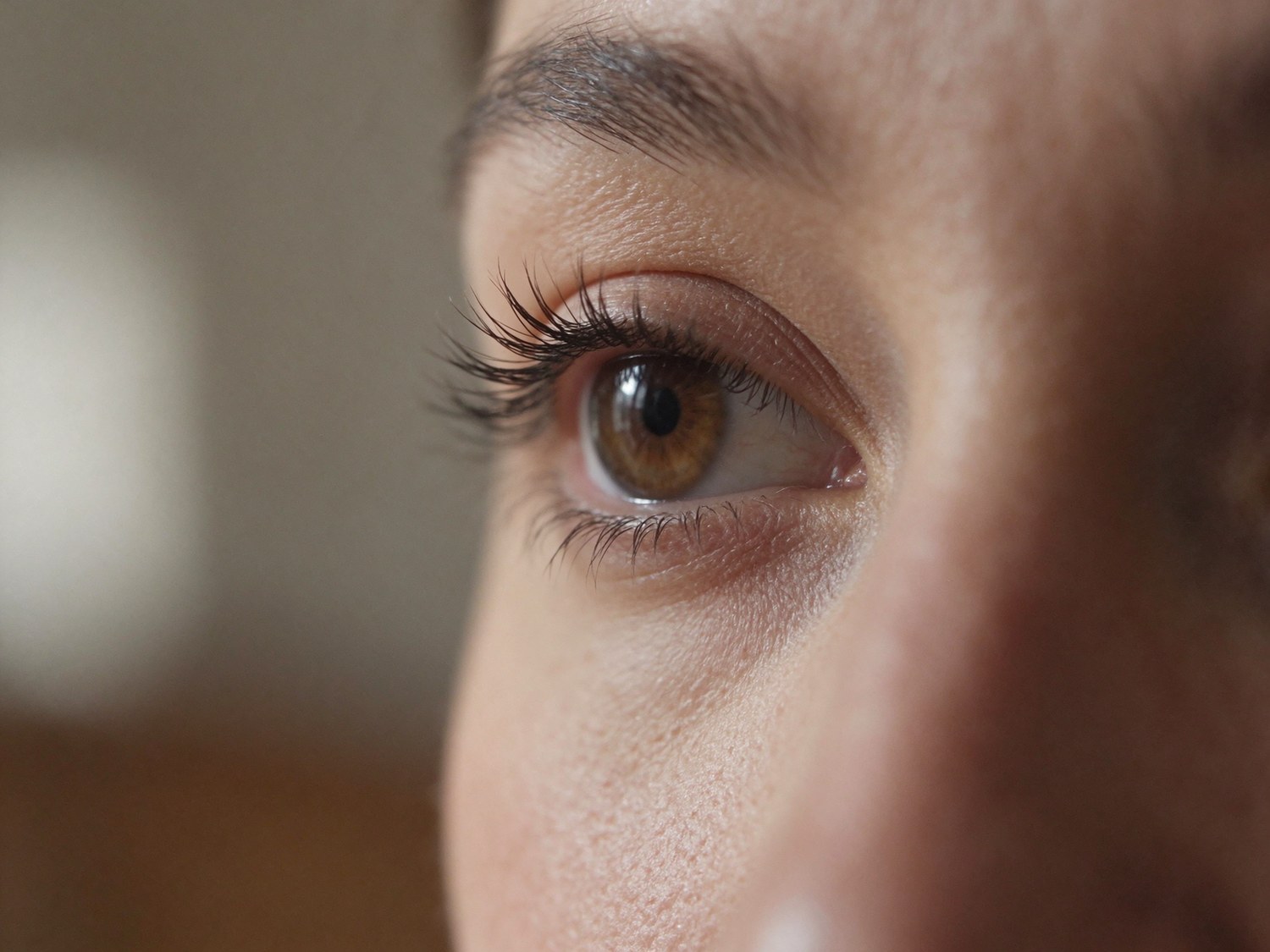
Length and diameter get most of the attention at a consultation, but curl is what a client actually sees when she looks in the mirror. Two sets with identical lengths and weights read completely differently depending on the curve, and the wrong curve is also the most common reason a set touches the brow bone or disappears into a hooded lid.
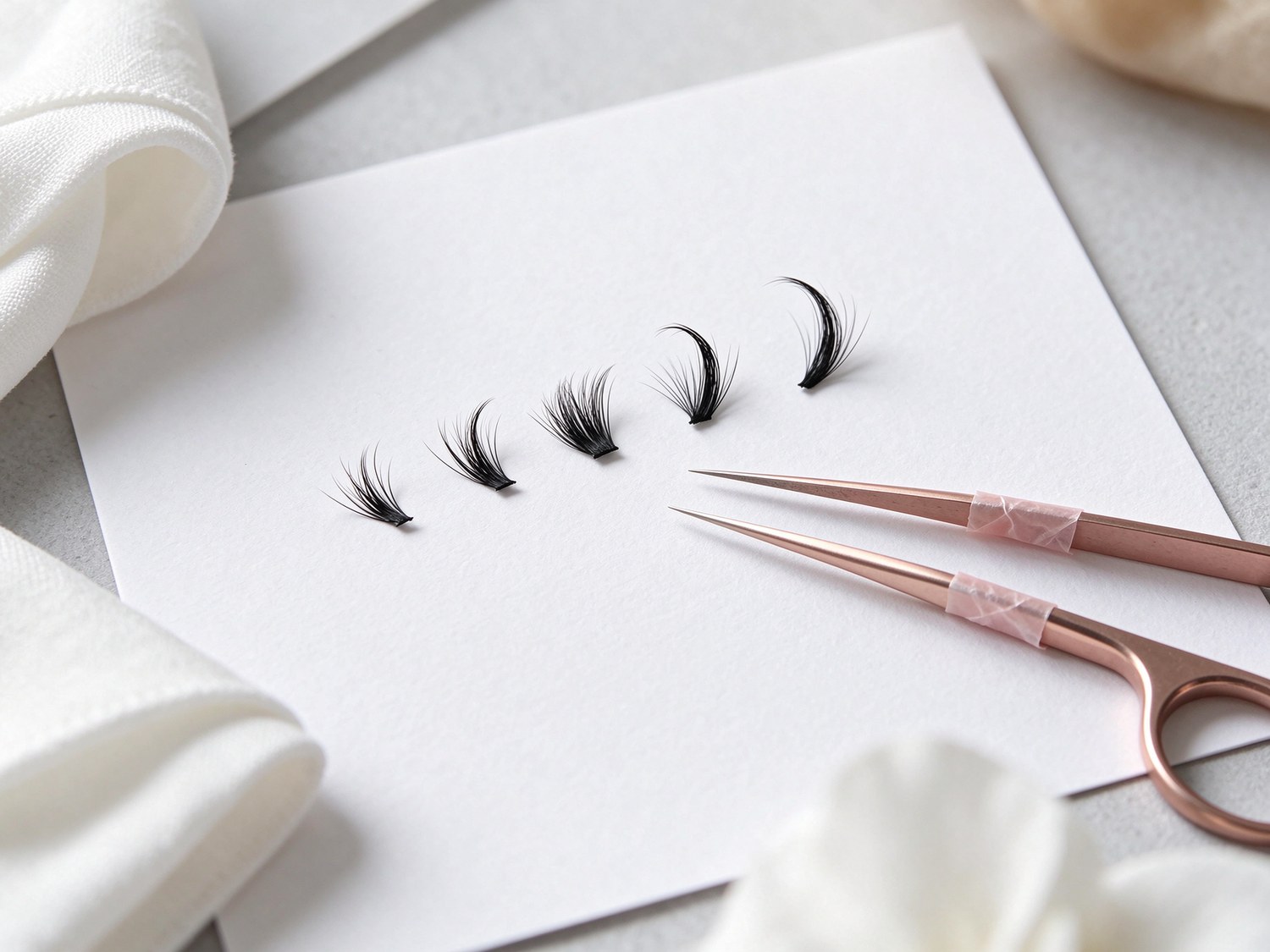
>What curl actually does
Curl sets the angle at which the extension leaves the natural lash. A flat curve continues the natural direction outward; a tighter curve lifts the tip upward sooner. That single variable changes three things at once: how open the eye looks, how much of the extension is visible from the front, and how close the tip sits to the skin above the lid.
For that reason curl is not a taste preference alone. It has to be chosen against eye shape, natural lash direction and the client’s daily routine. A client with downward-growing lashes who asks for the most natural option will be disappointed; a client with heavy lids who asks for the tightest curve may find her set brushing her brow within a week.
The four bands, in practice
Most professional ranges sit in four working bands. The names differ between brands, so the useful way to talk about them is by effect rather than letter.
- Softest band. Barely more curl than the natural lash. It adds length and density without changing the shape of the eye, and suits clients who want to look bare-faced with lashes as their only cosmetic. It is a poor choice for lashes that already point downward, because it emphasizes the slope rather than correcting it.
- Moderate band. The closest match to the average natural curve. It reads as soft and feminine, works on nearly every eye shape, and is the sensible default when a client is unsure. When in doubt, this band is the answer.
- Lifted band. A noticeable increase in curl, comparable to what a hand-held curler gives. Universally popular because it is dramatic without looking artificial. It is the band to avoid on heavily hooded or deep-set eyes, where the earlier lift can bring the tip into contact with the skin above the eye.
- Dramatic band. Maximum lift, built for clients who want a fully made-up look. It photographs beautifully and demands more careful mapping, because the tighter radius shortens the visible length and concentrates weight near the base.
Matching curl to eye shape
Hooded eyes benefit from a moderate-to-lifted curve with the longest lengths placed slightly past the centre of the lid, so the lift happens where there is room. Deep-set eyes need the length to reach outward before it turns up, which is a moderate band rather than the tightest one. Round eyes look best when the centre is kept close to the corners in length and the curl stays moderate, which avoids a doll-like circle. Almond and monolid eyes tolerate the wider range, and the decision comes back to how much lift the client wants to see.
Downward lashes are the one case where the answer is usually the opposite of what the client asks for: a moderate or lifted band corrects the direction, while the softest band simply follows it.
How to present the choice
Show two or three loose extensions on the back of the hand, side by side, rather than describing curves in words. The difference is immediately visible, and the client will pick with her own eye instead of guessing. Then confirm the choice against the map, because a tighter curl on the outer corner can shorten the apparent length and undo a cat-eye shape.
Record the band in the client’s file. Curl is the variable clients notice first when a refill looks “different”, and a note prevents a stylist from changing it by accident three appointments later.